A Look at Mobile’s Summer Teen Curfew Rules, Four Years In
Four years after Mobile's summer teen curfew took effect in 2011, the city ordinance still shapes downtown nightlife rules for minors under 18.
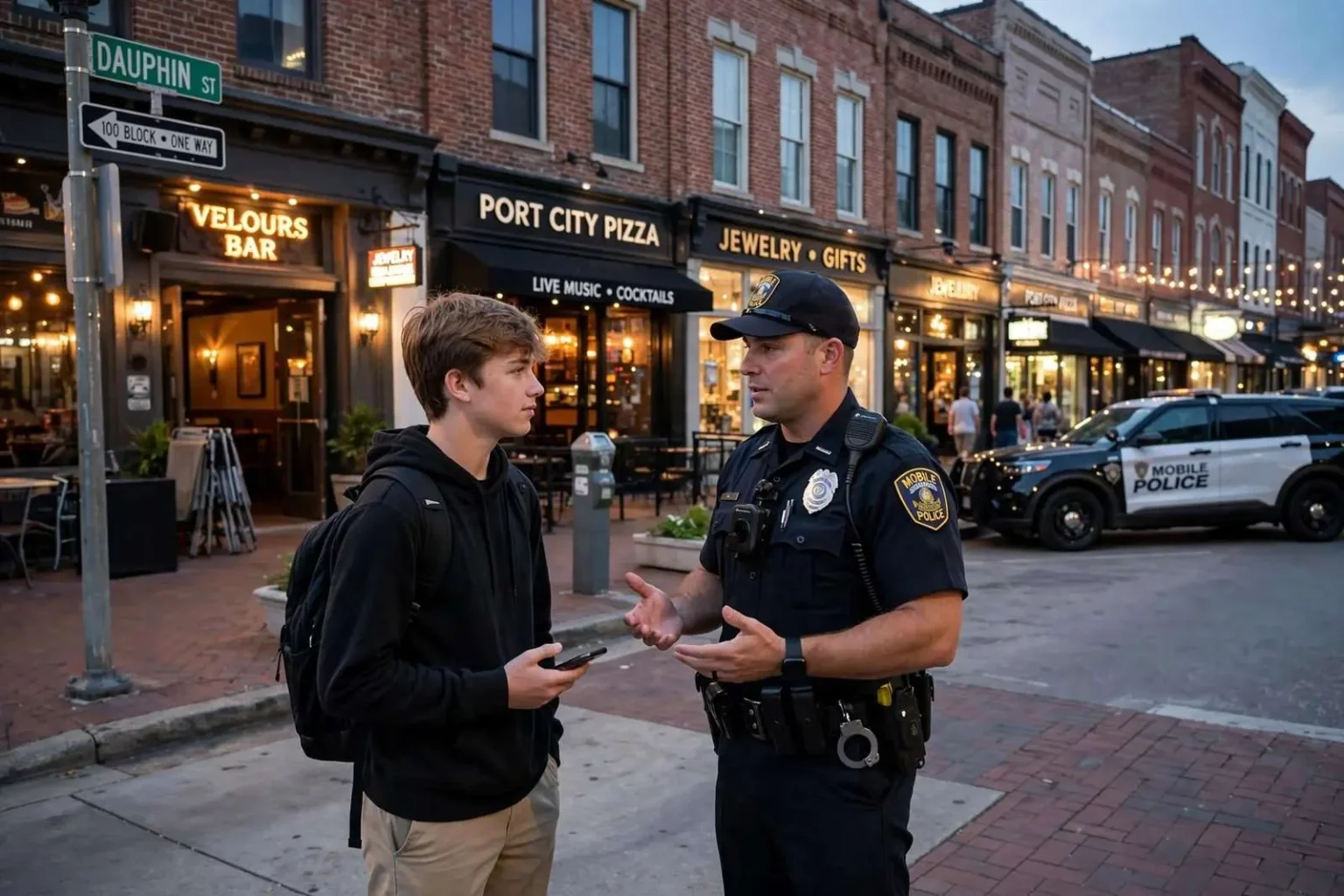
MOBILE, Ala. — Four years after Mobile enacted a summertime curfew for minors, the ordinance remains a fixture of how the city manages downtown nightlife and public safety during the warmer months, even as debate continues over whether the restrictions actually make a difference. The measure has outlived the administration debates that produced it and settled into the routine of police work along Dauphin Street, where officers reference it on busy weekend nights without fanfare.
The curfew, in effect since 2011, restricts where and when people under 18 can be out in public without a parent or guardian during specific hours. On Sunday through Thursday nights, the curfew runs from 11 p.m. until 6 a.m., while Friday and Saturday nights push the cutoff back to midnight, giving teens a bit more leeway heading into the weekend.
A stricter set of hours applies specifically to Mobile’s entertainment district, where the curfew for minors begins at 10 p.m. and runs until 5 a.m., reflecting the area’s concentration of bars and nightlife along streets like Dauphin Street. The two-tier structure acknowledges what downtown’s geography makes obvious: the blocks around Dauphin Street operate on a different rhythm than the city’s residential neighborhoods, and the hours when a teenager can lawfully be downtown differ accordingly.
City leaders adopted the ordinance amid concerns about large groups of unsupervised teenagers congregating downtown late at night, particularly in and around the entertainment district where alcohol service and foot traffic create unique safety considerations for police. The debates that preceded passage featured the arguments that accompany curfews in cities across the country — that they protect young people from being victims as much as they prevent mischief, and that they risk sweeping up teens who have done nothing wrong.
Like many municipal curfews, Mobile’s ordinance includes exceptions covering situations such as teens traveling to or from work, accompanying a parent, or responding to an emergency, so the restrictions are not absolute. The exemptions matter in a working city: a sixteen-year-old closing a shift at a restaurant, a teenager riding home with an older sibling after a family event, or a young person heading to a hospital all fall outside the ordinance’s reach.
Enforcement falls to the Mobile Police Department, which has periodically reminded residents and visitors about the rules during peak summer months when downtown foot traffic increases. In practice, enforcement usually begins with a conversation — officers who encounter an unaccompanied minor late at night first try to determine where the teen is going, whether an exception applies, and how the young person can safely get home.
Four years into the ordinance, city officials and residents continue to weigh in on whether the curfew has achieved its intended effect of reducing late-night incidents involving minors, with opinions varying widely among parents, business owners and teens themselves. Bar and restaurant operators along Dauphin Street generally credit the rules with thinning out the crowds of unsupervised teenagers that once gathered on the sidewalks during closing hours, while some parents and youth advocates argue the ordinance criminalizes ordinary adolescent life without addressing the underlying issues that draw teens downtown in the first place.
The ordinance remains on the books today as one of several tools Mobile uses to balance a vibrant downtown entertainment scene with public safety, alongside more visible measures such as increased police patrols in the entertainment district on weekend nights, surveillance cameras in the core blocks, and coordination with bar owners on crowd management during festivals and special events. Cities that manage nightlife districts typically layer these approaches, because no single tool addresses the range of situations a busy downtown generates.
Mobile’s nightlife economy gives the debate its stakes. The entertainment district’s bars, music venues and restaurants draw crowds from across the Gulf Coast, and the city’s festival calendar — crowned by Mardi Gras, which brings hundreds of thousands of visitors downtown each winter — tests the capacity of streets and policing alike. A curfew that works on a routine summer Saturday is also part of the framework the city relies on when the stakes grow larger during parade season.
Dauphin Street anchors that scene. The thoroughfare runs the length of downtown and holds the densest concentration of nightlife in the region, block after block of venues whose doors empty onto narrow sidewalks in the hours around closing time. It was precisely that concentration — crowds, alcohol, and late hours — that made the blocks the focus of the curfew’s stricter entertainment-district hours beginning at 10 p.m.
For parents, the ordinance functions as a backstop more than a burden. Families who set their own house rules often find the city’s hours reinforce them, and the exception for teens accompanied by a parent or guardian keeps the ordinance from separating families during festivals, concerts and other late-night events that draw all ages.
How the curfew is enforced in practice
On a typical weekend night, curfew enforcement in the entertainment district is less about arrests than about management. Officers working Dauphin Street identify unaccompanied teenagers as crowds build, ask questions about destination and companions, and arrange rides home when no exception applies. Formal citations represent a small fraction of the encounters, and police officials have generally described the ordinance as a tool for intervening early — moving a young person out of a risky environment before something happens — rather than a mechanism for punishment.
The exceptions officers apply in the field require judgment. A teenager with a work schedule shown on a phone, a name tag or a uniform passes the work-travel exception; a teen walking with a parent or guardian is outside the ordinance entirely; an emergency — a family crisis, a medical need — is handled case by case. Officers also weigh whether the teen is a downtown worker or a downtown visitor, since the restaurant and hospitality economy employs young people whose shifts end inside curfew hours.
Penalties under municipal curfews typically attach to the minor, and can also reach parents or guardians whose children are out in violation, though Mobile’s practice has emphasized warnings and family contact over the citation path. The goal, officials have said, is to get the young person home safely and to put the family on notice, reserving formal charges for repeat situations.
Nationally, curfews sit amid mixed evidence. Researchers who have studied municipal curfews have found inconsistent effects on juvenile crime and victimization, and civil liberties organizations have challenged ordinances in other cities over due process concerns. Mobile’s experience over its first four years has not settled that debate locally — it has simply embedded the ordinance in the city’s operations while the argument continues at council meetings and in the letters pages of the local press.
The bigger picture of downtown safety
The curfew exists alongside the seasonal realities of a Gulf Coast city whose downtown calendar is crowded. Mobile’s Mardi Gras — the oldest in the country, predating New Orleans celebrations by years — floods the entertainment district with families, teenagers and tourists for weeks each winter, and the city’s summer festival season keeps downtown foot traffic high through the warm months. Managing the age mix of those crowds is one of the quiet operational challenges behind every parade route and street closure.
Business owners in the district describe a before-and-after picture around the 2011 adoption. Operators who worked the Dauphin Street corridor before the ordinance recall weekends when packs of unsupervised teenagers filled the sidewalks deep into the night, generating disturbance calls and, occasionally, fights that spilled across the blocks. After the ordinance and the stricter district hours, owners report calmer sidewalks in the late hours — though they attribute the change to a combination of the curfew, heavier police presence and the district’s continued evolution toward venues that draw older crowds.
Youth advocates counter with the question of what teens are supposed to do instead. In a city where after-school programs, summer jobs and recreation options vary widely by neighborhood, the hours after dark on a summer night can be unstructured wherever a teenager lives. Some advocates have urged the city to pair the curfew’s restrictions with investment in the things that occupy young people constructively — extended recreation center hours, job programs and transportation that gets teens home safely after events.
The city council has periodically revisited those arguments as the ordinance ages, reviewing its operation the way councils review any recurring policy. Four years in, the consensus that emerged is practical rather than philosophical: the curfew gives police a clear standard and parents a clear rule, and nothing in the debate so far has generated the votes to repeal it.
For the teenagers of Mobile, the rules remain what they have been since 2011 — home by 11 on weeknights, midnight on weekends, and off Dauphin Street’s sidewalks by 10 — with the exceptions that keep work, family and emergencies outside the ordinance’s reach. The discussion over whether that framework is the right one goes on, but the framework itself has become part of how downtown Mobile works.