GulfQuest Maritime Museum in Mobile Seeks Hundreds of Volunteers Ahead of Opening
GulfQuest maritime museum in Mobile launched a 2015 recruitment drive for hundreds of volunteers ahead of its long-anticipated riverfront opening.
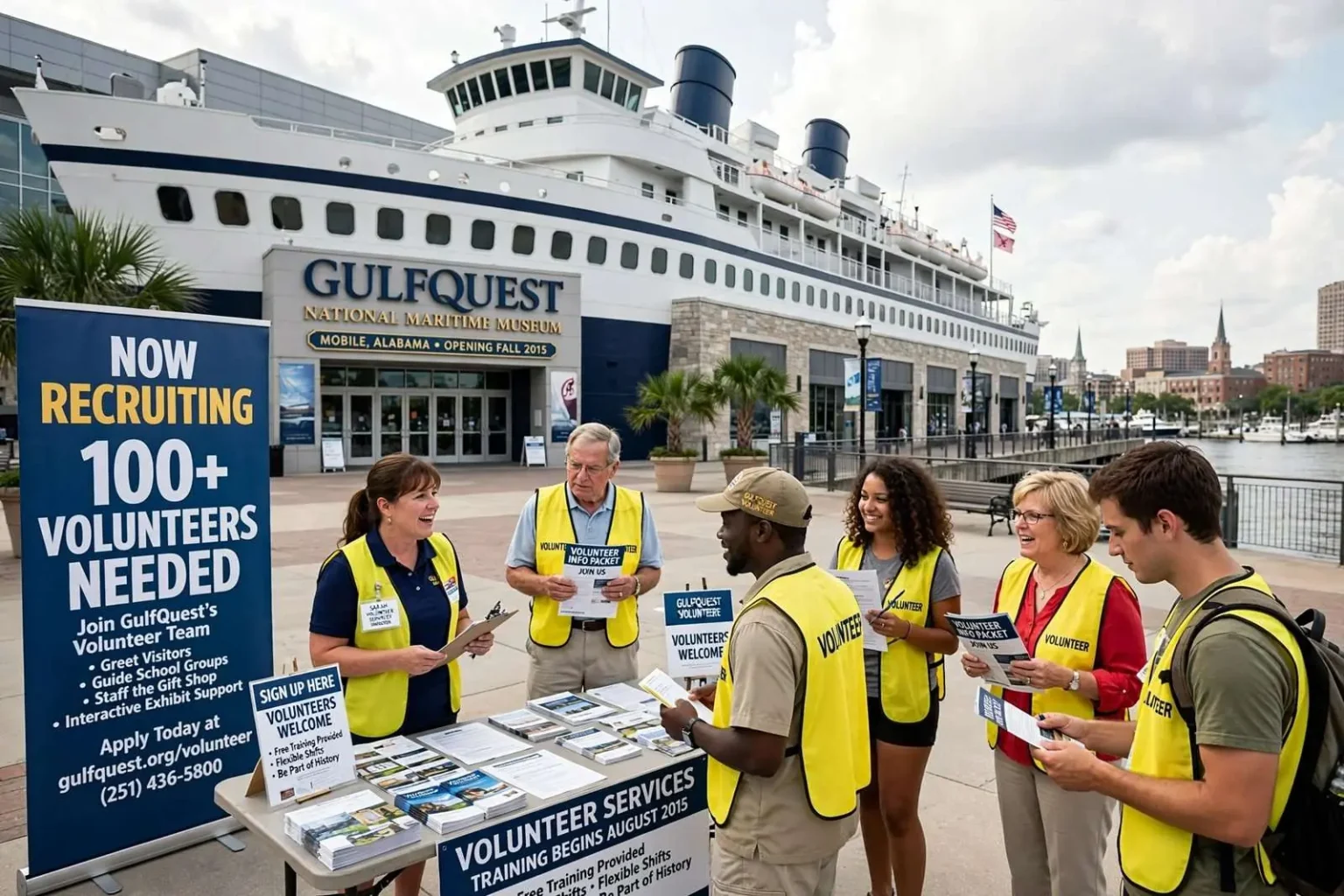
Organizers of Mobile’s GulfQuest National Maritime Museum launched a recruitment push in the summer of 2015 seeking hundreds of volunteers to help staff the long-anticipated attraction ahead of its opening later that year. The drive marked one of the final major steps in preparing the riverfront museum, which had been more than a decade in the making and was positioned as a signature addition to downtown Mobile’s revitalized waterfront.
The museum’s volunteer services director said she hoped to have a full roster of volunteers trained and ready by the time doors opened, describing the opportunity as a chance for community members to help write a new chapter in the Gulf Coast’s maritime history. The framing reflected the museum’s ambition: GulfQuest was conceived not as a collection of artifacts behind glass but as an immersive experience centered on the maritime culture that shaped Mobile and the entire northern Gulf Coast.
Volunteers were being sought to greet visitors, help school groups navigate the museum’s roughly 90 planned exhibits, and staff Treasures, the museum’s gift shop, among other duties. The duties ranged from wayfinding and hospitality to supporting the interactive stations that were expected to be the museum’s biggest draw for families and school field trips.
A Museum Built Around Interaction
GulfQuest was positioned as one of only two interactive maritime museums in the country and the only one dedicated specifically to the maritime traditions of the Gulf of Mexico, giving the Mobile riverfront attraction a niche appeal expected to draw visitors from across the region. The distinction placed it alongside the Mystic Seaport-tier of specialized maritime attractions while carving out a geographic identity no other museum claimed.
The museum’s design took its shape from a full-scale inland riverboat and cargo ship display, with exhibits arranged across multiple decks exploring topics from shipbuilding and navigation to hurricanes, wetlands ecology and the seafood industry. Interactive simulators allowed visitors to pilot vessels through the Port of Mobile’s channel, experience storm conditions and explore the science behind the Gulf’s weather systems.
The museum had been years in development, and its volunteer corps was seen as central to delivering the hands-on, interactive experience organizers had promised for the exhibits. In a museum where guests operate simulators, manipulate working models and move through a ship’s decks, staffing levels directly shape whether the intended experience lands — a lesson drawn from comparable institutions nationwide.
Prospective volunteers were directed to apply online through the museum’s website or by calling its volunteer services office directly. Organizers emphasized they were looking for outgoing, dependable people willing to commit time throughout the museum’s early months, when demand for guided help was expected to be highest as first-time visitors got oriented to the building’s layout and interactive stations.
Why Volunteers Matter to a Museum’s Launch
For a new attraction of GulfQuest’s scale, the volunteer corps serves several functions at once. Trained greeters and exhibit guides stretch the paid staff, keep wait times down at popular stations, and give school groups — among the most demanding audiences a museum serves — the structured attention that turns a field trip from a walk-through into a lesson. Museums that launch without a developed volunteer base frequently find their interactive exhibits underused simply because visitors cannot tell how to engage with them.
The training program organizers described was designed to prepare volunteers for exactly that role. Because the museum’s exhibits were hands-on, volunteers needed to understand not just where things were located but how each station worked, what it taught and what questions visitors were likely to ask. Extensive training before taking on visitor-facing roles meant weeks of preparation for the first cohort, learning the building’s layout and the stories behind its exhibits.
The emphasis on dependable, long-term commitment reflected the realities of a museum’s opening period. Attendance in the first months after a launch typically runs well above steady-state levels, with curiosity-driven crowds, school bookings and regional media attention all converging. Volunteers who could sustain a regular schedule through that surge were more valuable to organizers than a larger pool of occasional helpers.
Mobile’s Riverfront Renaissance
GulfQuest’s arrival capped a broader transformation of downtown Mobile’s riverfront that unfolded across the 2000s and early 2010s. The Cooper Riverside Park, the revitalized Dauphin Street corridor and the convention center district had already shifted the city’s center of gravity back toward the water, and city boosters had long identified a flagship maritime attraction as the missing piece that would give visitors a reason to extend their stays.
The recruitment drive reflected the broader anticipation building around GulfQuest’s debut, which downtown Mobile boosters hoped would become a signature draw alongside the city’s other riverfront attractions, bringing tourism dollars to restaurants, hotels and shops downtown. Mobile’s maritime identity runs deep — the city is home to one of the nation’s busiest ports, a centuries-old shipbuilding tradition and the annual Mardi Gras celebrations that arrived with Gulf commerce — and the museum promised to interpret that story for visitors who otherwise might know the city only as a place they passed through.
Regional tourism officials watched the project with interest for the same reasons. The Gulf Coast’s tourism economy in the mid-2010s was heavily weighted toward beaches, and attractions that could draw visitors on rainy days and shoulder-season trips carried outsize value for the region. A maritime museum in Mobile complemented the beach economy of Baldwin County and the historic draws of Pensacola, giving the central Gulf Coast an indoor, educational anchor attraction.
The museum’s site at the riverfront, within walking distance of downtown hotels and the convention center, was chosen with that visitor flow in mind. Planners anticipated that convention attendees, cruise passengers departing from the nearby Alabama Cruise Terminal, and families visiting the Gulf would all form parts of the museum’s audience.
School Groups and the Education Mission
The plan to use volunteers to help school groups navigate the museum reflected GulfQuest’s identity as an educational institution first. Museums across the Gulf South build their field trip programs around curriculum standards in science and social studies, and a maritime museum offers natural connections to subjects including marine science, weather, geography, economics and Alabama history.
Mobile County’s public schools, the largest district in Alabama, sat in the museum’s backyard, and organizers anticipated that local students would form a core part of the visitor base. For many students in the region, the museum would be their first structured exposure to the maritime industry that employed tens of thousands of people along the Gulf Coast — from port workers and shipbuilders to tugboat crews and seafood processors.
Volunteer guides trained to lead groups through the roughly 90 exhibits would multiply the museum’s education capacity. A docent corps that can split a class into small groups and move them efficiently between stations is the difference between a field trip that stays on schedule and one that dissolves into crowd management, which is why the recruitment push targeted that capability specifically.
The Long Road to Opening
GulfQuest’s path from concept to opening was long even by the standards of museum development. The project was first proposed in the early 2000s, and its funding drew on public and private sources, with the city of Mobile backing the development as part of its riverfront investment strategy. Construction and exhibit fabrication stretched across years, with opening dates set and adjusted as the building and its 90 exhibits came together.
That timeline made the volunteer recruitment push a visible signal that opening was finally near. Museums typically begin serious volunteer recruitment only months before their doors open, once training spaces and exhibit floors are far enough along to host rehearsals, and GulfQuest’s summer 2015 drive fit that pattern precisely.
The museum ultimately opened its doors in the fall of 2015, welcoming visitors to the riverfront building its organizers had promised for more than a decade. The volunteer corps recruited that summer formed the human foundation of the operation — the greeters, guides and gift shop staff who turned the building’s interactive ambition into an experience visitors could actually navigate.
For the volunteers themselves, organizers offered a pitch that went beyond tourism: a chance to represent Mobile’s maritime story to the region. Whether retired mariners, teachers, students or simply residents proud of the city’s Gulf heritage, the hundreds recruited that summer were asked to become the first faces of an institution dedicated to the waters that shaped the Gulf Coast.
Volunteer coordinators at comparable institutions note that a museum’s founding corps often becomes its institutional memory, with early volunteers remaining for years and training the classes that follow them. GulfQuest organizers made clear they were building with that permanence in mind, seeking people who saw the opportunity as an ongoing role in the city’s cultural life rather than a one-time commitment. The response to the recruitment drive, they said, would shape not just the opening season but the character of the museum’s public face for years to come.
Details about volunteer requirements, training schedules and application procedures were available through the museum’s website and its volunteer services office, which coordinated the onboarding of new applicants throughout the summer ahead of the opening season.