What Does the Typical Mobile Tourist Look Like? New Study Offers Answers
A new visitor study gives Mobile tourism officials fresh insight into who visits the Port City, how long they stay and why they come to town.
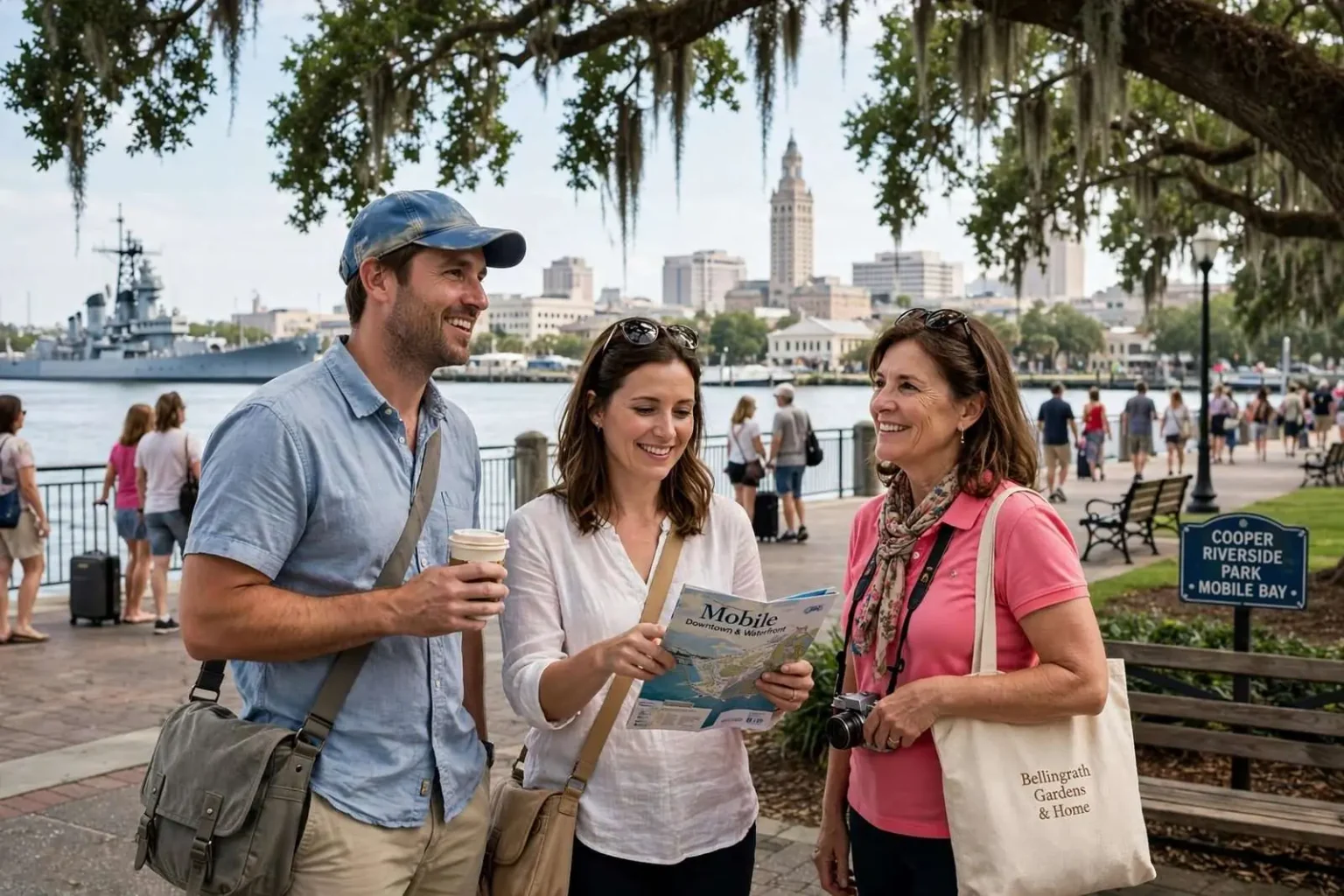
A newly commissioned visitor study is giving Mobile tourism officials a clearer picture of who is actually visiting the Port City, and where the industry might be leaving money on the table. The Mobile Bay Convention & Visitors Bureau presented the findings of its Visitor Profile study, compiled by Toronto-based research firm Longwoods International, to the Mobile City Council. Al Hutchinson, president and CEO of the visitors bureau, said the roughly $17,000 study was meant to help the city better understand its audience and market itself more effectively to new travelers.
The study represents one of the most detailed attempts in recent years to quantify who comes to Mobile, why they come, and what they spend while they are here. Longwoods International is a firm that specializes in tourism research for destinations across North America, and its Visitor Profile methodology draws on large-scale traveler surveys to build a statistical picture of a destination’s audience. For Mobile, that picture now extends well beyond hotel occupancy tallies and event attendance figures into the motivations and habits of the people behind the numbers.
The Mobile Bay Convention & Visitors Bureau serves as the region’s primary destination marketing organization, promoting the city and surrounding areas of Mobile County to leisure travelers, meeting planners and group tour operators. Its budget and priorities are closely tied to lodging tax revenue, which means city officials have a direct financial stake in understanding which markets are responding to Mobile’s advertising and which are not. Hutchinson told council members that the study’s findings would feed directly into that decision-making process.
A Detailed Portrait of Who Visits
According to the study, Mobile drew about 16.8 million person-trips in 2013, split between 8.9 million day trips and 7.9 million overnight stays. The sheer volume of day visits underscores how much of Mobile’s visitor traffic comes from within an easy drive of the city, rather than from travelers booking hotel rooms. Person-trips count every individual on every trip, so a family of four driving over from Pensacola for the afternoon registers as four person-trips under the survey’s methodology.
The vast majority of those visits were for leisure rather than business, accounting for 93 percent of overnight stays and 89 percent of day trips. That leisure dominance shapes nearly every aspect of the local hospitality economy, from the weekend-heavy rhythm of downtown restaurants to the seasonal surges that follow Mardi Gras, spring festivals and college sporting events. It also highlights the study’s central warning about business travel, which officials said remains an underdeveloped segment for the city.
Visitor spending totaled nearly $1.2 billion, with overnight guests contributing about $743.3 million and day-trippers spending roughly $441.2 million. Those figures cover the full range of traveler outlays, including lodging, food, retail purchases, entertainment and local transportation. The overnight share of spending is disproportionately large relative to the share of trips, which reflects the compounding effect of hotel bills on a traveler’s total budget.
The average overnight stay lasted 2.3 nights, a figure that carries real weight for hotel operators and for the lodging taxes that fund tourism promotion. Each additional half-night that a typical visitor stays multiplies restaurant meals, attraction tickets and retail spending, which is why extending length of stay appeared prominently among the opportunities the study identified. For a destination like Mobile, where many visitors pass through on the way to Gulf Coast beaches, converting pass-through traffic into longer stays has long been a strategic priority.
Where Mobile’s Visitors Come From
Most Mobile visitors came from nearby states, including Florida, Georgia, Mississippi, Louisiana and Texas, along with a notable share from California. The regional pattern is hardly surprising given Mobile’s position on the Interstate 10 corridor, which runs from Florida through the heart of the Gulf Coast and west toward the Texas line. Drive-in markets within a half-day’s drive supply the backbone of the city’s leisure traffic, whether they are coming for weekends along Dauphin Street, youth sports tournaments, cruises out of the Port of Mobile or family gatherings.
The strong California showing stands out in that mix, because it represents a fly-in market rather than a drive market. Officials noted that segment as evidence that Mobile’s appeal can reach well beyond the Southeast when it is marketed effectively, and as a reminder that air service connections at Mobile Regional Airport and the growing range of direct routes play a role in sustaining that demand.
More than half said the primary reason for their trip was to visit friends and family, while shopping, the waterfront and dining ranked as the top draws once they arrived. Visiting friends and relatives is one of the most stable forms of tourism because it does not depend on advertising campaigns; the visitors are already connected to the community. The challenge for the tourism industry is converting those guests into spenders at local restaurants, shops and attractions once the family reunion or holiday visit is underway.
The prominence of shopping, the waterfront and dining aligns with what Mobile has invested in over the past decade. Downtown’s revival has added restaurants, loft apartments and entertainment venues within walking distance of the RSA Tower district, Bienville Square and Cooper Riverside Park, while the Riverfront and the cruise terminal give visitors a reason to linger near the water. Retail corridors in west Mobile and across the bay in Baldwin County also capture visitor dollars, particularly on weekends.
The study’s findings on what visitors enjoy also reinforce the role of the city’s signature attractions, from the USS Alabama Battleship Memorial Park along the bay to the historic districts of Oakleigh and Church Street East, and seasonal draws such as Mardi Gras, which brings hundreds of thousands of revelers downtown each winter. Bellingrath Gardens and Home, just south of the city in Theodore, remains another anchor for garden and holiday-season travelers. None of these appeared as single dominant motivations in the survey, but together they form the backdrop against which the top three activities play out.
What the Numbers Mean for Local Businesses
For restaurant owners, hoteliers and attraction operators, the study offers both reassurance and a to-do list. The reassurance is that demand is broad, overwhelmingly leisure-driven and backed by real money, nearly $1.2 billion in a single year. The to-do list is longer: the visitor base is concentrated in a handful of drive markets, stays are short, and the segment most likely to fill hotel rooms on weekdays, business travel, remains small relative to peer cities.
The Missed Opportunities
The study also pointed to several missed opportunities for the tourism industry, including a lack of focus on business travelers, extended overnight stays and markets outside the Southeast and California. Each of those gaps represents revenue that nearby competitors are capturing. Business travel, in particular, tends to fill rooms from Monday through Thursday, smoothing out occupancy between the weekend surges that leisure destinations otherwise depend on, and it typically brings higher per-trip spending on meals and services.
Extending the average stay of 2.3 nights is the other clear lever. Convention and visitors bureaus across the country have found that visitors who add even a single night to a trip generate a disproportionate share of new revenue, because lodging, meals and activities all compound. For Mobile, that means packaging the downtown waterfront, the historic districts and area attractions in ways that make a two-day itinerary feel full and a three-day itinerary feel natural.
The geographic gaps are equally significant. The study’s finding that traffic concentrates in Southeastern states plus California suggests that large swaths of the Midwest, the Northeast and the Upper South are not being reached at all by the city’s current marketing footprint. Those travelers are not necessarily harder to win; they simply have less passing familiarity with what Mobile offers, which makes sustained marketing investment and air service development more important.
Social Media and the Next Steps
Hutchinson said Mobile could also do more to capitalize on visitors’ above-average use of social media, using it to promote the city’s historic sites and cultural attractions to a wider audience. Travelers who share photos of a downtown balcony during Mardi Gras or a sunset over Mobile Bay are, in effect, providing free advertising to their own networks, and destinations that engage those visitors online can amplify the effect. A population that over-indexes on social platforms is exactly the audience a mid-sized city can reach without a national advertising budget.
City officials said the findings will help shape future marketing efforts, including an ongoing rebranding push for the visitors bureau and a planned town hall event later in the month aimed at gathering public input on the direction of the city’s tourism promotion. Rebranding efforts of that kind typically touch everything from logo and advertising creative to the way the city describes itself to meeting planners and travel writers, and officials have indicated that the study’s demographic and motivational data will anchor those choices.
For residents, the stakes are practical rather than abstract. Lodging tax revenue helps fund city services and cultural programming, and the hospitality industry supports thousands of jobs across restaurants, hotels, attractions and event venues. A tourism economy that grows its business travel segment, stretches visitor stays and reaches new markets converts the same 16.8 million person-trips into substantially more local income.
The study arrives as Mobile continues to build out its visitor infrastructure, from downtown hotel development to riverfront improvements and a growing calendar of festivals and sporting events. Whether the city can convert the Longwoods findings into longer stays and new markets will depend on the marketing decisions made in the coming year, but officials now have something they have not had in some time: a precise, data-backed portrait of exactly who is walking down Dauphin Street, and what would make them stay one night longer.