More Than a Beach Town: Inside the Gulf Shores Museum’s Cottage Full of Stories
The free Gulf Shores Museum traces the city's story from fishing village to beach destination, with hurricane footage, donated artifacts and a butterfly.
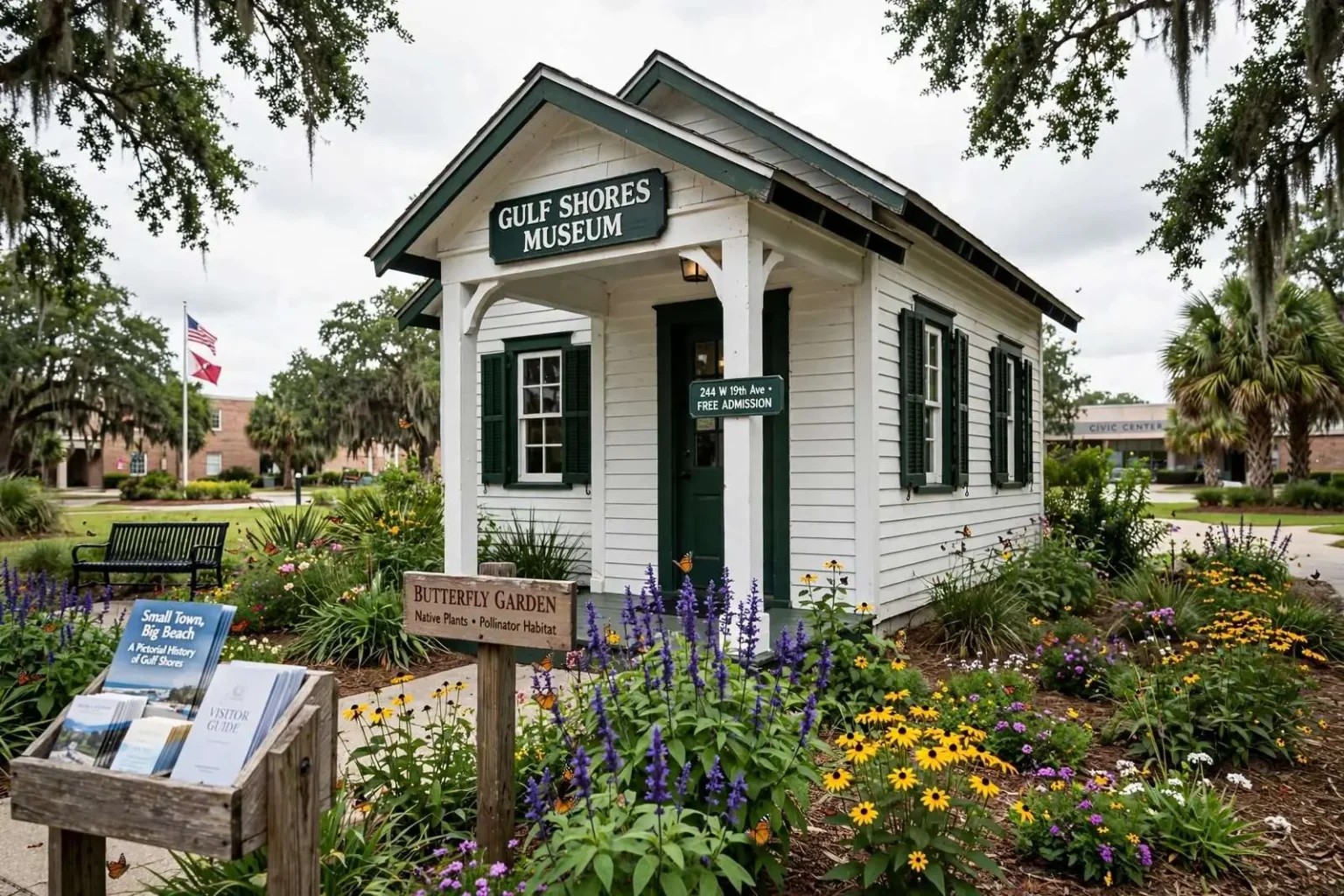
Most visitors to Gulf Shores can describe the beaches in detail and the city itself barely at all. The Gulf Shores Museum exists to fix that, and it does so from one of the most unexpected settings on the coast: a white cottage with dark green shutters that spent its early life as a family beach house before being moved a couple of miles inland in 1979.
The city-owned museum sits at 244 West 19th Avenue, a few miles from the sugar-white beach, in the municipal campus west of Highway 59 that also includes city hall, the fire station, the civic center and the library. Admission is free, and the visitor count follows a rhythm every beach town will recognize. Longtime museum administrator Christie Shannon says they get more visitors when it’s raining or there are purple or red flags, as people look for something else to do, and also get many locals entertaining visiting family and friends. For the uninitiated: a red flag means everyone must leave the water due to dangerous surf, and a purple flag warns of dangerous marine life. Both, as Shannon suggests, are excellent reasons to walk through the cottage door.
A City That Grew Up Fast
Inside, the exhibits make one point unmistakable: Gulf Shores became a city only in 1958, and its transformation from a humble fishing village into one of the region’s top tourist destinations happened in a remarkably short span. Photographs and ephemera from decades past give the place a nostalgia factor even though it is not strictly a history museum.
The city’s hardest chapters are represented too. A viewing area screens footage of the major hurricanes that have struck the coast, including Frederic, Ivan, Katrina and Sally, and exhibits also cover the Deepwater Horizon oil spill of 2010 and the COVID-19 crisis. The through-line is resilience: each time, Gulf Shores came back a bigger destination than before.
Tourism as History
For a town whose economy runs on visitors, the museum treats tourism itself as history. Shannon says their livelihood is tourism, so events like the Shrimp Festival and the Frank Brown International Songwriters Festival are also a big part of their ongoing history. The museum hosts community gatherings and holiday celebrations, and Shannon has been planning programming for the nation’s semiquincentennial, marking the 250th anniversary of the Declaration of Independence.
Most of what visitors see was donated, much of it by families who have lived in the area for generations. Often the items arrive after the loss of a family member, when survivors sorting through belongings find old photographs and letters they believe are worth preserving. Shannon welcomes gifts and loans but asks that anyone with such materials contact the museum first, rather than dropping items off without explanation.
Plan Your Visit
The grounds hold a butterfly garden out back, and the gift shop sells caps, t-shirts and coffee mugs along with copies of “Small Town, Big Beach,” a pictorial history of the community. The museum is open six days a week except for most major holidays: Tuesday through Friday from 10 a.m. to noon and again from 1 to 5 p.m., and Saturdays from 10 a.m. to 2 p.m.
The best part is that a visit requires no excuse. A rainy beach day will do, but so will curiosity about how a fishing village became one of Alabama’s most-visited destinations in barely two generations.
Related coverage from South AL News
- Same Date, Same Shoreline: Gulf Coast Marks 22 Years Since Ivan and Six Since Sally
- Hurricane Isaias Name: How a Retired Texas Storm Put Isaias on the 2026 List
- From Life Support to Sea Legs: The National Maritime Museum of the Gulf of Mexico Finds Its Course
- Frederic, Ivan, Sally, Opal and Zeta: What Alabama Hurricane History Says About Isaias