

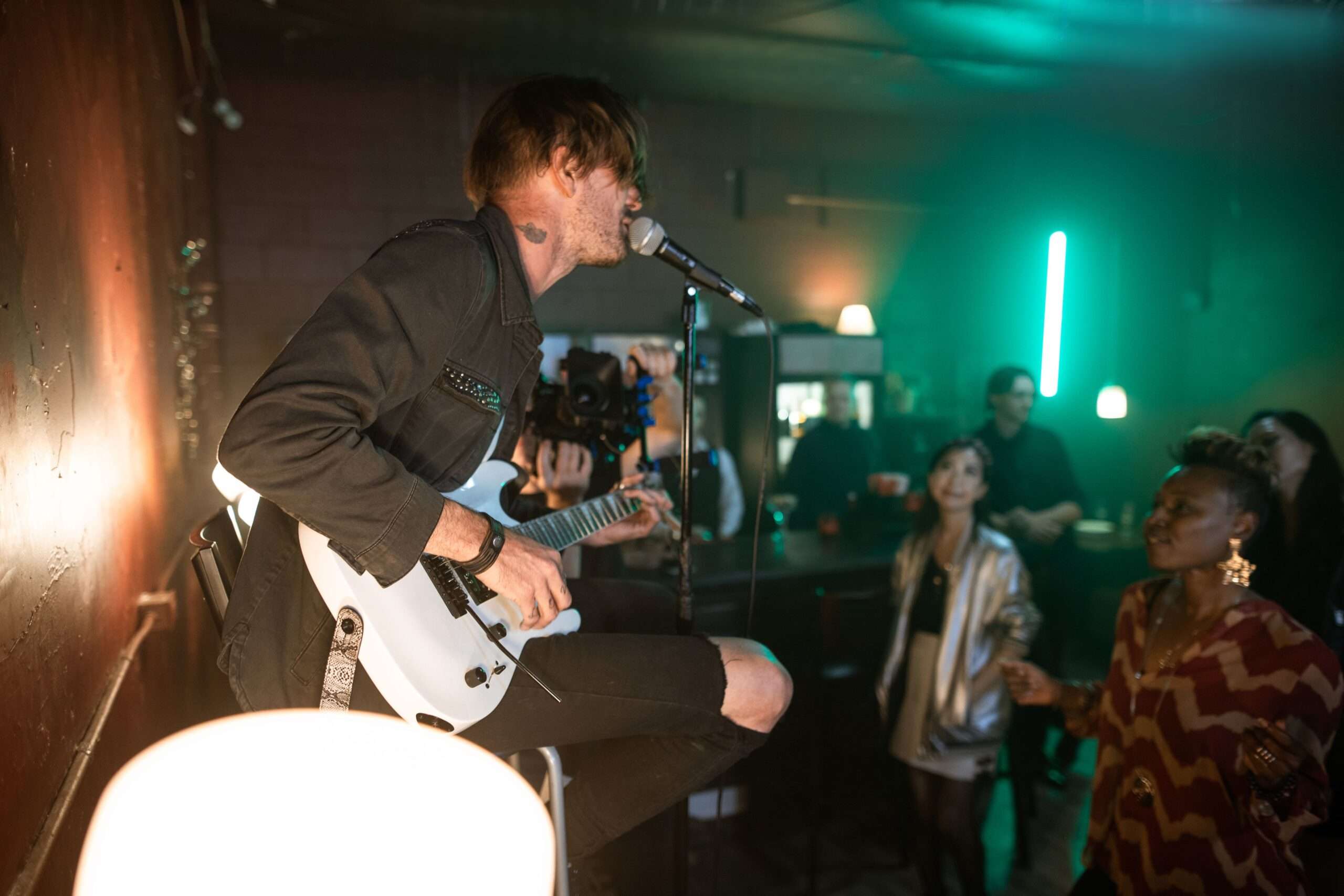
Before Morris Minor took the stage for an 8:30 p.m. set at Noell B's on Conception Street in downtown Mobile, frontman Greg Nobles sat down for a quick conversation about the band's origins, its most memorable Mobile gig, and why he believes coastal Alabamians owe it to themselves to support the musicians playing in their own backyard. Nobles formed Morris Minor seven years earlier, not long after moving back to Mobile from Birmingham.
He described the band as an outlet he needed at the time — a way to work through the songs that were piling up in his head after the move. That kind of homecoming story is a familiar one in Mobile's music scene: musicians leave for bigger cities, only to find their way back to the Port City and start something new once they're home. A British Name for an Alabama Band The band's name has nothing to do with Alabama at all.
A Morris Minor is a British-built car produced from the late 1940s into the 1970s, a small, boxy, economical vehicle that became one of the best-selling cars in the United Kingdom during the postwar era. It is the kind of everyday, unglamorous object that seems an odd fit for a band name, which may have been exactly the point — a modest, unpretentious label for a band built around plainspoken, direct songwriting rather than image or spectacle.
A Night at O'Rourke's Asked about his most memorable experience playing music in Mobile, Nobles didn't hesitate: a show Morris Minor played alongside singer-songwriter Jim White at O'Rourke's. White, an Americana and alt-country artist who built a national following through eccentric, literate songwriting, drew an unexpected visitor that night — Talking Heads frontman David Byrne, who had come out specifically to see White perform.
Nobles remembered the room as "a madhouse." The moment captures something particular about small regional music scenes like Mobile's: a low-key, unassuming club show can suddenly become a genuinely notable event when the right combination of touring and local artists collide.
Background and Context
Byrne, a founding member of one of the most influential rock bands of the late 20th century, was by 2009 known as much for his eclectic solo and collaborative work as for his Talking Heads legacy, and his presence at a Mobile club show would have been a striking moment for anyone in the room, band member or bystander alike. "Something Beautiful" When asked which single Morris Minor song coastal Alabamians should hear if they only had time for one, Nobles pointed to "Something Beautiful," describing it as the most positive song in the band's catalog.
He said he was, in his words, tired of negativity — a sentiment that lines up with the modest, sincere tone that ran through the rest of the interview. For a songwriter running a band named after an unassuming compact car, the preference for warmth over cynicism tracked as consistent with everything else he said that night. Plans and Philosophy Looking ahead, Nobles said the band's plans were straightforward: keep playing shows, keep recording new material, and keep looking for peace and harmony, both musically and personally.
When asked if he had any spiritual or philosophical advice to offer, his answer was simple and direct: be nice, and support local artists and musicians, because they need that support to keep going. That plea for community support is one that touring and gigging musicians across small and mid-sized cities have voiced for decades, and it remains just as relevant in local music scenes today. Independent musicians in cities the size of Mobile typically rely on a patchwork of income: door cover charges, tip jars, merchandise sales, and word-of-mouth crowds built one show at a time.
Without a robust support structure of major labels or large festival circuits, local acts depend heavily on regular audiences at neighborhood clubs and bars willing to book original, non-cover music on a given weeknight. Noell B's and Downtown Mobile's Music Venues The interview took place ahead of a set at Noell B's, a small venue on South Conception Street in downtown Mobile's historic core, an area long known for its concentration of bars, restaurants, and live music rooms within walking distance of one another.
Downtown Mobile's entertainment district sits near Dauphin Street and the Mobile Arts and Entertainment District, a stretch of blocks that has served for decades as a hub for local bands, singer-songwriters, and touring acts passing through the Gulf Coast. Venues in that corridor have historically operated on tight margins, relying on a mix of local regulars, downtown foot traffic, and cover bands or original acts to fill weeknight and weekend calendars alike.
Background and Context
Mobile's broader music identity has often been shaped by exactly the kind of grassroots, DIY effort Morris Minor represented: bands built by working musicians rather than industry backing, playing regularly in small rooms, building an audience gig by gig. That tradition traces back through Mobile's long relationship with blues, R&B, and rock traditions along the Gulf Coast, and continued through the 2000s as digital tools like band-hosted websites and early social networking platforms gave independent acts new ways to reach fans directly without needing a record label's marketing muscle.
The MySpace Era of Independent Music Morris Minor, like countless independent acts of the era, relied on MySpace as a primary online hub for sharing music and connecting with fans. Launched in 2003, MySpace became the dominant social platform of the mid-to-late 2000s and, notably, one of the first mainstream platforms to let unsigned bands host streaming songs, post tour dates, and build a following without needing traditional label distribution.
For a few key years, a band's MySpace page functioned much like a website, press kit, and fan community rolled into one, and it was common practice for local bands across the country, including in Mobile, to direct fans there for music samples and updates. The platform's dominance faded significantly after 2008 as Facebook and, later, other platforms took over much of that same function, but at the time of this interview it remained a standard tool for exactly the kind of independent regional band Morris Minor was.
A Snapshot of a Scene Interviews like this one, conducted before a show on any given weeknight, capture something that larger music journalism often misses: the day-to-day texture of a local scene sustained by musicians who keep writing, recording, and playing regardless of whether wider attention ever arrives. Nobles' answers were unpretentious and grounded — a band named for a humble car, a favorite song chosen for its optimism rather than its edge, and a closing message asking listeners simply to be kind and to show up for the musicians playing in their own city.
For readers interested in the broader context, small clubs like the ones that once lined downtown Mobile's core have long served as a proving ground for regional talent, some of whom go on to wider recognition and many of whom simply keep contributing, year after year, to the cultural fabric of the community. Conversations like this one offer a time capsule of that ecosystem: a working musician, a modest venue, and a simple ask to keep local music alive.
Wider Significance for Coastal Alabama
This story is part of a broader set of changes playing out across Mobile, Baldwin and the wider Gulf Coast region. Local residents, businesses and government agencies have been watching developments like this one closely, because decisions made in Mobile and Baldwin counties often ripple outward into neighboring communities across south Alabama, Mississippi and the Florida Panhandle. Public meetings, council work sessions and state legislative hearings have all carried echoes of the underlying concerns, with stakeholders ranging from neighborhood associations to industry groups weighing in on what the outcomes will mean for daily life along the Gulf Coast. Reporters and editors in the region have worked to document how these issues affect ordinary people, from commuters on Interstate 10 to families visiting the public libraries and parks that anchor so many of the Port City’s neighborhoods. The deeper context often emerges over months rather than days, as projects move from announcement to planning to construction, and as the people most directly affected find their voices in the public record. Continued coverage remains important, both for accountability and for the historical record, and the unfolding situation is one that warrants attention from anyone with a stake in the future of south Alabama.
Looking ahead, observers across the region expect the conversation to continue evolving. Local officials have signaled their intent to monitor outcomes closely, and community organizations have indicated they will remain engaged as new information becomes available. The intersection of state policy, local implementation and on-the-ground impact is precisely where stories like this one tend to develop their lasting significance. For Mobile and Baldwin residents, the practical effects will play out over time, in everything from tax bills and utility rates to traffic patterns and the availability of public services. Following the developments requires patience and attention to detail, but it is also a reminder of how civic life in coastal Alabama continues to be shaped by decisions that begin far from the neighborhoods they ultimately touch. Residents who want to stay informed can do so by following local government meetings, attending public hearings when significant issues arise, and reading the regional reporting that tracks how these stories progress from one phase to the next.
Local news organizations continue to follow this story closely, and updates are expected as more details emerge. The developments have generated discussion across the region, with attention from both longtime residents and newcomers who are following the issue for the first time. Community leaders have emphasized the importance of staying engaged with local government and participating in public meetings when significant decisions are being made. As the situation continues to unfold, residents are encouraged to remain informed through reliable local reporting and official city and county communications channels. The story remains active, and additional information is anticipated in the coming days and weeks as the relevant agencies and stakeholders complete their work.