

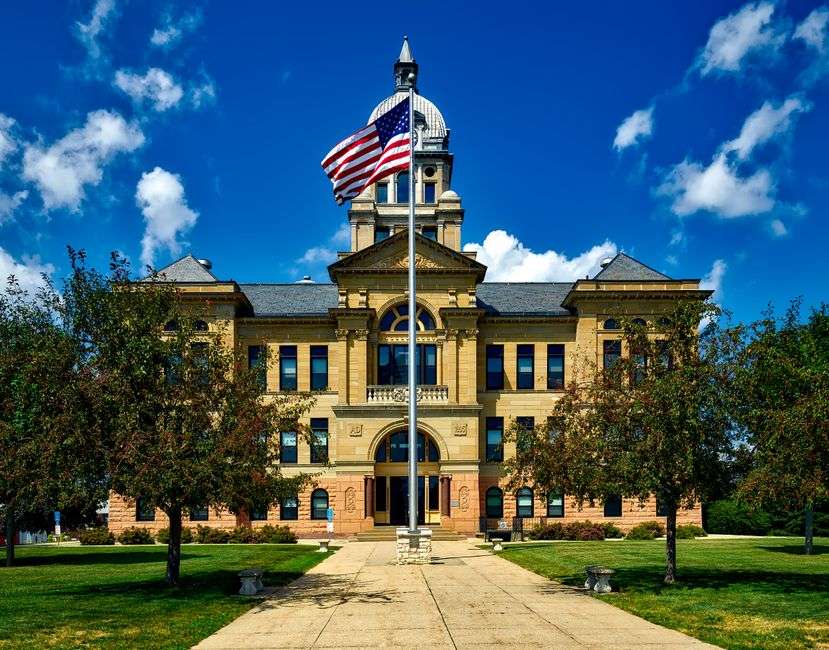
A long-simmering question is getting fresh attention in Mobile County: should the city of Mobile and the surrounding county combine into a single, unified metro government? The idea is not new, but recent friction between city and county officials over who pays for police and fire protection in certain neighborhoods has renewed interest in a consolidation model that other American cities adopted decades ago.
At the heart of the current dispute is a disagreement over service boundaries. Some Mobile city leaders have floated the idea of pulling back police and fire coverage for residents who live within the city’s police jurisdiction but outside the formal city limits, arguing that the county government should pick up those responsibilities instead.
The police jurisdiction is a feature of Alabama law that most residents of other states have never heard of. It extends a city’s regulatory and law-enforcement authority beyond its corporate limits — up to three miles for larger municipalities — and it puts thousands of suburban residents in the position of living outside the city, subject to some of its authority, and dependent on its police and fire protection without paying city property taxes. Extending services into the jurisdiction has been a quiet subsidy for decades; withdrawing them would shift real costs onto someone else’s budget.
County officials have pushed back, noting that major city events such as Mardi Gras draw enormous crowds and require significant law enforcement support, support that could be jeopardized if city and county leaders keep trading responsibility for who protects whom.
The Mardi Gras point is not a hypothetical. Mobile’s carnival season is among the largest special-event policing operations in the state, drawing hundreds of thousands of people downtown over several weeks and requiring overtime from officers across the region. County deputies and suburban departments have long played supporting roles around the festivities, and county officials see that help as part of the unstated bargain holding the two governments together.
Supporters of a merged government say the back-and-forth is exactly the kind of inefficiency that consolidation was designed to prevent. Rather than maintaining separate police forces, fire departments and administrative staffs for the city and the county, a unified metro government would combine services under one roof, eliminating duplicate leadership positions and overlapping bureaucracies.
Advocates argue the savings could be substantial and could free up money for infrastructure, public safety and other pressing community needs at a time when local budgets are frequently stretched thin.
The arithmetic they point to is straightforward: Mobile operates a full-scale police department and fire department, and the sheriff’s office and volunteer and municipal fire companies cover much of the rest of the county. Two purchasing systems, two personnel systems, two communications networks and two chains of command all cost money that a single government would spend once. Skeptics respond that consolidation’s savings are usually smaller than promised, because service demands in a city and in rural suburbs are not the same, and because merging pay scales and pension systems tends to raise costs before it lowers them.
The Precedent Elsewhere
The concept has precedent elsewhere in the country. Jacksonville, Florida, merged its city and Duval County governments in 1968, creating one of the best-known examples of city-county consolidation in the United States. Residents there have voted on and lived under a single metro government for more than half a century, and the Jacksonville model is often cited by consolidation advocates in Mobile as evidence that combining governments can work on a large scale.
Jacksonville’s consolidation grew out of the same dynamics Mobile now sees: a shrinking tax base inside the city limits, sprawling growth outside them, and duplicated services across an urbanizing county. The merged government that emerged became the template reformers in other metros have studied ever since.
Jacksonville is not the only example. Nashville and Davidson County, Tennessee, combined in the early 1960s; Augusta and Richmond County, Georgia, merged in the 1990s; and Louisville and Jefferson County, Kentucky, completed a consolidation at the turn of the millennium. Each case turned on local circumstances, and each left behind lessons about transition costs, district representation and the politics of persuading both city and county voters to approve a government neither side fully controls.
Each of those mergers also shows what consolidation does not fix. Combined governments still argue over which neighborhoods get services first, still carry pension obligations accumulated under the old separate systems, and still see some residents conclude that they are paying for someone else’s schools, roads or patrols. The supporters of consolidation in Mobile would inherit those realities along with the model.
Mobile’s Own History With the Idea
Mobile has flirted with the idea before. Former Mobile County Commissioner Steve Nodine was among the local officials who once pushed for a county-wide metro government, arguing that combining the city and county would end costly duplication of leadership and services.
That proposal never advanced to a public vote, but the underlying argument — that taxpayers are paying twice for services that could be delivered once — continues to resurface whenever city and county leaders clash over budgets and jurisdiction.
The recurrence is itself telling. Every few years, a dispute over annexation, drainage, roads or — as now — police and fire boundaries reignites the same conversation, and each time the argument stops where the politics begins. A merger is not something a mayor or a commission can accomplish alone; it requires persuading two electorates, a legislature and a generation of officeholders who owe their positions to the existing structure.
The demographics of the debate are also part of its history. The city of Mobile’s population has been roughly stable for decades while the unincorporated suburbs have grown, meaning more county residents depend on city-adjacent services while city taxpayers shoulder the fixed costs of an urban core. Consolidation advocates see that imbalance as an argument for merging; opponents see it as an argument that merging would simply shift suburban costs onto city taxpayers, or dilute the city’s political voice in a larger countywide electorate.
The Legal Road Ahead
Any move toward consolidation would face a long road. Alabama law would likely require both a legislative process and a public referendum before Mobile city and Mobile County government could formally merge, and similar efforts in other parts of the state and country have taken years, or failed outright, amid disagreements over representation, tax rates and control of local agencies.
Alabama’s constitution is famously restrictive about local government structure, and reorganizing a county’s fundamental shape is among the most consequential changes a legislature can make. A consolidated Mobile would need a new charter defining everything from district boundaries to how a combined council is elected, how the sheriff’s office and police department relate to each other, and what happens to the other municipalities in the county — Saraland, Prichard, Chickasaw, Satsuma, Daphne’s neighbors across the bay and the rest — that are not part of the city.
That last question is one of the reasons metro-government talk in Mobile County stays theoretical. Unlike Jacksonville in 1968, the county contains a dozen incorporated cities and towns, several of them larger and more assertive than the small jurisdictions that Duval County absorbed. A true countywide metro government would either absorb them — a political nonstarter — or sit alongside them in yet another layer, which defeats the purpose of eliminating duplication.
Still, with police and fire jurisdiction disputes once again testing the relationship between the Mobile City Council and the Mobile County Commission, some residents say it may be time to let voters decide whether a single metro government makes more sense than two overlapping ones.
For now, the disagreement over who provides law enforcement and fire protection in disputed areas remains unresolved, and no formal consolidation study or ballot measure is currently before city or county officials. But the debate over Mobile’s fractured system of local government, one that has quietly persisted for decades, shows little sign of going away.
What the current dispute has done is give the question a concrete edge. Until recently, the argument for consolidation was abstract — efficiency, duplication, economies of scale. Now it has a case study attached: the police jurisdiction, where residents live in the space between two governments, and each government has a reason to think the other should be responsible for them.
The stakes are highest for the residents themselves. A homeowner outside the city limits but inside the police jurisdiction pays county taxes, may drive on city-maintained roads, and currently counts on city police and fire response. If that coverage is pulled back, the county must either build capacity it does not currently have or the homeowner must accept slower response times — a change that would land hardest on neighborhoods where response minutes already run long.
Fire protection adds another dimension. In unincorporated Mobile County, fire service is delivered through a patchwork of fire districts and volunteer departments supplemented by the city, and coverage maps that work quietly day to day become contentious the moment a cost dispute moves a boundary line. Emergency medical response follows the same map, and none of it stops at the place where the city limits end.
Businesses in the police jurisdiction face their own uncertainty. The zone gives the city authority over business licensing and certain regulations outside its limits — authority that has been challenged in litigation across Alabama over the years, since the jurisdiction’s residents and businesses are often represented by no one who answers to them. A city can regulate within its police jurisdiction, but the people regulated cannot vote in city elections. That representation gap is one of the quiet arguments for consolidation, and one of the loudest complaints about the status quo.
None of this guarantees that the merger conversation advances beyond talk. The friction that produces it tends to fade once a particular dispute is settled, and the structural interests arrayed against consolidation — elected officials in both governments, suburban municipalities, labor contracts and pension systems — remain as formidable as ever.
But the conditions that keep the question alive are also permanent features of the landscape. A city surrounded by unincorporated growth it partially serves and does not govern; a county government asked to cover what the city sheds; a carnival season that requires both governments to work together every winter; and a state legal structure that gives each side its own lever to pull in a dispute. The next time the boundary question flares — and in Mobile County’s history, it always flares again — the argument will begin from the same place: two governments, one community, and the question of which form serves it better.