

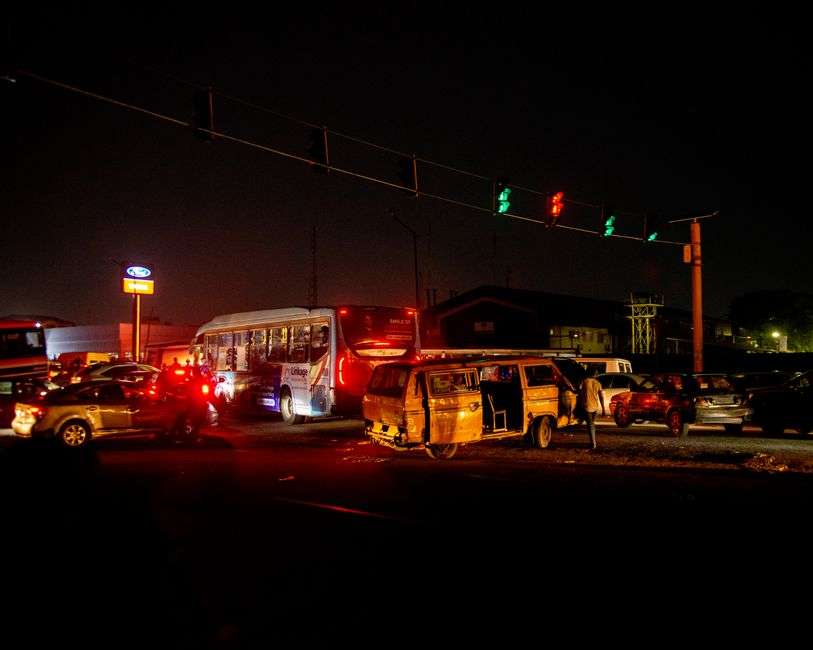
MOBILE, Ala. — Mobile Police say one person suffered severe, life-threatening injuries and another was hurt in a head-on collision Sunday afternoon at the intersection of Schillinger Road and Grelot Road in west Mobile. Officers responding to the intersection found a head-on crash involving at least two vehicles, according to police, who said the front-end collision left one vehicle’s occupants facing the most serious consequences of the impact.
One person was taken to a local hospital with severe, life-threatening injuries, while another sustained a minor, non-life-threatening injury, according to police. The difference in injury severity between the two patients reflects the violence of a head-on crash, in which the closing speed of two vehicles traveling in opposite directions is absorbed largely by the front of each car and by the occupants nearest the point of impact. Authorities have not released the identities of those involved, and police did not say which vehicle each injured person had been riding in.
Mobile Police say the crash remains an active investigation, and no further details were immediately available. Investigators have not stated what caused the vehicles to collide head-on, and the department has not said whether speed, impairment, distraction or a medical event is suspected. Those determinations typically come only after officers have completed scene measurements, interviewed witnesses and, when warranted, reconstructed the collision.
The intersection where it happened
Schillinger Road and Grelot Road anchor one of west Mobile’s busiest suburban crossroads. Schillinger Road runs north-south through the rapidly developed corridor between Moffett Road — U.S. Highway 45 — and Airport Boulevard, threading past subdivisions, schools and shopping centers that have filled in the area over the past three decades. Grelot Road extends east-west, connecting the Schillinger area toward Hillcrest Road and the commercial strips along Cottage Hill Road. The junction serves thousands of vehicle movements a day, a mix of commuter traffic, school runs and shoppers moving among the west Mobile neighborhoods.
Intersections like Schillinger and Grelot carry a familiar risk profile. Wide, multi-lane approaches encourage higher speeds, and left turns across opposing traffic create the conflict points that produce some of the most severe crashes. A head-on collision at an intersection can arise from a driver turning across oncoming lanes, crossing the centerline while negotiating a turn, or a vehicle traveling the wrong direction — and investigators must sort among those possibilities using physical evidence such as final rest positions, damage patterns and skid or gouge marks on the pavement.
How head-on crashes injure
Head-on collisions are among the deadliest crash types on American roads despite accounting for a small share of total crashes, and the physics explain why. Two vehicles closing on each other combine their speeds, so a crash at modest individual speeds can still deliver an impact comparable to a high-speed collision with a fixed object. Modern vehicles are engineered with crumple zones, reinforced passenger compartments and airbag systems designed around frontal impacts, but the protection any vehicle provides has limits, and the severity of injury in a head-on crash rises steeply with the closing speed.
Occupant position matters as well. The person seated nearest the point of impact typically absorbs the greatest forces, which is why drivers or front-seat passengers in the struck vehicle often suffer the most serious injuries while occupants elsewhere in the vehicle fare better. Emergency responders arriving at a head-on crash scene triage patients accordingly, prioritizing those with life-threatening trauma for rapid transport to trauma-capable hospitals — in Mobile, that means transport toward the city’s designated trauma center rather than the closest emergency room. The Sunday crash’s injury pattern, one critical patient and one minor injury, is consistent with that uneven distribution of forces.
The response and investigation
When officers are dispatched to a crash with life-threatening injuries, the first units on scene handle three jobs at once: stabilizing patients until medics can take over, directing traffic away from the wreckage and preserving the evidence an investigation will need. West Mobile’s road network allows rerouting around the Schillinger-Grelot junction, but closures at that intersection ripple through the neighborhood for hours, as drivers who use the crossing daily discover alternate paths through the surrounding subdivisions.
The investigation that follows a serious-injury crash mirrors the work done in fatal collisions, though on a shorter timeline. Officers document the scene with photographs and measurements, canvass for witnesses and nearby surveillance video, and examine the vehicles for mechanical evidence. Statements from those involved, once they are able, and any citations or charges come at the end of that process. Mobile Police noted only that the crash remains an active investigation, and the department said no further details were immediately available.
For residents of west Mobile, the Sunday collision is a reminder of the risks at the junctions they cross every day. Safety officials’ standard advice applies in every direction: approach busy intersections at speeds that allow full stopping distance, watch opposing traffic when turning left, eliminate distractions, and never assume an oncoming driver will do what you expect. Anyone who witnessed the crash or has information that could aid investigators is generally encouraged to contact Mobile Police. This article reflects the information the department released; further details would come only as the investigation concludes.
West Mobile’s growth and its roads
The Schillinger-Grelot corridor tells the story of west Mobile’s transformation. Much of the area was pine forest and farmland into the 1970s and 1980s, before the wave of residential development that followed the extension of city services westward. Today the neighborhoods between Moffett Road and Airport Boulevard are among the most densely settled parts of Mobile outside the downtown peninsula, and the road network — two-lane collectors widened in stages, intersections signalized as traffic grew — bears the imprint of that incremental expansion.
Schillinger Road itself carries a heavy share of that load. As the principal north-south route through the area, it funnels commuters toward Moffett Road and the industrial and port jobs beyond, and it collects traffic from the subdivisions that branch off it in every direction. Grelot Road performs the east-west complement, linking the corridor to Hillcrest Road and the commercial heart of west Mobile around Cottage Hill Road. The result at their junction is a crossing that functions like a small town square for tens of thousands of residents, with all of the congestion and conflict that implies.
Transportation planners have long recognized that corridor’s pressures. Signal timing, turn lanes and shoulder improvements have been adjusted over the years as development added traffic, and crash history at major west Mobile intersections drives periodic reviews by the city and the Alabama Department of Transportation. Sunday’s crash occurred at the kind of crossing where those reviews concentrate: high volume, multiple turn movements and approaches that invite speed.
The emergency response network in west Mobile
Getting a critically injured patient from the Schillinger-Grelot intersection to definitive care depends on a response chain that west Mobile residents rarely see until they need it. Fire stations and EMS units positioned across the corridor provide the first medical contact, with responders trained to stabilize trauma patients at the scene and en route. The transport decision — where to take a patient with life-threatening injuries — follows regional trauma protocols that route the most seriously hurt to a designated trauma center rather than the nearest emergency department, because survival in major trauma improves markedly when patients reach a facility with surgical teams and blood banks ready.
That geography matters in a crash like Sunday’s. West Mobile sits some distance from the city’s downtown medical complex, so transport times for critical patients can run long even with lights and siren. Traffic on the corridor, the need to close and reroute around the crash scene, and the work of extrication if patients are trapped all add minutes. It is one reason police and fire officials emphasize intersection safety so consistently: the best outcome is the crash that never happens, because the trauma system’s job begins only after the worst has occurred.
What comes next in the investigation
As the active investigation proceeds, several threads typically come together. Physical evidence from the scene — the orientation of the vehicles, the distribution of debris, the location and length of any skid marks — establishes how the collision occurred and allows reconstruction of approximate speeds. Witness statements from drivers and residents along the corridor fill in the moments before impact. Vehicle examinations can reveal mechanical failures, and toxicology testing may be ordered where impairment is a question. The department’s eventual findings determine whether any citations or charges result, and whether the crash contributes to the city’s ongoing intersection safety data.
The identities of those involved remain unreleased, consistent with the department’s practice of withholding names while families are notified and the investigation is young. For the neighborhood around Schillinger and Grelot, the visible signs of the investigation — the closed lanes, the measured pavement, the damaged vehicles — will disappear within hours. The lasting questions, about what caused two vehicles to meet head-on at a crossing thousands of people use every day, will take longer to answer, and Mobile Police said only that the work remains active and that no further details were immediately available.