Cuba Aid Caravan Brings Its Appeal to Mobile
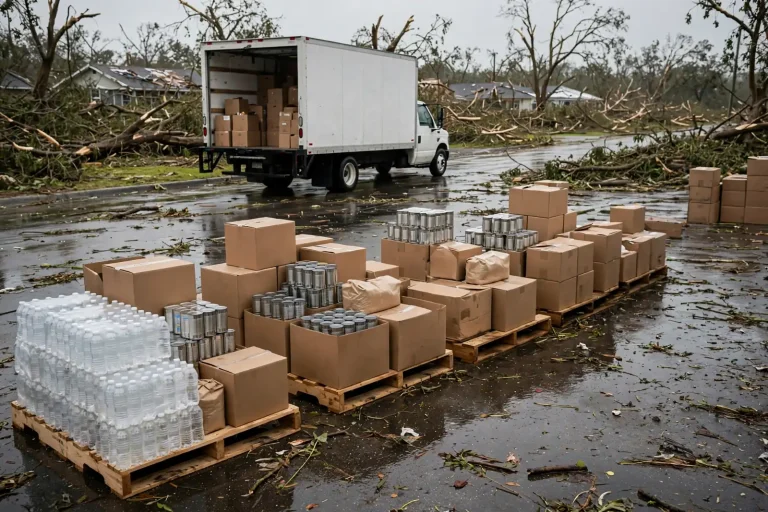
Pastors for Peace routed its 22nd Friendshipment Caravan through Mobile, staging a rally against U.S. travel and trade restrictions on Cuba as part of a monthlong national tour.
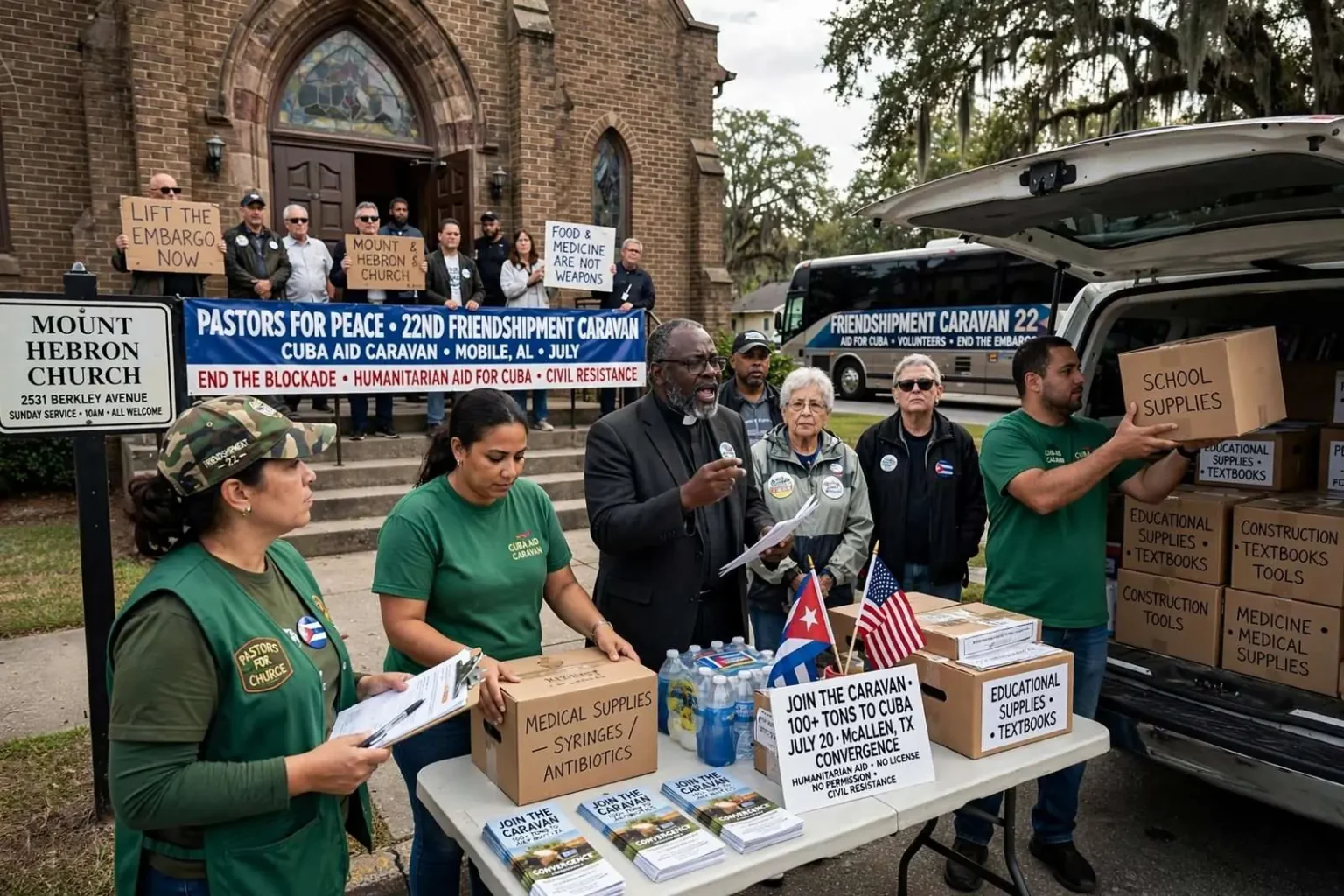
A national caravan challenging the U.S. blockade of Cuba brought its message to Mobile, staging a rally as part of a monthlong tour that organizers billed as an act of civil resistance against travel and trade restrictions they called immoral and illegal. The stop placed the Port City on the itinerary of one of the country’s most persistent protest traditions, and it gave local residents a chance to hear an argument about American foreign policy that rarely gets a public hearing on the Gulf Coast.
The Pastors for Peace 22nd Friendshipment Caravan scheduled its Mobile event for 5 p.m. at Mount Hebron Church, 2531 Berkley Avenue. The program featured speakers, discussion and a new film about Cuba, drawing supporters of a shift in U.S. policy toward the island. Church venues have long anchored the caravan’s route, reflecting the faith-based roots of the organization and the congregations that host its volunteers as they wind across the country collecting aid and building support.
A cross-country journey
Mobile was one stop on a much larger itinerary. The caravan’s organizers said a highlight would come on July 20, when more than 100 volunteers carrying some 100 tons of humanitarian aid planned to converge on McAllen, Texas, and cross toward Cuba without U.S. Treasury Department licenses. The border city near the Gulf has served as the staging ground for previous friendshipment caravans, where buses, trucks and volunteers from dozens of routes merge into a single convoy before attempting the crossing.
The volunteers intended to deliver school buses, construction tools and materials, educational supplies, medicines and medical supplies that had been gathered in communities across the United States and Canada. The cargo is assembled item by item over months of local collection drives — boxes of syringes and antibiotics, crates of textbooks, donated school buses refitted for the journey — with each host community asked to contribute what it can toward the eventual shipment.
Organizers said they had identified 130 host communities, Mobile among them, that supported a new U.S.-Cuba relationship grounded in respect and non-aggression. The host-city model is central to how the caravan works: in each town, local volunteers arrange a venue, publicize the event, put up traveling participants overnight and send them on with supplies and donations, so that by the time the convoy reaches the border it carries both cargo and the names of thousands of supporters from hundreds of cities and towns.
For Mobile, inclusion on the list placed the city alongside communities far larger, and reflected the work of local organizers who arranged the Mount Hebron Church venue and spread word through congregations, peace groups and campus organizations across the area.
The case against the blockade
The group framed its effort in the language of international law. It contended that longstanding U.S. policy amounted to a violation because it allegedly used food and medicine as weapons of war to pressure another sovereign government to bend to Washington’s political will. That argument draws on the U.S. embargo’s tightening over the decades and on humanitarian critiques of restrictions that make it harder, organizers say, for ordinary Cubans to obtain everyday medical supplies — not the island’s government.
By deliberately traveling without federal licenses, the caravan’s participants sought to draw attention to restrictions they regarded as unjust, a tactic the organization had employed on previous journeys. Unlicensed travel and delivery to Cuba can carry civil penalties under the embargo regulations administered by the Treasury Department, and the caravan’s organizers have long treated the possibility of enforcement as part of the point: a public, documented challenge intended to force a conversation about why licenses are required at all.
The rally in Mobile gave local supporters a chance to hear firsthand accounts and to view the film that accompanied the tour. Speakers on past caravans have included veterans of previous friendshipment journeys, clergy who have traveled to Cuba, and local residents with family or professional ties to the island, and the discussion periods typically give audiences a direct exchange with people who have seen the effects of the embargo up close.
The 22nd caravan’s route came at a moment when debate over Cuba policy was active in Washington, with legislators from both parties periodically proposing to ease travel and agricultural export restrictions. Organizers argue that public opinion — particularly in Gulf Coast states with long maritime and trading traditions — favors engagement over isolation, and events like the Mobile rally are designed to convert that sentiment into visible local support.
A local hand in the arrangements
The event carried a distinctly local footprint. Organizers directed those seeking more information to local contacts involved in arranging the Mobile stop, and the rally depended on volunteers from area congregations and civic groups to handle logistics — publicity, refreshments, transportation for the traveling participants and the gathering of aid items for the convoy.
Mount Hebron Church, the host site on Berkley Avenue, fits the pattern of past caravans, which have relied on houses of worship across the country precisely because congregations can mobilize donations and volunteers quickly. Church basements and fellowship halls along the route serve as collection points, sleeping quarters and meeting rooms, and the hosting relationship often outlasts the caravan itself, with congregations continuing to collect medical and educational supplies for later shipments.
What the blockade means locally
Supporters of the caravan argue that the embargo is not an abstraction for Gulf Coast residents. Mobile is a port city whose maritime economy was built on trade with the Caribbean and Latin America, and business groups over the years have joined agricultural interests in urging normalized commerce with Cuba, envisioning shipping routes, agricultural exports and port traffic that current restrictions foreclose. The caravan’s organizers see that local economic stake as a natural point of agreement with their moral argument.
The aid cargo itself tells the story the group wants told. School buses collected in American communities are intended for Cuban schools; construction tools and materials are destined for rebuilding projects; medical supplies address shortages that advocates attribute directly to the embargo’s rules. Organizers have long emphasized that the shipments are humanitarian and that the point is not ideology but the ability of ordinary Cubans to receive medicine, textbooks and equipment that the blockade’s critics say should never be withheld.
Civil resistance on the Gulf Coast
The Mobile rally formed part of a monthlong tour that has, caravan after caravan, treated each host city as both a waypoint and a witness. The organizing model has changed little across the journeys: announce the event through faith and peace networks, gather locally donated aid, present the film and the speakers, and send volunteers on to the next stop carrying letters, supplies and momentum. By the time the convoy reaches the border, the caravan’s leaders present it as a moving referendum on the embargo, backed by residents of the 130 host communities.
The gathering in Mobile also connected the city to the caravan’s wider summer schedule, which built toward the July 20 convergence stop by stop. Between host communities, volunteers carried collected supplies aboard the caravan’s vehicles, so that the tonnage announced for the border staging grew as the tour progressed — a deliberate demonstration, organizers said, of how much aid ordinary communities could assemble when the restrictions were set aside and residents were simply asked to help.
For the volunteers who ride the routes, the caravans are equal numbers protest and pilgrimage. Many are veterans of earlier friendshipments; others are students or clergy making the trip for the first time. They travel in donated buses and vehicles, stopping to speak in each host community, and their accounts from the road become the raw material of the next year’s organizing.
The restrictions the caravan challenges have shaped daily life on the island for decades. Under the embargo’s rules, travel between the two countries is tightly limited, most American trade with Cuba is prohibited, and humanitarian shipments generally require specific licenses before they can legally cross. The caravan’s organizers argue those licensing requirements turn what they describe as ordinary charity — a box of syringes, a rebuilt school bus — into a federal offense, and they have made the paperwork itself the target of their protest since the first friendshipment rolled toward the border.
Whether the July 20 crossing proceeded without federal interference, and how Treasury officials responded to the unlicensed convoy, remained to be seen as the tour advanced toward the border. What was already clear from the Mobile stop was the breadth of the network behind it: a quarter-century of organizing, cargo gathered from across two countries, and host cities — including Mobile — willing to put their names and their meeting halls behind an open challenge to a policy the caravan’s participants consider unjust.
Local supporters who attended the Mount Hebron event were encouraged to join future collection drives, and organizers said continued donations of medical and educational supplies from host communities remain the lifeblood of the friendshipment model between the caravan seasons.