

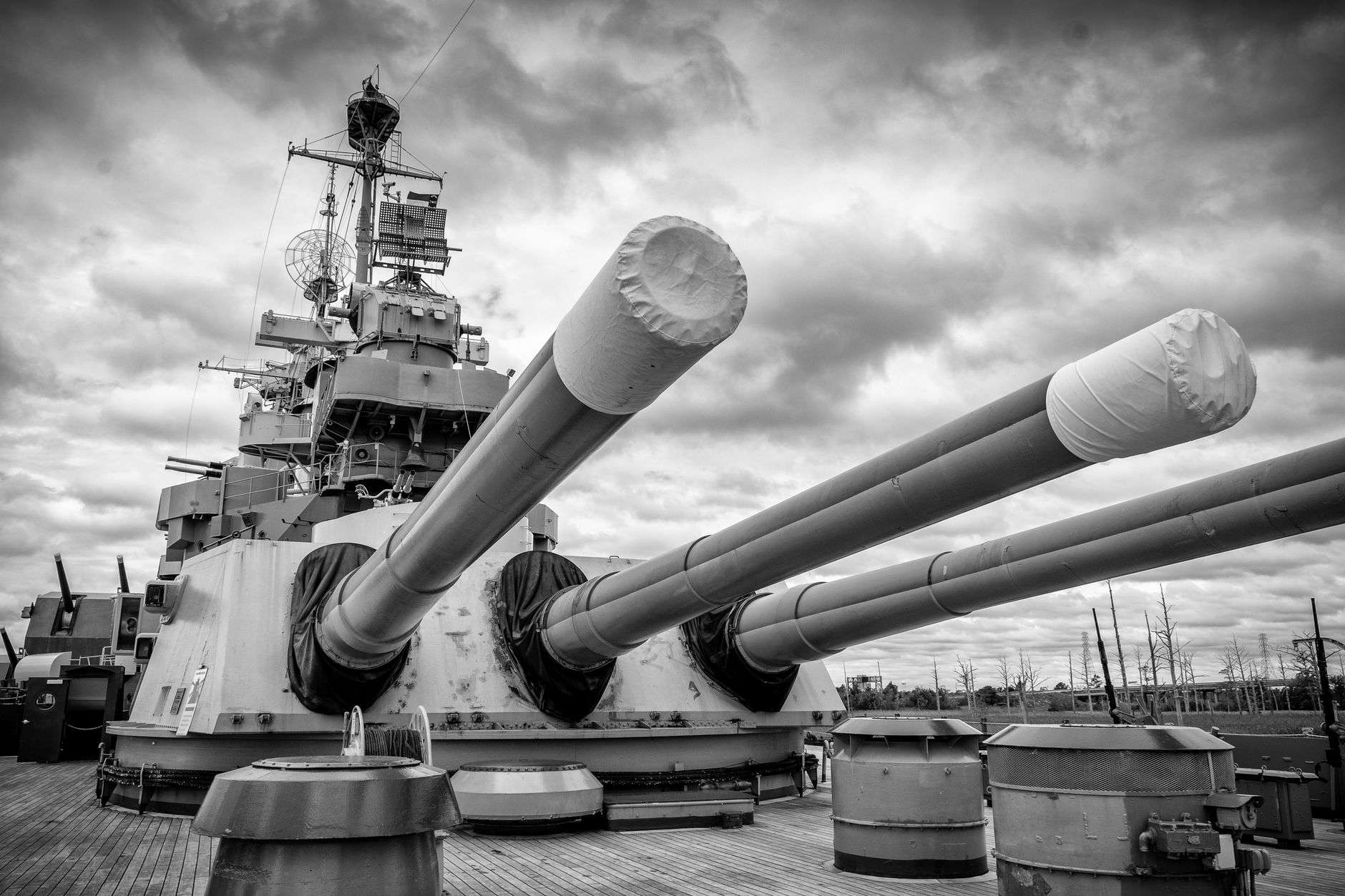
More than six decades ago, a statewide army of schoolchildren emptied their pockets of pennies, nickels and dimes to accomplish something no government budget would pay for: bringing the battleship USS Alabama home. The fundraising drive, remembered as Operation BB-60 after the ship’s hull number, turned a warship bound for the scrapyard into the centerpiece of USS Alabama Battleship Memorial Park in Mobile and one of the most recognizable landmarks in the state.
The story of how the USS Alabama schoolchildren campaign came together is a reminder of what ordinary Alabamians can do when they rally around a common cause, and it includes a few surprising names among the kids who chipped in.
From Tokyo Bay to the Panama Canal
The most dramatic moment of the journey came at the Panama Canal. On a hot, tense day, reporters and curious onlookers gathered to watch the massive battleship, weighing roughly 45,000 tons, squeeze through the canal’s locks. Suspense built as spectators saw just how little room there was: only about 11 inches of clearance on each side of the hull.
That tight fit was no accident of design. The locks of the original Panama Canal are 110 feet wide, and American battleships of the era were built to the so-called Panamax limit so they could move quickly between the Atlantic and Pacific. The result was a ship that could pass through the canal, but only barely, and every foot of the transit had to be carefully managed.
The USS Alabama was one of four battleships in the South Dakota class, a group of fast, heavily armed ships built as the United States prepared for the possibility of war. Construction began in 1940, and once in service the ship and its crew of about 2,500 sailors served in both the North Atlantic and the South Pacific during World War II.
In September 1945, the Alabama helped lead the victorious American fleet into Tokyo Bay for the Japanese surrender. The ship its crew called the “Mighty A” earned nine battle stars for its service and the nickname “Heroine of the Pacific.”
After the war, the Alabama was decommissioned and placed in the Navy’s reserve fleet at Bremerton, Washington, along with many other ships that were no longer needed in peacetime. For years it sat quietly in Puget Sound, its future uncertain.
Why the Navy Was Letting Battleships Go
By the early 1960s, naval warfare had changed dramatically since the ship’s heyday. World War II had shown that the aircraft carrier, not the battleship, was the true capital ship of the modern fleet, and the arrival of guided missiles and nuclear-powered submarines further reduced the role of big-gun warships. Maintaining mothballed battleships was costly, and the Navy began disposing of many of the vessels it no longer expected to use.
For communities with ties to those ships, that shift presented a choice: let a piece of history be cut apart for scrap metal, or find a way to preserve it. Several states and cities launched campaigns during this period to acquire decommissioned ships named for them, and Alabama would become one of the most memorable examples.
Mobile had its own deep connection to the war effort. During World War II, the city’s shipyards built and repaired vessels around the clock, and its population swelled with workers who came to the Gulf Coast for defense jobs. For many residents, bringing a World War II battleship to Mobile Bay felt like a natural way to honor that generation.
A Newspaper Notice Sparks a Movement
In May 1962, the federal government announced that the Navy would send the South Dakota-class battleships, including the USS Alabama, to the scrapyard. Jimmie Morris, a member of the Mobile Chamber of Commerce, saw the announcement in the newspaper and became alarmed.
That very day, Morris organized a committee of concerned Alabamians with an ambitious goal: not only to save the battleship but to bring it home to the Port of Mobile. The effort gained momentum quickly. In September 1963, the Alabama Senate gave its approval for the project, and Gov. George C. Wallace proclaimed, “Let’s bring our ship home!”
The state created a battleship commission to oversee the effort, a body that continues to govern Battleship Memorial Park today. But approval alone did not solve the most pressing problem.
Pennies, Dimes and the Longest Tow in Navy History
There was no budget to pay for the project. The solution was to get the state’s schoolchildren involved. Under the slogan “Let’s Bring Our Ship Home!”, students organized in schools across Alabama, donating pennies, nickels, dimes and, occasionally, quarters. Some businesses added to the fund, and restaurants in Birmingham donated what they took in from their customers on a single day.
The first school system to meet its fundraising goal was the city of Opp, a small town in Covington County in south-central Alabama. By 1964, the schoolchildren and other fundraisers had collected enough money to pay for the ship’s journey to Mobile.
The campaign became a point of pride that many Alabamians still talk about. For a generation of students, it was their first experience with civic action, and the payoff was tangible: a real battleship they could visit and call their own.
Moving a 45,000-ton ship without its own power was an enormous undertaking. The battleship was towed 5,600 miles from Bremerton, Washington, to Mobile, a trip that took two months after it began in July 1964. The journey still holds the record for the longest non-military dead-weight tow in the history of the U.S. Navy.
In a fitting tribute, Navy sailors who had served aboard the battleship during World War II were among those on hand for the homecoming. The USS Alabama arrived in the Port of Mobile on September 14, 1964. After some refurbishing, it opened to the public in January 1965.
A National Historic Landmark on Mobile Bay
Today the USS Alabama is a National Historic Landmark and the anchor of USS Alabama Battleship Memorial Park, which sits along the Causeway on the western edge of Mobile Bay, just across the water from downtown Mobile. The ship has been restored to reflect how it looked during its World War II service.
The park hosts several World War II historical reenactments each year, and nearly 20 million visitors have stepped aboard since it opened. School groups and organizations such as the Boy Scouts often hold overnight campouts on the ship, giving young people a taste of life in a sailor’s bunk.
In 1969, the park grew with the addition of the USS Drum, a 311-foot World War II submarine that was also donated. The Drum opened for tours on July 4, 1969. The park’s website describes the USS Alabama as “easily the most recognizable symbol of the State of Alabama.”
The Alabama was not the only South Dakota-class battleship saved by a local campaign. Its sister ship, the USS Massachusetts, is preserved as a museum ship in Fall River, Massachusetts. The other two members of the class were scrapped, making the two surviving ships rare reminders of an era when battleships were the pride of the fleet.
A Lifetime Pass and Some Famous Donors
The schoolchildren who donated received something in return. Each was awarded a USS Alabama Charter Member Card that allows the holder to tour the battleship at no charge, with no expiration date. Many of those cards are still tucked away in wallets and keepsake boxes across the state.
Some of those young donors went on to become well known. Don Siegelman, a former student at Murphy High School in Mobile, later became governor of Alabama. Terry Ankerson, who served as the student body campaign chair at the former McGill Institute, now known as McGill-Toolen Catholic High School, went on to serve on the Battleship Commission.
Another McGill Institute student who contributed would later become known around the world as musician and author Jimmy Buffett, the singer behind hits such as “Margaritaville” and “Cheeseburger in Paradise.” Buffett, who grew up in Mobile, donated two of his airplanes, a Stearman biplane and a Grumman, to Battleship Memorial Park in 2022, before his death in 2023.
Visiting Battleship Memorial Park
For anyone who has not been aboard in years, or at all, the park remains one of the Gulf Coast’s signature attractions. A few things to know before you go:
- The park is located on Battleship Parkway, along the Causeway between Mobile and the Eastern Shore, and is easy to reach from Interstate 10.
- Visitors can explore the battleship’s decks, gun turrets and interior spaces, tour the USS Drum and see the park’s collection of historic military aircraft.
- Wear comfortable shoes and be ready for ladders and narrow passageways, especially below deck and inside the submarine.
- Check the park’s official website for current hours, admission prices and special events such as reenactments and overnight youth programs.
- If you or a family member donated as a child, it is worth asking about the Charter Member Card before paying admission.
More than 60 years after Alabama’s schoolchildren brought their ship home, the USS Alabama remains a testament to their pocket change and their determination. Every visitor who walks its decks today is, in a sense, a guest of those students.