

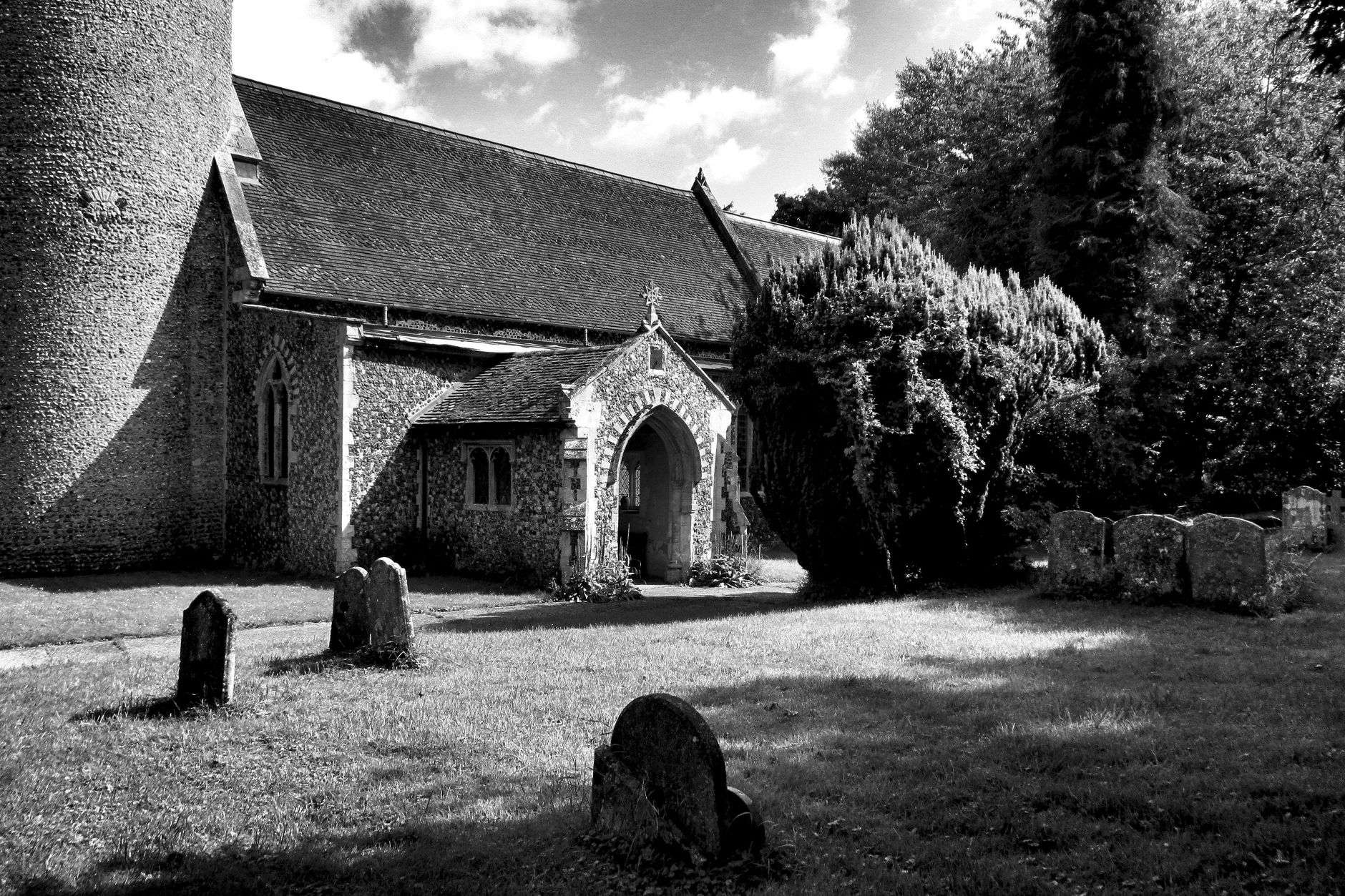
Tucked among the weathered headstones of Pleasant Grove Baptist Cemetery in Clarke County are two markers unlike most others on the grounds. Neither stands over a body. Both honor young men from the area who went to sea during World War II and never came home, their remains lost to the ocean along with the vessels that carried them. The cemetery sits beside Pleasant Grove Baptist Church, a congregation established in 1858, and it holds generations of the same extended families, many of whom trace their roots directly to the two men remembered by these markers. The grave shelter that stands over part of the burial ground is one of only a handful still found anywhere in Clarke County, adding to the site’s significance as a piece of local history that has endured for well over a century. Visitors who come to Pleasant Grove often spend a few quiet minutes at these markers, reflecting on the connection between a small Clarke County community and the larger story of America’s wars.
A Merchant Marine Lost Off the Coast of Trinidad
One marker bears the name of Clarence Lowrey, a young man whose exact birthplace has been lost to time but whose family ties to Clarke County are unmistakable. His grandfather, father, mother and other relatives were all laid to rest at Pleasant Grove. After his father died while Lowrey was still a teenager, he moved with his mother to Mobile County, where he later signed on with the Merchant Marine, most likely around the time the United States entered World War II. Lowrey began his service as a wiper, an entry-level position aboard ship that doubled as on-the-job training in basic seamanship. At just 19 years old, he was serving aboard the Alcoa Pilgrim, an unarmed cargo freighter making the run from Trinidad to Mobile, when a German U-boat torpedoed and sank the ship in May 1942. Of the 40 crew members aboard, 31 were lost, including both the captain and Lowrey himself. The attack came only about six months after the United States formally declared war, and local historians note that Lowrey may well have been Clarke County’s first casualty of the conflict, even though he served as a civilian mariner rather than as a member of the military.
The Wartime Service of a Coast Guardsman
The other marker honors a Coast Guardsman whose family also has deep roots in the Pleasant Grove community. He served aboard a Coast Guard cutter that was lost in the Atlantic during the war, with most of its crew reported missing and presumed dead. Like Lowrey, he left behind family members in Clarke County who would spend decades hoping that some news might surface about the men lost at sea. The Coast Guard, which was responsible for port security, convoy escort and search-and-rescue work during the war, suffered significant losses even though its members are rarely counted among the high-profile casualties of the conflict. For families in Clarke County and elsewhere along the Gulf Coast, the loss of a Coast Guardsman was just as devastating as the loss of a soldier, sailor or Marine, and the markers at Pleasant Grove are part of how the community has chosen to remember them.
The Alcoa Steamship Company and Gulf Coast Shipping
The Alcoa Pilgrim was one of several cargo ships operated by the Alcoa Steamship Company, a subsidiary of the Aluminum Company of America that moved bauxite, alumina and aluminum products between the company’s operations in South America and its processing plants in the United States. Many of those ships sailed out of Mobile, where ALCOA maintained docks and warehouses along the Mobile River. The Alcoa fleet was a frequent target of German submarines in the early years of the war, particularly along the Caribbean run where U-boats found easy prey in the slow, unarmed freighters that connected Gulf Coast ports to South American suppliers. Several Alcoa ships were sunk during the war, and the loss of the Pilgrim in 1942 was among the more significant casualties for the company and for the Merchant Marine fleet based in Mobile.
How the Markers Came to Be Placed
Memorial markers like those at Pleasant Grove have been placed at cemeteries across the country by veterans’ organizations, family members and historical societies. The markers do not stand over graves because there are no graves; the men they honor were lost at sea and their remains were never recovered. Instead, the markers serve as a place where family members and community members can come to remember the missing and to honor their service. The markers at Pleasant Grove were placed by family members in cooperation with the church, which has cared for the cemetery grounds continuously since the 19th century. The markers have been kept in good condition through regular maintenance, and the families who placed them have continued to visit the site on Memorial Day and Veterans Day to lay flowers.
Clarke County and the World Wars
Clarke County, like most of rural Alabama, sent a significant share of its young men off to fight in both world wars. The county’s population in the early 1940s was largely agricultural, with families making their living from timber, cattle and small farms. Many of the young men who went into military service during World War II came from families with deep roots in the county, and the loss of any one of them was felt across multiple communities. The markers at Pleasant Grove are part of a broader pattern of local remembrance that includes similar memorials in other Clarke County cemeteries, in town squares and at the courthouse in Grove Hill. Taken together, these memorials form a record of the county’s contribution to the wars of the 20th century and of the sacrifices made by families who lost sons, brothers and fathers in service to the country.
What the Markers Mean Today
For current residents of Clarke County, the markers at Pleasant Grove are a reminder of how deeply the community was touched by the wars of the last century. The names on those markers are still remembered by older family members, and the stories of how the men died have been passed down to younger generations. Local schools and historical societies have used the markers as starting points for lessons on the county’s role in World War II, and the markers themselves have become part of the cultural heritage of the Pleasant Grove community. As time passes and the last family members who knew the men personally pass on, the markers will take on even greater importance as physical reminders of lives cut short and families forever changed by the events of the 1940s.
Preserving Local Military History
Across Clarke County, efforts to preserve military history have intensified in recent years as veterans of the Korean War and Vietnam War age and as families look for ways to honor their service in the same way earlier generations honored those who served in World War II. The markers at Pleasant Grove are part of that broader effort, and they serve as a model for how small communities can keep the memory of their veterans alive for future generations. Local historical organizations have worked to document the stories behind markers like those at Pleasant Grove, ensuring that the sacrifices they represent will not be forgotten. The Pleasant Grove community, like many others in Clarke County, has shown that even the smallest cemeteries can hold the most important stories.
Beyond the markers themselves, Pleasant Grove Baptist Cemetery tells a broader story about the role of faith communities in preserving the memory of fallen servicemen and women across the rural South. Churches have long been the institutions that maintained cemeteries, organized remembrances and supported the families of those who never returned from war. The continued stewardship of Pleasant Grove’s grounds is part of that tradition, and the markers added in recent decades reflect the same care that earlier generations gave to the cemetery’s other graves. Visitors who tour the site often remark on the way the markers integrate so naturally with the older gravestones, as if the missing sailors had always been part of the Pleasant Grove story, even though they rest only in the family’s memory and not in the soil of the cemetery itself.
Local schools and civic groups in Clarke County have begun using the markers at Pleasant Grove and other similar sites as part of lessons on the county’s wartime history. Teachers and historical society members lead walking tours, share family interviews and connect the names on the markers to the broader events of World War II in the Gulf of Mexico and the Caribbean. Those educational efforts have helped ensure that even as the wartime generation passes on, the lessons of service, loss and resilience remain accessible to younger residents of Clarke County and to visitors from outside the area who come to learn about the county’s role in the wider conflicts of the 20th century.