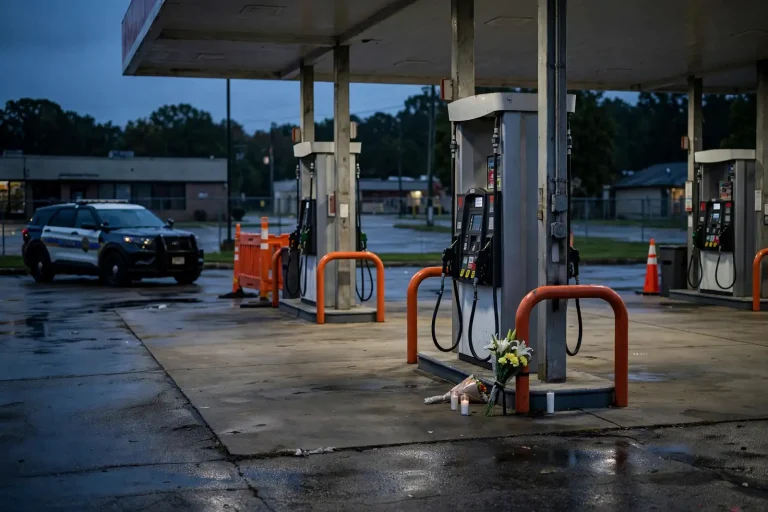
Mobile Man Turns Himself In After Deadly Prichard Shooting
A Mobile man surrendered to Prichard police after a shooting on Center Street left a 33-year-old man dead, marking the city's seventh homicide this year.
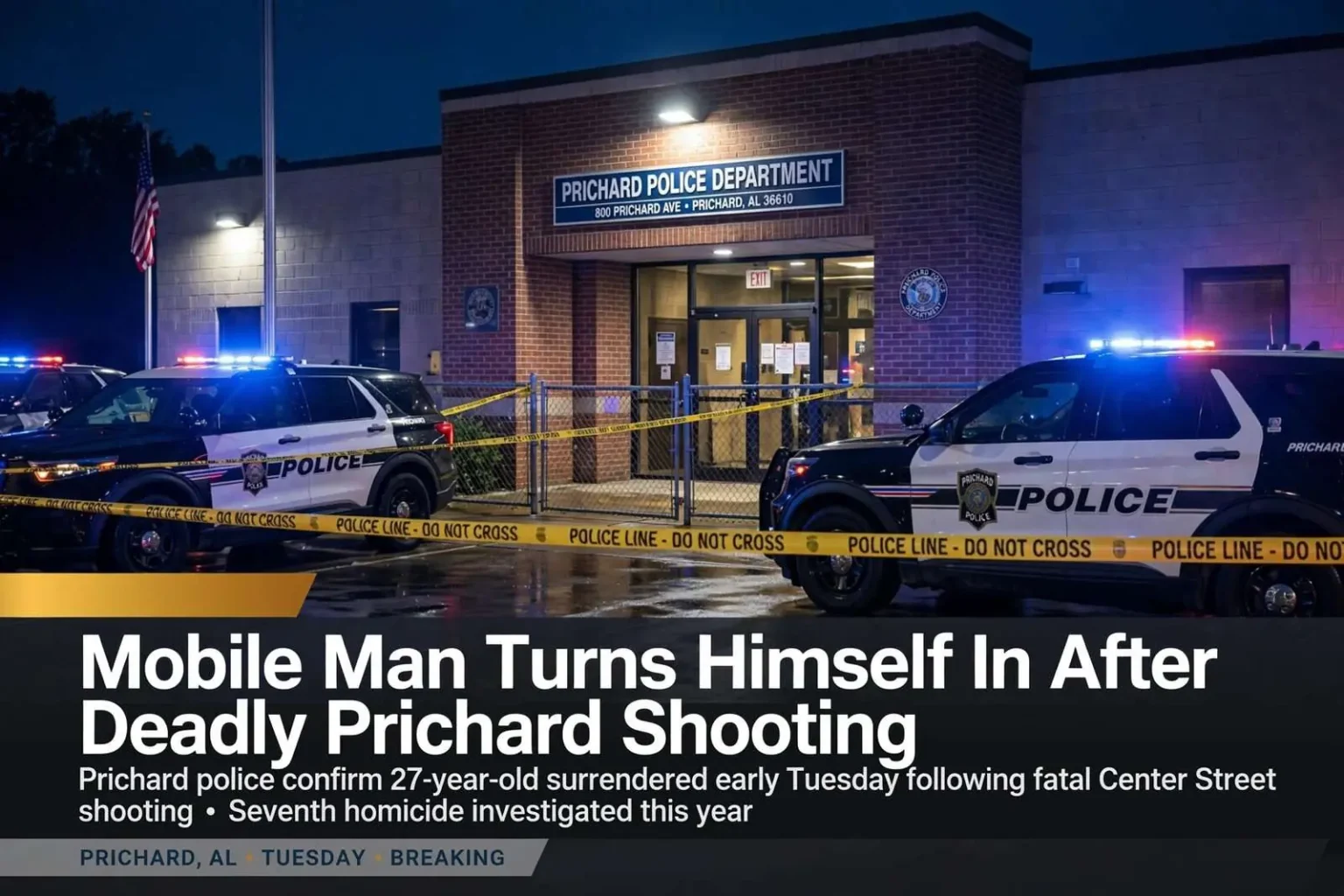
A Mobile man turned himself in to Prichard police early Tuesday, hours after a shooting on Center Street left a 33-year-old man dead, in a case that marked the seventh homicide investigation opened by Prichard detectives this year. The surrender brought a rapid first step to a case that began as a routine medical call and ended with a suspect in custody and charges still taking shape.
Medics pronounced Antonio Jerold Yow, 33, dead after finding him unresponsive on the floor of a home on Center Street around 7 p.m. Monday. Responders had been summoned to the residence, and the discovery of a shooting victim transformed the scene into an active death investigation, with detectives securing the home and canvassing the neighborhood as the evening wore on.
Several hours later, 27-year-old Anthony Demetric Johnson of Mobile turned himself in to officers with the Prichard Police Department, according to Philip Stiell, chief of staff for Prichard Mayor Troy Ephriam. The decision to surrender rather than flee shortened what can often be a days-long search, though officials stopped short of describing the circumstances that led Johnson to come forward.
The charges filed and those still pending
In the pre-dawn hours Tuesday, authorities booked Johnson into Mobile County Metro Jail on charges of first-degree burglary, third-degree domestic violence and violation of a protection order. The booking charges, while serious, did not directly allege the killing. Stiell said charges directly connected to the shooting death remained pending at the time of Johnson’s arrest, as investigators continued piecing together the circumstances surrounding Yow’s death.
That combination of charges is notable to anyone who follows the Alabama court system. First-degree burglary under state law typically involves entering or remaining unlawfully in a dwelling with the intent to commit a crime, and it carries enhanced penalties when another person is present inside. Third-degree domestic violence covers a range of lower-level offenses committed against family or household members, and a violation-of-protection-order charge means a court had already ordered Johnson to keep his distance from someone.
Taken together, the filings suggest investigators were already aware of tension between Johnson and people connected to the case before the shooting occurred, though authorities have not detailed the exact relationship between Johnson and Yow. Prosecutors in Mobile County often wait for forensic results, autopsy findings and completed interviews before adding homicide counts, and detectives said the case remained under active review.
A difficult year in Prichard
The killing added to a difficult year for Prichard, a Mobile County city that has seen a string of homicide investigations in 2015. The case was the seventh homicide probe opened by the department this year, a total that has kept detectives moving from one case file to the next in a city that fields a much smaller investigative staff than neighboring Mobile.
City officials and police leadership have pointed to disputes among people who know each other, rather than random violence, as a recurring theme in many of the cases opened so far this year. That pattern mirrors what investigators across the Gulf Coast have described in recent years: a large share of killings grow out of arguments, domestic conflicts and personal grievances between acquaintances, which complicates prevention efforts because the people involved often have no prior contact with patrol officers.
Prichard sits in the northern reaches of Mobile County, wedged between Mobile and Chickasaw, and its compact footprint means a single detective division handles everything from burglary rings to death investigations. Officials have acknowledged in the past that limited resources can strain investigators working multiple open homicide cases simultaneously, and the case underscores ongoing concerns among Mobile County law enforcement about the pace of violent crime in the city’s smaller municipalities.
How the investigation moved forward
Police continued investigating the case Tuesday, and Prichard officials asked anyone with additional information about the shooting to contact the department directly at 251-452-2211. Detectives spent the day working the Center Street scene, interviewing neighbors and following up on the timeline that stretched from the discovery of Yow’s body to Johnson’s surrender at the police department.
Prichard police say the investigation remains active, with additional charges possible as detectives continue to review evidence gathered from the Center Street scene. In cases like this one, the next steps typically include an autopsy to confirm the cause and manner of death, laboratory analysis of any physical evidence recovered from the home, and a presentation of the findings to the Mobile County District Attorney’s Office, which decides what charges will move forward in court.
The domestic violence and protection order charges filed against Johnson in connection with his arrest give prosecutors an early thread to pull. Protection orders are issued by judges after a petitioner shows a need for protection from abuse, and violations are themselves criminal offenses. When such an order is already in place, investigators examine whether the events leading to the death involved contact that the order was meant to prevent, a factor that can influence both the charges selected and the conditions of any bond.
What comes next for the case
For Yow’s family, the pace of the process will now shift from investigation to prosecution. Homicide cases in Mobile County often take many months to reach trial once charges are formally filed, moving through grand jury review, arraignment and a series of pretrial hearings. Detectives have asked anyone with knowledge of the events on Center Street to come forward while memories remain fresh, a standard appeal that carries extra weight in the early days of a case.
Community leaders in Prichard have repeatedly urged residents to report disputes before they escalate, and the mayor’s office has used its communication channels to publicize both the tips line and the importance of witness cooperation. In a city where officials have described most of this year’s killings as arising from personal conflicts, the difference between an unsolved file and a prosecutable case often rests on neighbors and family members willing to speak with detectives.
The Center Street case will remain on the books as the seventh of the year in Prichard, with the possibility that the counts against Johnson will grow once the investigation is complete. Until then, the shooting stands as another entry in a 2015 tally that city officials have described with growing frustration, and another reminder that the Gulf Coast’s smaller municipalities carry a caseload that their police departments must stretch to meet.
Understanding the charges Johnson faces
First-degree burglary is among the most serious property-related felonies on the Alabama books, and prosecutors treat the presence of occupants inside a dwelling as an aggravating factor that elevates the charge. A conviction can carry a lengthy prison sentence, which is why booking a suspect on that count alongside domestic violence offenses signals that investigators believe the events inside the Center Street home went well beyond an argument that spilled outside.
Third-degree domestic violence, by contrast, is generally charged as a lower-level offense, but it matters greatly in cases like this because it documents the nature of the relationship dynamics at play. Courts in Alabama handle domestic violence dockets with specific protocols, including protective conditions on release, and those conditions can shape how a case proceeds even before the more serious potential charges are resolved.
A violation of a protection order adds its own layer. Judges issue these orders to create a legal buffer between people, and each documented violation strengthens the picture prosecutors can present about escalating conduct. Defense attorneys in such cases typically focus on the sequence of events inside the home, while prosecutors will weigh whether the evidence supports upgraded counts once autopsy and laboratory work is complete.
The Mobile County Metro Jail, where Johnson was booked, serves as the primary intake facility for arrests across the county, holding defendants from Mobile, Prichard and the surrounding municipalities as they await initial court appearances. Booking records generated there become part of the public record early in a case, which is how the initial charges against Johnson became known while the homicide investigation was still in its first full day.
The timing of events on Center Street illustrates how quickly a death investigation moves in its first hours. Medics arrived to find a man unresponsive, made their determination, and from that moment the home became a scene that belonged to detectives rather than rescue crews. Officers on the initial call secured the property, kept onlookers away and began the list of tasks that every homicide file starts with, from photographing the interior to identifying who had been inside the residence in the hours before the body was found.
A voluntary surrender also changes the early shape of a case. When a suspect walks into a police department rather than being taken into custody after a search, detectives gain an immediate opportunity to begin questioning while events are still recent, and prosecutors receive a cleaner narrative of how the person came to be in custody. The hours between the discovery of a body and the walk-in on Tuesday morning will be among the first stretches of the timeline investigators reconstruct.
Prichard’s position inside the larger Mobile County law enforcement network shapes how cases like this are worked. The county sheriff’s office, Mobile police and the district attorney’s investigators all operate in the same geography, and smaller departments regularly lean on that ecosystem for laboratory services, forensic expertise and detective support that a city the size of Prichard cannot maintain on its own. The Mobile County Metro Jail booking process itself links municipal arrests to the county court system that will eventually hear the case.
Residents of the Center Street area spent Tuesday adjusting to the reality of a homicide on their block. In neighborhoods where such investigations unfold, officers typically maintain a visible presence for days, and the questions detectives ask door to door become the first point of contact many residents have with an active case. Officials renewed their standing request that anyone with information use the department’s number directly rather than assume someone else has already reported what they saw.
The seventh-homicide milestone carries administrative weight as well. Each open investigation consumes overtime, detective hours and evidence-processing resources, and departments keep careful count of the caseload when planning budgets and staffing requests. City officials in Prichard have used the yearly totals in past discussions about enforcement priorities, making each new case part of a broader conversation about how the city confronts violent crime with the resources it has.
For now, the formal counts against Johnson stand as filed, with the more serious question of the shooting death itself left to the investigation that continues downtown. The distinction between booking charges and final charges is a familiar feature of Alabama criminal procedure, and it means the case will remain a moving picture for weeks as evidence arrives, witnesses are interviewed and prosecutors weigh what the facts gathered from Center Street will support in open court.
What remains constant is the department’s appeal to the public. The number listed by officials, 251-452-2211, connects callers directly to the Prichard Police Department, and investigators have emphasized that even small details from neighbors, such as who was seen arriving or leaving the home Monday evening, can anchor a timeline. In a case with a suspect in custody but charges still pending, that community input is the resource that most often determines how the file is ultimately resolved.