

Four friends, one truck, and a map full of pins: a road trip across North Alabama is one of the state’s best-kept travel secrets, and the route from Fairhope to Auburn to the Shoals packs mountains, music history, barbecue, and a revolving restaurant into a long weekend. It is a trip that proves Alabama’s northern hill country deserves the same travel loyalty the Gulf Coast gets.
The itinerary that works runs north on a Thursday, returns on a Sunday, and touches five distinct Alabamas along the way: the college town, the mountain, the lake country, the bargain-hunting detour, and the recording capital of the South. With paper map and GPS both loaded — the paper map earns its keep when the mountain roads lose signal — the drive from the Eastern Shore to Auburn takes about four hours.
Day one: Toomer’s Corner and the state’s rooftop
Auburn rewards a lunch stop. The campus core is walkable, the sidewalks wide, and Toomer’s Corner — where the oaks have been rolled with toilet paper after big wins for generations — anchors the intersection. The Tiger Trail downtown embeds the names of former players and coaches in the sidewalk, a scavenger hunt for visitors with a family connection to the place. In summer, when students are gone, the town moves at a small-city pace.
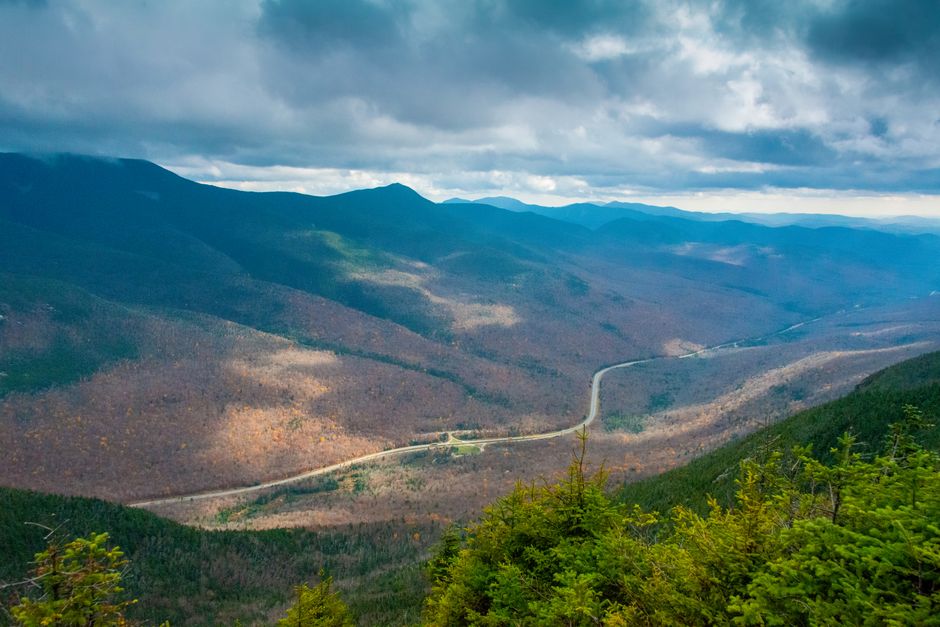
From Auburn, the route turns to Cheaha State Park, home of the highest point in Alabama at 2,407 feet — high enough to run twenty degrees cooler than the coast and to see into Georgia and Tennessee from the overlook. The trail to the observation tower ends in a scramble over house-sized boulders, so hiking shoes are not optional. The park’s name comes from the Creek word “chaha,” meaning high place, and the longleaf-and-oak views justify the detour.
Overnight in Gadsden puts you on the Coosa River, where fishing tournaments fill the marinas and the riverside dinner houses serve platters sized for anglers. It is a practical base for day two.
Day two: The lake, the luggage, and the mountain
Guntersville opens day two. The state park sits on a hilltop above the lake, with long views over water broken by green islands — and, in early summer, a cicada chorus loud enough to interrupt conversation. The drive on to Scottsboro brings one of American retail’s strangest landmarks: the Unclaimed Baggage Center, the only store in the country that buys unclaimed airline luggage and sells its contents. Bargain hunters can spend hours; the unconverted can be back on the road in thirty minutes with a story.
Mentone, near the Georgia line, is the lunch stop — a mountain village of a hundred years old and stone-floored dining rooms, famous for its carrot cake and its view-sheltered coolness. The drive west to Huntsville crosses terrain that can show storm damage even in quiet years; the region sits in Dixie Alley, and spring tornadoes are part of the landscape. Huntsville itself is Alabama’s future-tense city — rockets and defense contractors spread across big lawns — and Stovehouse, a converted factory development of restaurants, shops, and a sunken lawn where families spread out and bands play country covers, is the evening’s destination. It captures the city’s family-friendly energy better than any brochure.
Day three: Muscle Shoals and the sound that conquered the world
The Shoals — Florence, Muscle Shoals, Tuscumbia, and Sheffield — deserve the full day, and they deliver the trip’s highlight. Start in Florence at the birthplace of W.C. Handy, the Father of the Blues, preserved as a museum of the composer’s life: instruments, letters, and the log-cabin rooms where the man who carried the blues to the world learned to hear them. Handy’s story — sitting on the Tennessee River bank composing, then writing home as his fame spread — sets up everything that follows.
At noon, take the tour at FAME Studios in Muscle Shoals. Florence Alabama Music Enterprise was founded by Rick Hall, who built a world-class studio out of an ordinary building and, with session musicians who became legends in their own right, created the Muscle Shoals Sound: the records behind Aretha Franklin, Etta James, Clarence Carter, Wilson Pickett, and on through Lynyrd Skynyrd. The small tour groups move through the main floor and upstairs to the memorabilia — Aretha’s piano among it — and the guides, often young engineers themselves, answer musician-level questions with studio-level detail. Families still run the place, and artists still come from far glitzier rooms to record here.
Overnight at the Marriott Shoals Hotel and Spa, the Shoals’ grand hotel, where the hallways are wallpapered with gold and platinum records and a working jukebox plays only songs cut in local studios. The 360 Grille, atop the Renaissance Tower, makes a full rotation every hour — about twenty floors above the Tennessee River, with views of the Wilson Lock and Dam and, on a lucky evening, a rainbow forming over the water. Book well ahead.
Why the route works
What makes North Alabama click as a road trip is the variety per mile. No other stretch of the state offers a mountaintop, a lake, a space city, and a recording shrine within a two-hour circle, and the driving is easy — four-lane most of the way, scenic on the approaches to Mentone and the river towns.
The practical notes: go in late spring or early fall for the cooler mountain air; book FAME tours in advance, as groups are small; reserve the 360 Grille early; and leave slack in the schedule, because the best stops — a fishing tournament in Gadsden, a bluegrass jam in a Mentone porch — are the unplanned ones. Travelers who made the Route 66 pilgrimage together swear this loop delivers more Alabama per day than any interstate route, and the Shoals have a way of converting first-time visitors into repeat pilgrims.
Fill the tank in Fairhope, load the playlist — Handy to Aretha to Skynyrd, in that order — and point the truck north. Alabama’s other end of the state is worth the drive.