Shark Sightings Near Orange Beach Prompt Questions From Worried Swimmers
Researchers explain what caused a cluster of shark sightings near Perdido Pass and Orange Beach that closed swimming areas and rattled beachgoers.
Flags Up, Swimmers Out
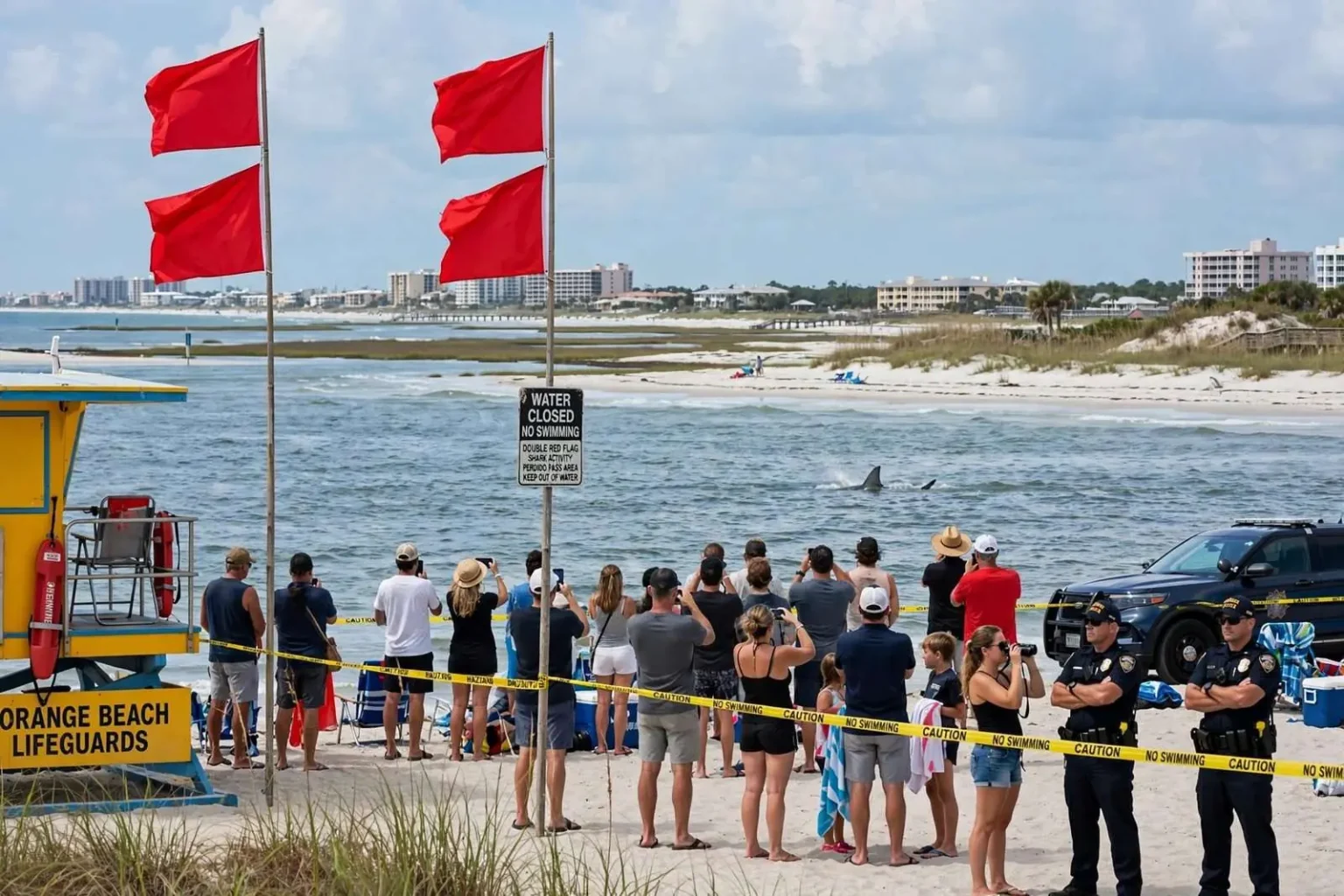
A wave of shark sightings near Perdido Pass in Orange Beach earlier this month sent double-red warning flags up along the shoreline and left many beachgoers rattled, prompting local marine researchers to weigh in on what was actually happening in the water. Swimmers had been temporarily barred from the water after a large number of sharks were spotted congregating close to shore, an event that drew national attention even as officials eventually reopened the waters to the public.
Double-red flags — the beach warning system’s most serious signal, meaning the water is closed to the public — flew along the affected stretch while lifeguards and police cleared swimmers from the surf. Images and video of the gathering sharks circulated widely online, turning a routine public safety response into a national story and filling the beachfront with onlookers hoping for a glimpse from the sand.
The closures disrupted the heart of the beach season at one of the Gulf Coast’s busiest destinations, with Perdido Pass — the channel separating Orange Beach from the undeveloped shoreline of Perdido Key — sitting amid hotels, condominiums and public beaches that draw visitors from across the region.
Why So Many Sharks, So Close to Shore?
Marcus Drymon, an assistant research professor at the University of Alabama, and Jill Hendon, who manages the Shark Research Program at the Gulf Coast Research Lab, offered some clarity on the phenomenon. According to Hendon, near-shore waters actually serve as important nursery habitats for many shark species, meaning sharks are essentially always present in these areas, relying on them for food and protection from larger predators.
The nursery role is the key to understanding what beachgoers saw. Young sharks of many Gulf species spend their early lives in the shallow, warm, protected waters close to shore, where the menu of small fish is rich and the deep-water predators that hunt them cannot easily follow. What looked like an invasion was, in the researchers’ telling, the ordinary machinery of the Gulf’s food web — momentarily made visible by the number of animals gathered in one place.
What made this particular event so noticeable, she said, was simply the number of sharks gathering together in one relatively small area at the same time, likely drawn by an abundant food source. Concentrations of baitfish near the pass can pull sharks in from a wide area within hours, creating the impression of a sudden arrival when the animals may have been working the same waters all along.
Who Lives in These Waters
The most common species found along the Gulf Coast include the Atlantic sharpnose, blacktip, finetooth, bull, bonnethead, spinner, blacknose and sandbar shark, along with occasional sightings of great hammerhead, scalloped hammerhead and tiger sharks, the latter of which can grow to 15 feet or more.
The regulars are mostly small and unobtrusive. Atlantic sharpnose sharks — the slim, gray-snouted sharks often seen in waist-deep water — rarely reach more than a few feet, and finetooth and blacknose sharks are similarly modest. Blacktips and spinners are the acrobats whose leaps sometimes appear in the surf line, while bonnetheads, with their shovel-shaped heads, are small relatives of the hammerheads that feed heavily on crabs and other crustaceans. Bull sharks, which tolerate the low salinity of river mouths and bays, are among the larger regulars in the near-shore mix.
The giants — great hammerheads, scalloped hammerheads and tiger sharks — are uncommon visitors to the swimming beaches rather than residents, and their occasional appearances near passes and deeper channels tend to draw outsized attention precisely because they are rare. Researchers stress that the presence of any of these species in Gulf waters is neither new nor increasing dramatically; what changes is how often people notice.
Should Swimmers Be Worried?
Both researchers stressed that humans are not a natural food source for these species. Drymon explained that most so-called shark attacks on humans are cases of mistaken identity, where a shark bites something it perceives as typical prey and quickly releases it upon realizing its mistake — which is why repeat bites in a single incident are rare.
The mistaken-identity explanation fits the profile of most incidents in the region: a quick, single bite on a hand, foot or calf, usually involving a small or medium shark in murky or churned-up water, followed by an immediate release. Surfers and swimmers splashing at the surface resemble the seals, turtles and large fish that bigger sharks hunt, particularly in low light — dawn and dusk — when visibility is poor and feeding activity peaks.
For all the alarm the Perdido Pass gathering produced, the researchers’ message was that swimmers share the water with sharks every day of the season without incident. The double-red flags marked an unusual concentration of animals, not a change in the sharks’ behavior toward people — and the closure system did exactly what it was designed to do, keeping people out of the water while the situation was assessed.
The Fish Carcass Question
As for the fish carcasses some beachgoers reported finding washed ashore around the same time, the researchers offered a few possible explanations, pointing to the natural turnover of life in productive coastal waters — predation, scavenging and the ordinary discard of bycatch from the region’s busy fishing activity all leave remains that wind and current eventually deliver to the beach.
Whatever the specific source, the researchers noted that abundant fish remains and abundant sharks arriving together are not a coincidence so much as two signs of the same thing: a stretch of water currently rich in food. Productive near-shore habitat draws baitfish, baitfish draw sharks, and the leftovers of all that feeding sometimes end up on the sand.
Living With the Gulf’s Longtime Residents
For a beach town, the practical takeaways from the episode were less about fear than about habits. Researchers and safety officials alike emphasize the standard precautions: swim near lifeguards, heed the flag system, avoid the water at dawn and dusk when sharks feed most actively, stay away from fishing activity and schools of baitfish, and leave the water if sharks are visibly present.
Orange Beach’s flag system, maintained along the public beaches, exists precisely to translate changing water conditions — surf, weather, and in this case marine life — into a simple visual code visitors can follow. The rapid return to swimming after the closures reflected officials’ confidence that the gathering was a transient feeding event rather than a lasting hazard.
The national attention the sightings attracted also highlighted a recurring gap between perception and science. Researchers who work Gulf waters year-round describe near-shore sharks as a sign of a healthy coastal ecosystem — the nursery habitats that Hendon described are only productive when the waters they border are well managed — and they caution against reading a feeding aggregation as evidence that the Gulf has become more dangerous.
The sharks, meanwhile, went back to being sharks: moving with the baitfish, growing up in the shallows that have raised generations of their kind, and drawing a crowd whenever they happen to gather where the crowds already are. The waters off Perdido Pass reopened, the flags came down, and the Gulf’s oldest residents resumed their patrol of a coastline they never really left.
The Science Behind the Beach
The research programs behind the two scientists’ explanations are built on years of work in exactly these waters. Shark research along the northern Gulf combines longline and gillnet surveys, tagging studies and nursery mapping, producing the population data that lets researchers speak with confidence about which species are common, where they spend their lives and how the region’s sharks are faring overall. Drymon’s work at the university and Hendon’s program at the Gulf Coast Research Lab both contribute to that picture, and both have documented the seasonal movements of young sharks through the bays, passes and beachfronts of the coast.
That body of work is why researchers can say plainly that the Perdido Pass gathering, however startling to visitors, fits known patterns. Sharks follow food, food follows water conditions, and a productive stretch of coast can flip from quiet to crowded in a matter of days as baitfish move with tides, temperature and river outflow from Mobile Bay and the Perdido system.
The episode also served as an unplanned public lesson in Gulf ecology. Millions of visitors see the water as a swimming pool with a view; the sight of dozens of sharks just past the surf line made the point that it is a living estuary system, more productive — and more populated — than any postcard suggests.
Lifeguards and police, meanwhile, were credited with managing the closures without incident, clearing the water quickly and keeping curious onlookers out of the surf while the sharks worked the pass. The episode ended the way researchers said it would: the food source moved on, the sharks dispersed, and the water off Orange Beach was returned to the swimmers who share it, every day, with its most misunderstood residents.