Citronelle Man Identified as Hero Who Saved Toddler From Drowning at Gulf Shores’ Lake Shelby
A Citronelle man is identified as the stranger who performed CPR and saved a 3-year-old girl who nearly drowned at Gulf Shores' Lake Shelby.
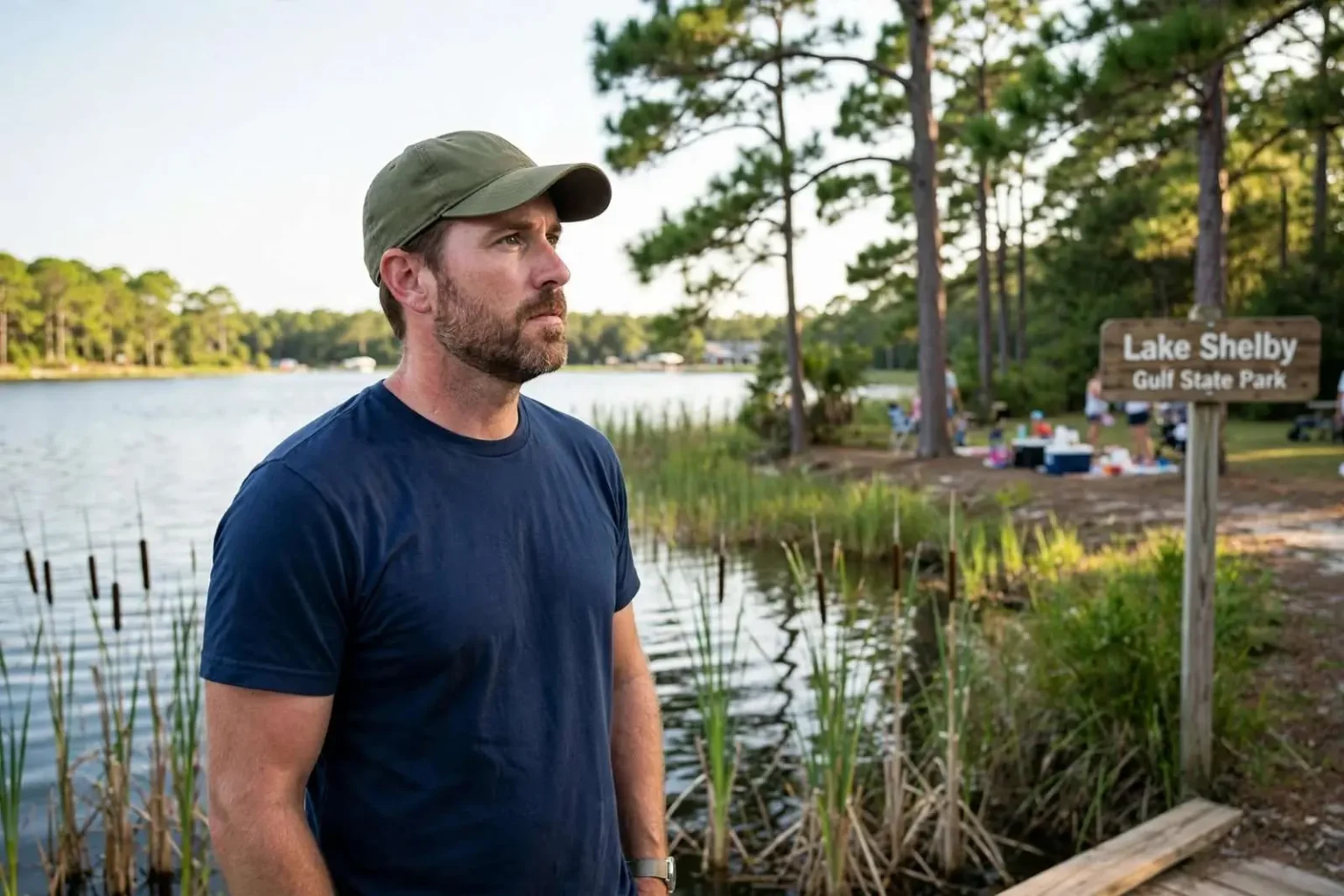
GULF SHORES, Ala. — A 3-year-old girl who nearly drowned at Lake Shelby is back home recovering, and her grandfather has finally learned the identity of the stranger whose quick CPR is credited with saving her life. Hadassah Bounds was swimming with her brother and mother, Leann Brand, at the popular Gulf Shores lake on a Monday afternoon when the toddler slipped beneath the surface.
Her grandfather, Ron Bounds, said her mother spotted where she thought Hadassah had gone under and sent her 10-year-old brother to find her. “They were down swimming and I guess the baby just disappeared,” Bounds said. When the boy reached the spot, he found his little sister face-down in the water, still wearing a pool noodle, and pulled her out.
That’s when a man nearby stepped in. According to Bounds, the stranger immediately began CPR and revived Hadassah before paramedics could reach the scene. Gulf Shores Fire Rescue then flew the girl to Sacred Heart Hospital as a precaution. Doctors believe Hadassah was underwater for only two to three minutes and had taken in relatively little water into her lungs, which they said helped her recover quickly. She was released from the hospital the following afternoon.
A search for a stranger
In the days after the near-drowning, Bounds searched for the man who had saved his granddaughter’s life but didn’t have a name to go on. The break came through social media: the City of Gulf Shores posted publicly that, according to a Gulf Shores Fire Rescue deputy chief, crews on the scene identified the man as Martin Walker of Citronelle. Gulf Shores Fire Rescue has since said it would help put Walker and the Bounds family in touch.
The search had spread across the coastal community in the meantime, with family members asking anyone who had been at the lake that afternoon to come forward. Rescuers who act quickly and leave before authorities collect names are a recurring challenge for departments hoping to recognize them, and in this case it took the department’s own public appeal — and the recollection of the crews who saw the rescue firsthand — to attach a name to the man the Bounds family had been looking for.
Citronelle, where Walker lives, sits in northern Mobile County, a considerable drive from the Baldwin County beachfront. That a visitor from that far inland happened to be at the lake that afternoon and knew exactly what to do in the critical minutes is part of what has made the story spread so widely along the coast.
That calm appearance is precisely why safety officials urge vigilance there. Freshwater lakes along the coast lack the lifeguard coverage and flagged warning systems of the guarded beach sections, and the water’s stillness can mask drop-offs and sudden depth changes just a few yards from shore. Young children wading at the edge can be out of sight in seconds, which is the scenario the Bounds family described in all too concrete terms.
Safety advocates also point to the role flotation toys can play in accidents like this one. Pool noodles are a familiar sight at Lake Shelby on summer afternoons, but they are toys, not life-saving devices: they ride beside a child rather than holding one upright, and they can slip away from a swimmer who goes under. A child wearing one can disappear beneath the surface with the noodle floating nearby, exactly the image the Bounds family described when her brother found her face-down in the water still wearing it.
Gulf State Park, which manages the lake and the thousands of acres surrounding it, draws visitors from across the region for its trails, campground, lodge and beach access, and Lake Shelby is often the first stop for families staying in Gulf Shores who want a calmer swimming experience than the Gulf surf. The park’s popularity means that on peak afternoons the shoreline is lined with parents and children, and safety instructors say that crowd is precisely why every family should arrive with a plan for who is watching the water.
Water-safety organizations recommend that an adult remain within arm’s reach of any child under 5 in any body of water, that a designated “water watcher” stay off phones and out of conversation while children swim, and that families learn CPR precisely because professional help — even with a fire station minutes away — cannot reach a victim in the two to three minutes that mattered in Hadassah’s case.
What happens in a submersion emergency
The medical details the family shared after the hospital stay underscore how little margin those minutes leave. Children who are underwater for very long aspirate large amounts of water, and the resulting damage can turn a rescue into a long recovery or worse. Hadassah’s relatively brief submersion and the small amount of water in her lungs meant that once her breathing was restored, her prognosis was good — and her release the following afternoon confirmed it.
Gulf Shores Fire Rescue’s response, including the helicopter transport to Pensacola, reflects the standing protocol along the coast for pediatric submersion cases, where doctors prefer to observe young patients even when they appear fine at the scene. Delayed symptoms, including a condition in which lingering water in the lungs causes breathing difficulty hours later, are rare but serious enough that practitioners treat every near-drowning as an admission case.
For the Bounds family, the aftermath has been simpler: a healthy toddler back home, a brother who did exactly what his mother asked, and a name — Martin Walker — to attach to the debt they have been trying to acknowledge since that Monday afternoon at the lake. The department’s help connecting the two families closes the last open question of an afternoon that could easily have ended in tragedy.
Why bystander CPR decides these outcomes
The rescue at Lake Shelby is also a case study in why water-safety groups press so hard for ordinary people to learn CPR. In a submersion emergency, the interval between the moment a victim is pulled from the water and the moment professionals arrive is almost always longer than the interval that determines survival, and the difference is made by whoever is standing closest. Bystanders who begin compressions and rescue breaths immediately can keep oxygen moving to the brain during exactly the window that decides whether a child recovers fully, recovers with lasting injury, or does not recover at all.
Along the Alabama Gulf Coast, CPR training is broadly available to residents who want it. Fire departments in Gulf Shores, Orange Beach and across Mobile and Baldwin counties regularly host or refer residents to certification courses, hospitals offer community classes, and the American Red Cross and American Heart Association both provide in-person and blended online training that can be completed in a matter of hours. Instructors stress that hands-on practice with a manikin is what builds the confidence to act, and that hesitation — not lack of skill — is the most common reason bystanders wait for help that is still minutes away.
Modern guidance has also lowered the barrier to action. Rescue organizations teach that a rescuer who is untrained or out of practice should at minimum perform compression-only CPR until help arrives, and that any attempt is better than none. The man at Lake Shelby evidently had more than the minimum: he began resuscitation immediately and restored the child’s breathing before paramedics reached the scene, which physicians credit for her rapid recovery and release from the hospital the next day.
First responders along the coast see the results of both preparation and its absence. Gulf Shores Fire Rescue, which patrols the beachfront during the heavy summer season and responds to calls across the city, has repeatedly urged beach and lake visitors to swim near other people, keep children in view at all times and know who in their group can perform CPR. The Bounds family’s experience gave those warnings a local face, and the department’s willingness to connect Walker with the family gave the community a rare happy ending to share.
A debt the family can finally name
For the Bounds family, the aftermath has been simpler than the science: a healthy toddler back home, a brother who did exactly what his mother asked, and a name — Martin Walker of Citronelle — to attach to the debt they have been trying to acknowledge since that Monday afternoon at the lake. The city’s public post identifying him, relayed through a Gulf Shores Fire Rescue deputy chief, ended the family’s search, and the department has since said it will help put Walker and the Bounds family in touch.
Hadassah’s recovery, her short submersion and the stranger who happened to be standing nearby will be retold along the coast for years, precisely because so many similar afternoons end differently. Her family’s message to other families is the one Ron Bounds put into words himself: something like this really can happen in the blink of an eye, and the people who come home safe are almost always the ones who had someone watching, someone swimming to help, and someone nearby who knew what to do.