Silverhill Farmer Starts Digging Peanuts With About 20,000 Acres in the Ground Across Baldwin County
Jimmy Fidler of Fidler Farms began digging last week and says steady weekly rain has set up a good crop. Most of the county's peanuts head to peanut butter, oil and candy.
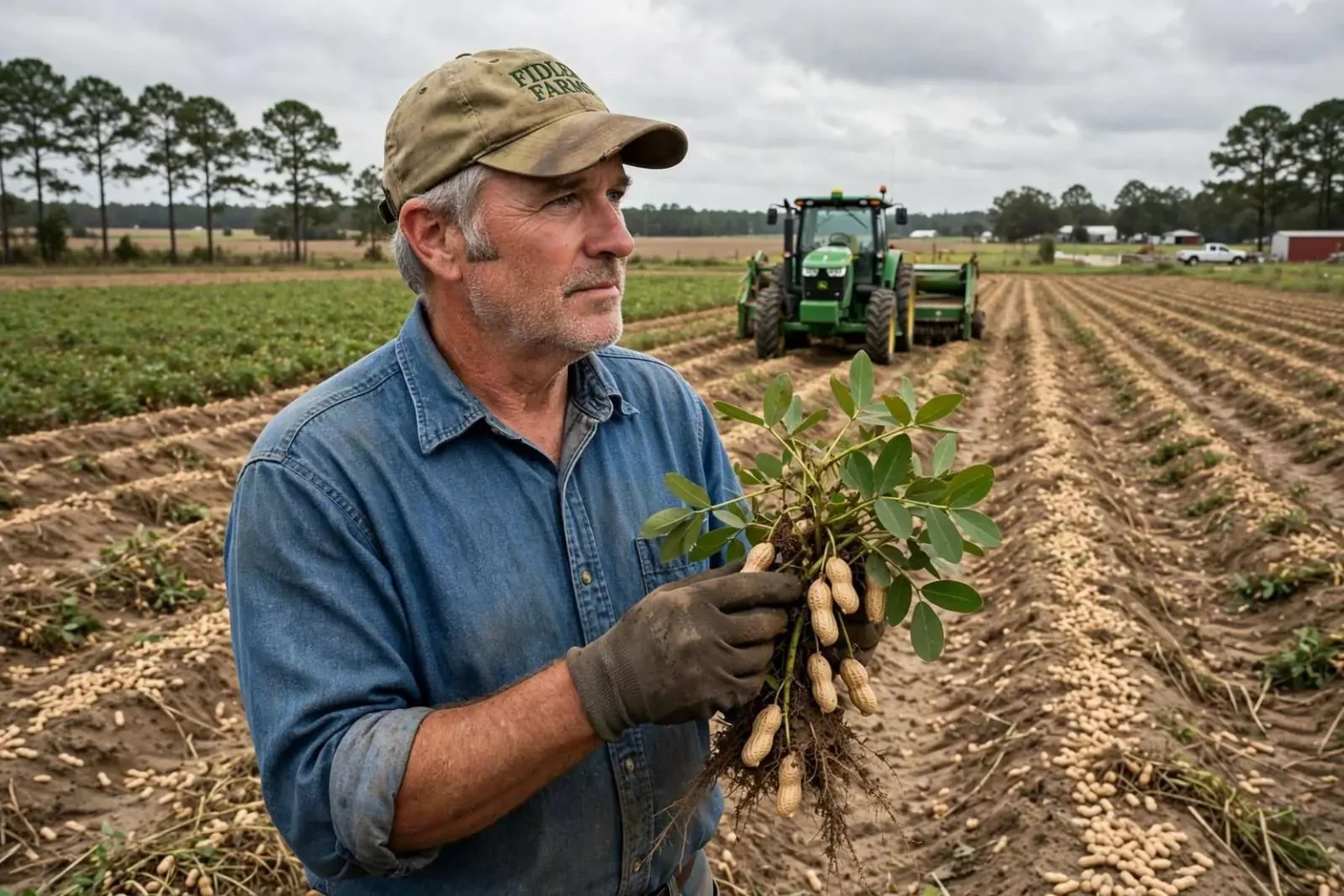
SILVERHILL, Ala. — Peanuts, peanuts and more peanuts. This year’s crop is coming out of the field and heading to a retailer near you.
A Good Year, if the Rain Holds
“If we just keep getting our rain like we’ve been getting, two inches of rain every week or so, we’ll make some good peanuts,” said Jimmy Fidler at Fidler Farms in Silverhill.
Fidler started digging his peanuts last week.
The timing of rain matters as much as the total during peanut harvest. Peanuts are dug and left in windrows in the field to dry before being picked up, which means a wet stretch at the wrong moment can cost quality even in a year with good growing conditions. Steady, moderate rainfall through the growing season followed by workable harvest weather is the combination growers hope for.
Inspection Before Packaging
Tons of peanuts will pass through an inspection conveyor belt before being packaged for sale.
“We have machinery that takes out the pops that is not filled out, or little bitty immature ones and sticks and stuff,” Fidler said. “They come along and take out a black one, or a dark-looking one, something that you wouldn’t want to eat.”
“Pops” are the industry term for shells that formed without developing a kernel inside. They look like peanuts until you pick one up and find it weightless — and sorting them out is a significant part of what separates a bag a customer will enjoy from one they will complain about.
Why People Keep Buying
Whether boiled, raw or parched, peanuts hold their audience, and that keeps customers coming back year after year.
Fidler has a theory about why. “You get started, and you can’t stop,” he said. “It’s like a habit, a dope habit, you know what I mean? So, you get hooked on these peanuts.”
Twenty Thousand Acres
There are about 20,000 acres of peanuts in Baldwin County this year.
Most of the crop will be used for peanut butter, peanut oil and components of candy bars. The green peanuts — those sold fresh rather than dried, and the ones destined for boiling pots across the region — will be sold to customers throughout the area.
That split between commodity and local sale is characteristic of the Gulf Coast peanut economy. The bulk of the acreage feeds national processing, while green peanuts sold locally represent a smaller volume at a substantially higher return per pound.
Peanuts in the Baldwin County Rotation
Peanuts occupy an important place in the county’s crop rotation beyond their own value. As a legume, the crop fixes nitrogen in the soil, which reduces fertilizer requirements for whatever follows it in the field, and rotating peanuts with grasses like corn helps break disease and pest cycles that build up in continuous planting.
“I think it’s going to be a real good season this year for the whole county,” Fidler said.
That is good news for peanut fans across the region — and for the growers whose year is decided over the next several weeks in the field.