University of South Alabama Mobile
University of South Alabama to Host National Environmental Symposium on Coastal Development
A $75,000 gift from a USA trustee will fund a national environmental symposium in Mobile examining lasting Gulf of Mexico oil spill impacts.
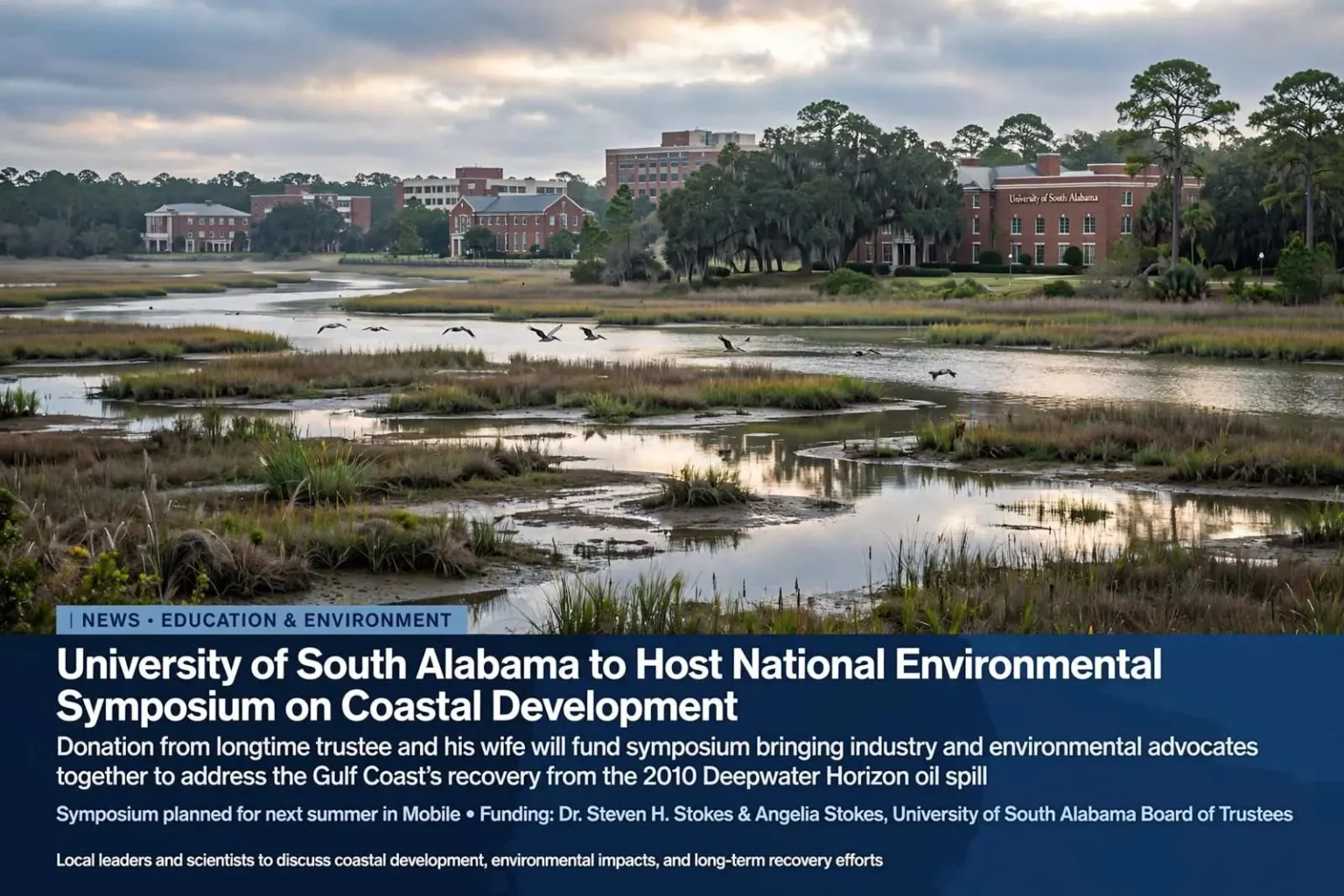
The University of South Alabama will host a major environmental symposium next summer thanks to a gift from a longtime university trustee and his wife, who hope the event can bring together industry and environmental advocates to address the region’s ongoing recovery from the 2010 Deepwater Horizon oil spill.
Dr. Steven H. Stokes and his wife, Angelia, announced a 75,000 dollar donation at a recent Board of Trustees meeting to cover the cost of the conference, which Stokes said he hopes will draw participants and experts from across the country. Stokes, a University of South Alabama alumnus, has served on the board since being appointed in 1993 and held leadership roles on the board through the following decade.
University officials plan to invite national experts on environmental impacts to attend, giving the school a chance to showcase its own research programs alongside the broader symposium agenda. Stokes said the goal is to bring together people from business, industry and environmental advocacy groups to work through practical solutions rather than talking past one another.
“We can’t shut industries down,” Stokes said. “We have to find a way to develop industries and protect our environment. We need a leader, and we hope the University of South Alabama will be that leader.”
Stokes said he and his wife decided to fund the symposium as research continues into the long-term environmental effects of the 2010 oil spill, particularly around the use of chemical dispersants to break down oil on the water’s surface. “No one knows what the long-term effects will be,” he said of the dispersants used during the spill response.
Casi Callaway, executive director of Mobile Baykeeper, is helping plan the symposium and is expected to be among the speakers. Callaway said her organization has been closely involved in spill-related research and recovery efforts since the disaster began, giving the group firsthand insight into gaps that still need to be addressed before the region faces another large-scale environmental crisis.
“We have been involved and on the ground in the disaster from day one, and we got to see a lot of what was missing in our community” in terms of preparedness, Callaway said. She added that the symposium offers a chance to share what residents and responders actually experienced during the spill with scientists and policymakers who may not have been on the ground for it.
“I think the science community needs to hear from the public at large,” Callaway said. “We know what the community saw and continues to see as a result of dispersants being used. There’s a whole lot more to it than, ‘It worked; the oil is hidden.’”
University officials have not yet announced a specific date for the symposium beyond a target of next summer, but say planning is already underway to line up speakers and finalize the agenda.
Background on the spill
The Deepwater Horizon drilling rig exploded on April 20, 2010, killing 11 workers and releasing oil into the Gulf of Mexico for 87 days before the well was capped. During the response, roughly 1.8 million gallons of chemical dispersants, mostly Corexit products, were applied at the surface and at the wellhead, which is why their long-term effects have remained a focus of research.