

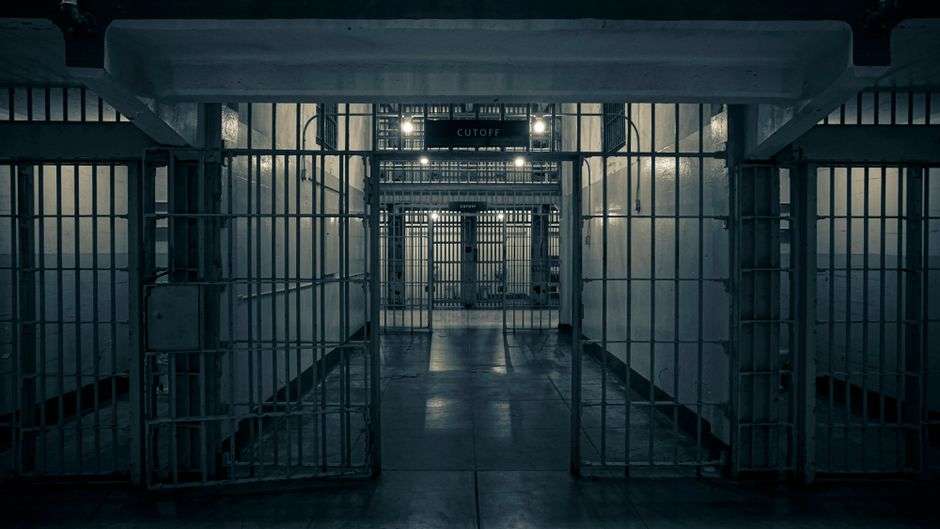
A growing backlog of state inmates being held in county jails across Alabama has emerged as a major flashpoint in the fight against COVID-19, with Mobile County Metro Jail among the facilities most affected by the slowdown in transfers to state prisons.
Gov. Kay Ivey this week directed the Alabama Department of Corrections to develop a plan for addressing the thousands of state inmates who remain in county custody because of the pandemic. The directive came as part of a broader state of emergency proclamation aimed at curbing the spread of COVID-19 in ADOC facilities, while also responding to mounting pressure from county officials and sheriffs frustrated by the reduced pace of inmate transfers since March.
The proclamation put the state’s signature on a problem county officials had been documenting for weeks: Alabama’s prisons had effectively stopped taking custody of the people sentenced to serve time in them, and the county jails — built and budgeted for short stays — were absorbing the difference indefinitely. A directive within an emergency proclamation carries legal weight, but it also signals political attention, and county leaders across the state had been insisting for weeks that the backlog qualified as both a fiscal and a public health emergency of its own.
Beyond calling for a transfer plan, the proclamation guarantees counties reimbursement for the extra costs of housing and providing medical care to state inmates who would otherwise be in ADOC custody. It also extends liability protections to counties, sheriffs and their employees for claims that arise from those added responsibilities.
Those two provisions answered the practical objections sheriffs had raised. Housing a state inmate costs a county money it did not budget, and medical care for a population with pandemic-era health needs could run into serious figures for a rural jail. The liability protection matters just as much: when a state inmate held in county custody sues over confinement conditions or medical treatment, the shield determines whether the sheriff’s office or the county commission carries the exposure.
Ivey urged the department to return inmate intake to “pre-COVID-19 levels” as soon as conditions allow, though she stopped short of setting a firm timeline.
How the Backlog Built
Transfers into the state system have dropped sharply since ADOC Commissioner Jeff Dunn suspended new intakes in late March as part of an effort to limit outbreaks inside Alabama’s correctional facilities. As of June 10, the state reported 83 ADOC employees and 27 inmates had tested positive for COVID-19, including two inmate deaths.
The suspension was a calculated bet: by slowing the flow of new prisoners into a prison system already operating at severe overcrowding, the department hoped to keep its facilities from becoming the kind of mass-outbreak sites seen in institutions across the country. The cost of that bet landed not in the prisons but in the county jails, where the population that would have left simply stayed. While the department has resumed accepting some prisoner transfers since March 20, many inmates continue to sit in county jails, which are simultaneously trying to contain their own outbreaks.
The resumed transfers moved at a fraction of the normal pace, and every week of the slowdown compounded the arithmetic. A jail that processes a steady stream of state-bound inmates has a predictable turnover; a jail whose outflow stops fills like a reservoir behind a closed dam, with every new arrest adding to a population that no longer leaves.
Sonny Brassfield, executive director of the Association of County Commissions of Alabama, said in a statement that the governor’s proclamation finally drew attention to what he called “a crisis that has been flying under the radar for the past 75 days.”
“The 3,000 state inmates in county jails today represent about 12 percent of the state’s total inmate population. We agree that backlogging inmates at the county level is unacceptable,” Brassfield said. “The presence of so many state inmates clearly puts every jail at risk of an outbreak of COVID-19, in the same way the state prison system is at risk. Sheriffs in Alabama have done a remarkable job of adjusting to the new safety concerns in the face of the state’s decision not to accept inmates as required by Alabama law and the Alabama Supreme Court.”
Brassfield’s figures reframed the dispute as a matter of law as much as public health. Under Alabama statute and state supreme court precedent, the Department of Corrections is required to accept custody of sentenced inmates once the sentencing court commits them; the county jail is supposed to be a way station of days or weeks, not a warehouse. Three thousand inmates — roughly one in every eight people in the state’s custody — sitting in county facilities for three quarters of a year of pandemic conditions was, in the counties’ telling, a state obligation quietly transferred to local taxpayers.
The 12 percent figure also carried a fiscal edge. Counties reimburse the state at a set per-diem for the inmates they do house for ADOC; the reverse flow — the state’s obligation to pay counties for holding its inmates beyond the mandated pickup window — had been the subject of long-running disputes even before the pandemic froze the system entirely.
The View From Metro Jail
The backlog has been felt acutely at Mobile County Metro Jail, where officials have spent weeks managing a local COVID-19 outbreak with less room to isolate and quarantine potentially sick or infected inmates because of the added state prisoners taking up space.
At last count, more than 50 Metro Jail inmates and 30 corrections officers had tested positive for the virus.
Outbreak control in a jail is a geometry problem: isolation and quarantine require empty cells, and every state inmate occupying a bunk is a bunk that cannot be used to separate a sick inmate from the population. Mobile County’s facility, one of the largest jails in the state, had spent the spring running its normal admissions through a building simultaneously managing a growing outbreak — a task made materially harder by the state prisoners who could not leave.
Metro Jail Warden Trey Oliver said case numbers rose after the city of Mobile offered to help screen all jail employees last month, though he noted the number of active cases has been trending downward in recent weeks.
Universal employee screening — testing every officer and staff member rather than only those showing symptoms — surfaced cases that symptom-based screening had missed, which is why the facility’s case count rose before it fell. Public health officials regard that pattern as the expected result of honest testing rather than a deteriorating situation: identifying infected employees, pulling them from shifts and tracing their contacts is how a facility bends its curve. The downward trend Oliver reported in the weeks after suggested the screening and isolation protocols were working.
Oliver said Metro Jail is currently holding 265 state inmates who, under normal circumstances, would have already been transferred into ADOC custody. Some of those inmates, he said, are being held for probation violations and have already served longer than their original sentences because of the state’s ongoing transfer backlog.
The probation-violation cases sharpen the inequity in human terms. An inmate whose underlying crime carried a one-year sentence, revoked to prison time for a technical violation of supervision, should serve that term in state custody; instead, some have now been held in the county jail longer than the sentence itself. There is no mechanism in the backlog for those inmates to earn release, file an appeal that moves, or transfer to the facility where their programs and parole eligibility actually reside — they wait, at county expense, for the state to resume pickups.
County officials say the situation underscores the strain the pandemic has placed on local jails statewide, many of which were not designed to hold state inmates for extended periods and now face added public health risks as a result.
With ADOC facilities and county jails both working to prevent further spread of the virus, local leaders continue to press the state for a clear timeline on resolving the backlog.
The structural question underneath the emergency is one Alabama’s counties have pressed for years: a state that sentences people to prison must have the capacity to receive them. The pandemic did not create the backlog — Alabama’s prison system entered 2020 already among the most overcrowded in the nation — but it removed whatever slack the transfer system had and exposed how thin the margin was. County commissions and sheriffs across the state, with the Association of County Commissions negotiating on their behalf, will be watching whether the mandated plan produces actual pickup dates and funded beds, or another round of directives without timelines.
For Metro Jail and its counterparts, the immediate arithmetic remains unchanged until it does: every state inmate who cannot leave is a cell that cannot isolate, a medical bill the county fronts, and — for the inmates already past their sentences — another week in the wrong facility while both systems wait for the state’s plan to move from paper to buses.