

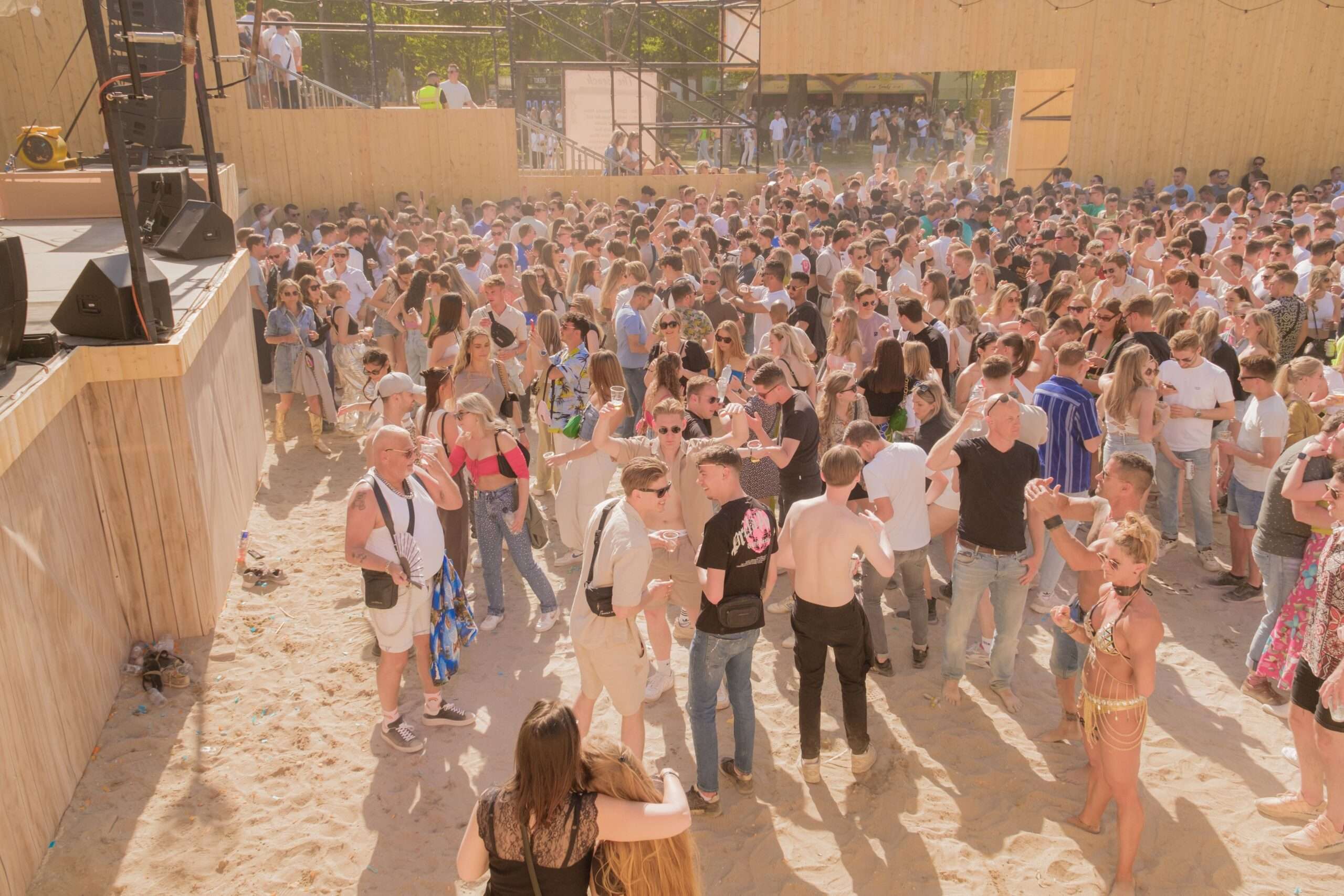
Tens of thousands of music fans converged on the beach in Gulf Shores for the inaugural Hangout Music Festival, a three-day event that brought a rare jolt of energy and economic activity to a Gulf Coast community bracing for the fallout of the Deepwater Horizon oil spill. Local condominiums, restaurants and shops saw a surge of business as festivalgoers filled the beachfront for a lineup that ranged from jam bands to hip-hop to flamenco-inspired guitar. The debut of the festival, staged directly on the sand in front of The Hangout restaurant and entertainment complex, marked an ambitious bet that South Baldwin County could support a large-scale touring music festival on par with events in bigger markets.
For a weekend in May 2010, that bet appeared to pay off, even as an unfolding environmental crisis loomed just offshore. A Weekend of Big Sets on the Sand The festival's first day set the tone with a set from the Black Crowes, the Georgia-born rock band whose blues-inflected sound could reportedly be heard from outside the festival gates, drawing curious passersby toward the beach even before they had passed through security. Saturday brought a wide range of sounds to the two main stages. Toubab Krewe, an instrumental band known for blending West African string instruments with American roots music, offered what many attendees described as an easygoing, exploratory soundtrack well suited to a beach afternoon.
Later in the day, the Mexican-born guitar duo Rodrigo y Gabriela brought their rapid-fire, percussion-driven flamenco style to the stage, drawing one of the weekend's more enthusiastic crowds with a sound built around two acoustic guitars and no backing band. Gov't Mule, the veteran Southern rock and jam outfit fronted by guitarist Warren Haynes, delivered its characteristically muscular, full-force live set later that evening. Moon Taxi, a rock and jam band that was still building its national profile in 2010, emerged as one of the weekend's pleasant surprises. Festivalgoers who caught the set noted the band's high-energy performance and the sense that the musicians themselves were as invested in the moment as the crowd in front of them.
A Late Replacement Steals Saturday Night Saturday night closed with a headlining set from The Roots, the Philadelphia hip-hop group known for its live-instrumentation approach to the genre. The band stepped in as a late replacement after the Flaming Lips, originally booked for the slot, were unable to perform. By most accounts, the swap worked out well: The Roots' set carried out across the open beach, reportedly drawing listeners onto the balconies of nearby condominium towers, and closed to loud, sustained applause from the sand below. Storms Force a Sunday Evacuation Outdoor festivals along the Gulf Coast are no strangers to sudden weather, and the inaugural Hangout Fest got a firsthand lesson in that reality on its final day.
Lightning moved into the area on Sunday, prompting organizers to evacuate the festival grounds as a safety precaution — a standard, and necessary, response for any outdoor event when lightning is detected nearby. Weather-related evacuations are common practice at large outdoor gatherings, since lightning strikes are unpredictable and can travel well beyond the leading edge of a storm cell; event organizers and public safety officials typically follow established protocols that call for clearing exposed areas such as beaches and open fields until a storm has passed a safe distance away. The storm's intensity was significant enough that at least one parked vehicle in the festival's vicinity was left partially submerged by rising water.
Background and Context
Once the weather cleared, organizers reopened the grounds without additional charge, largely as a practical matter — with single-day wristbands and passes already scanned for entry, there was no simple way to re-admit only paying ticket holders, so the gates were opened back up to the public. Crowds returned to the beach quickly once the lightning threat passed. Closing Acts Find Their Rhythm Despite the Delay The rest of Sunday's lineup pressed on despite the disruption. Ben Harper, the singer-songwriter known for blending folk, blues and reggae influences, took the stage as the evening progressed.
Trey Anastasio, best known as the frontman of Phish, performed with his side project Trey Anastasio Band (TAB); the set was capped off with a fireworks display over the beach and was widely regarded as one of the highlights of the weekend. Reggae and hip-hop artist Matisyahu closed out the festival with a performance that took on an unusual shape because of the day's weather delays. With the outdoor schedule pushed back, his set was moved indoors, resulting in a smaller, more intimate audience than festival organizers likely anticipated. Attendees who caught the shortened, indoor performance described it as an unexpectedly close and memorable way to end the festival's first year. A Festival Born Amid a Crisis The inaugural Hangout Music Festival did not take place in a vacuum.
Less than a month before the festival's opening weekend, the Deepwater Horizon drilling rig exploded roughly 40 miles off the Louisiana coast on April 20, 2010, killing 11 workers and setting off a blowout nearly a mile below the surface of the Gulf of Mexico. Oil flowed from the ruptured well for approximately three months before it was successfully capped in mid-July 2010, becoming the largest accidental marine oil spill in United States history and prompting a sprawling, multi-agency response involving the U.S. Coast Guard, the Environmental Protection Agency, the National Oceanic and Atmospheric Administration, state environmental agencies and BP, the well's operator. For Gulf Shores and other Baldwin County beach communities, the timing could hardly have been worse.
Spring and early summer are traditionally the region's peak tourism months, when hotel and condominium bookings, restaurant traffic and charter fishing business generate a large share of the area's annual revenue. As images of oil sheens and tar balls began appearing along stretches of the Gulf Coast that spring and summer, many coastal businesses in Alabama reported steep drop-offs in reservations, even in areas where beaches remained clean. Against that backdrop, the debut of a major music festival drawing visitors back to the sand carried significance well beyond a typical concert weekend. The event's organizers had already pledged that festival profits would go toward Gulf Coast protection and cleanup efforts rather than canceling or postponing the debut, framing attendance itself as an act of support for the region.
The sight of tens of thousands of people filling the beach for three days offered a visible, if temporary, counter-narrative to the spill's economic toll, even as anti-BP artwork and messages of support for Gulf Coast communities appeared around the festival grounds — a reminder that the crisis remained very much on attendees' minds even as they enjoyed a weekend of music. Building a Beach Festival Tradition The Hangout Music Festival's first year set a template that would carry the event forward in subsequent years: a beachfront setting unlike most inland festival grounds, a lineup spanning rock, jam, hip-hop and world music influences, and a close relationship with the small beach town that hosts it.
Background and Context
Staging a festival directly on the sand posed logistical challenges that inland festivals rarely face, from protecting stage equipment and sound systems from salt air and shifting sand to managing crowd flow along a beach rather than a fixed festival ground, and to planning for the kind of fast-moving coastal storms that forced Sunday's evacuation. Gulf Shores and the surrounding Baldwin County coastline have long depended on tourism as an economic driver, built around the region's beaches, fishing and a calendar of seasonal events.
A festival capable of drawing large out-of-town crowds during the shoulder season between spring break and the peak of summer represented a new kind of draw for the area, one built around music rather than sun and sand alone, even though the two were inseparably linked given the festival's on-the-beach setting. For a coastal community absorbing the early, uncertain weeks of a historic environmental disaster, the festival's debut weekend offered a rare bright spot: crowded restaurants, booked-up condos and a beach full of people who had chosen, deliberately, to spend their weekend in Gulf Shores.
Attendees who made the trip left the beach having weathered a lightning evacuation, caught a late-replacement headlining set, and witnessed performances from a lineup that ranged from Southern rock veterans to a flamenco guitar duo — an eclectic mix that left many looking forward to seeing whether the young festival would return for a second year.
Wider Significance for Coastal Alabama
This story is part of a broader set of changes playing out across Mobile, Baldwin and the wider Gulf Coast region. Local residents, businesses and government agencies have been watching developments like this one closely, because decisions made in Mobile and Baldwin counties often ripple outward into neighboring communities across south Alabama, Mississippi and the Florida Panhandle. Public meetings, council work sessions and state legislative hearings have all carried echoes of the underlying concerns, with stakeholders ranging from neighborhood associations to industry groups weighing in on what the outcomes will mean for daily life along the Gulf Coast. Reporters and editors in the region have worked to document how these issues affect ordinary people, from commuters on Interstate 10 to families visiting the public libraries and parks that anchor so many of the Port City’s neighborhoods. The deeper context often emerges over months rather than days, as projects move from announcement to planning to construction, and as the people most directly affected find their voices in the public record. Continued coverage remains important, both for accountability and for the historical record, and the unfolding situation is one that warrants attention from anyone with a stake in the future of south Alabama.
Looking ahead, observers across the region expect the conversation to continue evolving. Local officials have signaled their intent to monitor outcomes closely, and community organizations have indicated they will remain engaged as new information becomes available. The intersection of state policy, local implementation and on-the-ground impact is precisely where stories like this one tend to develop their lasting significance. For Mobile and Baldwin residents, the practical effects will play out over time, in everything from tax bills and utility rates to traffic patterns and the availability of public services. Following the developments requires patience and attention to detail, but it is also a reminder of how civic life in coastal Alabama continues to be shaped by decisions that begin far from the neighborhoods they ultimately touch. Residents who want to stay informed can do so by following local government meetings, attending public hearings when significant issues arise, and reading the regional reporting that tracks how these stories progress from one phase to the next.
Local news organizations continue to follow this story closely, and updates are expected as more details emerge. The developments have generated discussion across the region, with attention from both longtime residents and newcomers who are following the issue for the first time. Community leaders have emphasized the importance of staying engaged with local government and participating in public meetings when significant decisions are being made. As the situation continues to unfold, residents are encouraged to remain informed through reliable local reporting and official city and county communications channels. The story remains active, and additional information is anticipated in the coming days and weeks as the relevant agencies and stakeholders complete their work.