

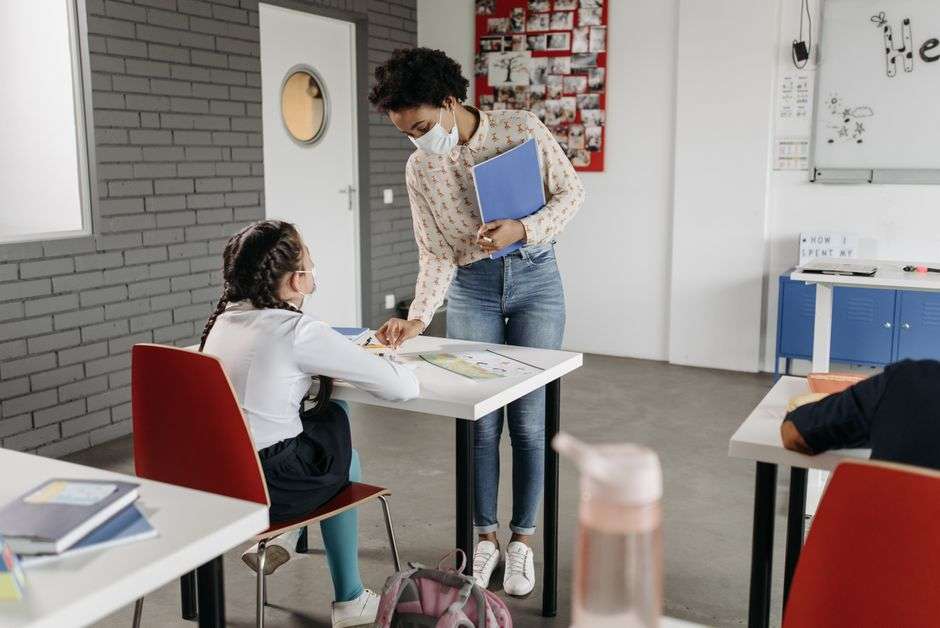
A statewide survey of Alabama educators has found that a large majority feel uneasy about heading back into school buildings this fall as the coronavirus pandemic continues to spread, a concern that carries particular weight in Mobile County, where thousands of teachers and students are preparing for a school year unlike any other. The findings arrive at the exact moment districts along the Gulf Coast are finalizing reopening plans, balancing the academic needs of their students against the health risks that come with gathering large groups of children and adults indoors five days a week.
The Alabama Education Association surveyed nearly 41,000 teachers, administrators and support staff in mid-July about how their schools planned to handle reopening amid COVID-19. The association, which represents public education employees across Alabama, used the survey to take the temperature of the workforce at the moment when most districts were still deciding between traditional in-person schedules, hybrid models, or all-virtual starts. Because respondents came from nearly every corner of the state, the results offer one of the broadest available pictures of how Alabama’s school employees viewed the return.
Roughly 65 percent of respondents said they would feel very uncomfortable going back to their school buildings under the health and safety conditions currently in place, citing worries over face coverings, social distancing, transportation logistics and cleaning protocols in buildings that were not designed with a pandemic in mind. Educators described classrooms that would fill past the point of reasonable spacing, hallways where distancing would be difficult to enforce, and buses that mix students from multiple neighborhoods every morning and afternoon.
Most of those who took part in the survey work in elementary schools, where education officials have said the youngest students are likely to struggle most with mask-wearing and maintaining distance from classmates. Kindergarten and early-grade teachers have long noted that five- and six-year-olds tend to hug, share supplies, and sit close together without prompting, behaviors that are healthy for development but risky during a respiratory outbreak. The survey results suggest that elementary staff are among the most anxious groups in the system about what a full return will look like in practice.
Middle school, high school and even college-level educators also responded, giving the survey a broad cross-section of perspectives from across Alabama’s public education system. High school teachers raised concerns about class sizes in core subjects, shared lab equipment, and crowded common areas such as cafeterias and gyms. Support staff, including bus drivers, custodians and aides, pointed out that their duties put them in close contact with students throughout the day and that they were often among the last groups consulted when reopening plans were drafted.
What the survey found
More than 60 percent of respondents said they would rather see schools open with remote instruction only, at least to start the year. That preference stands in sharp contrast to the traditional September opening most Alabama families have come to expect, and it reflects a belief among many educators that a few extra weeks of distance learning would buy time for case numbers to fall, for districts to stock protective equipment, and for school buildings to be reorganized with distancing in mind.
That option is already the plan in more than a dozen Alabama school systems, including the Mobile County Public School System, which opted to begin the academic year with virtual learning for at least the first nine weeks before revisiting the decision. As the state’s largest district, Mobile County’s choice carried outsized influence: leaders in smaller systems watched closely to see how the district handled technology distribution, teacher training, and communication with families before making their own calls on scheduling.
Districts that chose a remote start cited several factors, including the difficulty of hiring enough staff to cover in-person classes while teachers with health concerns or at-home risk factors requested accommodations, and the practical problem of distancing students on campuses built for full enrollment. In Mobile County alone, the virtual-first approach affects tens of thousands of students across cities and communities stretching from the Mississippi line to the Baldwin County border, from urban neighborhood schools in Mobile to rural campuses in Citronelle and Mount Vernon.
Districts split over how to start
Other districts around the state are moving forward with in-person instruction but requiring face coverings for most students and staff, along with more frequent cleaning and distancing measures inside classrooms and common areas. Several systems along the Gulf Coast, including districts in Baldwin County, have adopted modified schedules intended to keep groups of students separate, staggered lunch periods, and reduced occupancy in spaces such as gymnasiums and libraries. The patchwork of approaches reflects the reality that Alabama’s 137 school districts operate under local boards with wide latitude over day-to-day operations.
The differences among systems have created confusion for families who move between districts or who live near county lines. A parent working in Mobile but living in Baldwin County may have children following two very different calendars, one starting virtually and one starting in person, complicating child care and transportation decisions. Superintendents across the region have acknowledged that no plan will satisfy everyone and that flexibility, frequent communication, and a willingness to change course if conditions shift are essential.
Nearly every system is also offering some form of online option for students who are sick or considered at higher risk for severe illness from COVID-19. Families of medically vulnerable children, along with those living with older relatives or immunocompromised household members, have been among the most vocal in asking districts to preserve virtual choices even where in-person classes proceed. The surge in demand for remote learning has also pushed districts to expand device lending and internet access programs, particularly in rural parts of south Alabama where broadband coverage is inconsistent.
The state’s largest districts have leaned on existing distance-learning infrastructure built during earlier digital initiatives, while smaller systems have had to improvise, pairing paper packet delivery with limited live instruction. Teachers in both settings report long hours spent converting lesson plans to online formats, mastering new platforms, and troubleshooting technology for students and parents who are using the tools for the first time.
The concerns behind the numbers
Transportation emerged as one of the most persistent worries in educator responses. A conventional school bus seats students two and three to a bench for rides that can run thirty minutes or longer, and many Alabama districts already faced driver shortages before the pandemic. Requiring masks on buses, opening windows, assigning seats, and sanitizing between routes all add labor and cost at a moment when budgets are already strained. Some systems have asked parents to drive students to school where possible, a shift that creates new traffic and staffing problems at campuses designed around bus unloading zones.
Cleaning protocols present a similar scale problem. Custodial staff in most Alabama districts were hired and scheduled for routine nightly cleaning, not for the repeated daytime disinfection of doorknobs, desks, railings, computer keyboards and shared equipment that health guidance recommends. Many systems have hired additional custodial workers or reassigned staff from other duties, while others have limited the number of rooms and shared items a single class uses in a day to reduce the surface area that must be sanitized between groups.
Face coverings have been the most politically charged element of the debate. Alabama’s statewide mask order, put in place by Gov. Kay Ivey in mid-July, requires masks in public indoor spaces, with school-specific guidance issued by the Alabama State Department of Education through its roadmap for reopening schools. Districts vary in how strictly they apply the requirement to students, and several systems have faced heated public comment at board meetings from parents on both sides of the issue. Educators, for their part, have largely asked for clear, consistent rules rather than choices left to individual classrooms.
State education officials, working with the Alabama Department of Public Health, published reopening guidance that leaves key decisions to local superintendents and boards, a structure that produced the wide variation seen across the state. The guidance covers screening for symptoms, procedures for isolating students who become sick during the day, recommendations for cohorting students to limit spread, and protocols for notifying families and staff when cases are confirmed on campus.
Teachers’ organizations, including the Alabama Education Association and the National Education Association’s state affiliates, have pressed districts to address workload and liability questions raised by the pandemic, noting that many educators are themselves older or managing chronic conditions that put them in higher-risk categories. The survey’s findings have been circulated to lawmakers and state board members as part of that effort, with associations arguing that the preferences of school employees deserve formal weight in reopening decisions rather than being treated as an afterthought.
What it means for Mobile County
In Mobile County, the survey’s results land on a community still weighing the costs of a virtual start. The district’s nine-week virtual opening gives leaders a defined checkpoint at which to reassess case trends, staffing levels, and the readiness of buildings. Families in the county have been asked to confirm learning choices, pick up devices at distribution events, and adjust to new schedules for meals, which many schools continued providing through pickup sites during closures.
Local educators say the coming weeks will test whether the concerns raised in the survey are addressed before campuses reopen. Ventilation upgrades, staffing for health screenings, substitute-teacher pipelines, and clear protocols for responding to positive cases are among the items unions and employee groups have asked districts to detail publicly. Whether those demands are met, and how quickly in-person learning resumes, will shape the year for the tens of thousands of students and the thousands of employees the survey represents.
For now, the message from Alabama’s classrooms is unambiguous: the people responsible for teaching the state’s children want to teach them, but they want to do it in conditions they consider safe. The gap between that expectation and the plans many districts have adopted remains the central tension of the school year, one that will be renegotiated month by month as the pandemic and the school calendar move forward together.