University of South Alabama Mobile
Mobile Woman Pleads Not Guilty to Manslaughter in Fatal Domestic Stabbing
Tamekia Danielle Steele, 35, broke down in a Mobile courtroom as she pleaded not guilty to a manslaughter charge in the June stabbing death of a man she had once been close to, court proceedings showed.
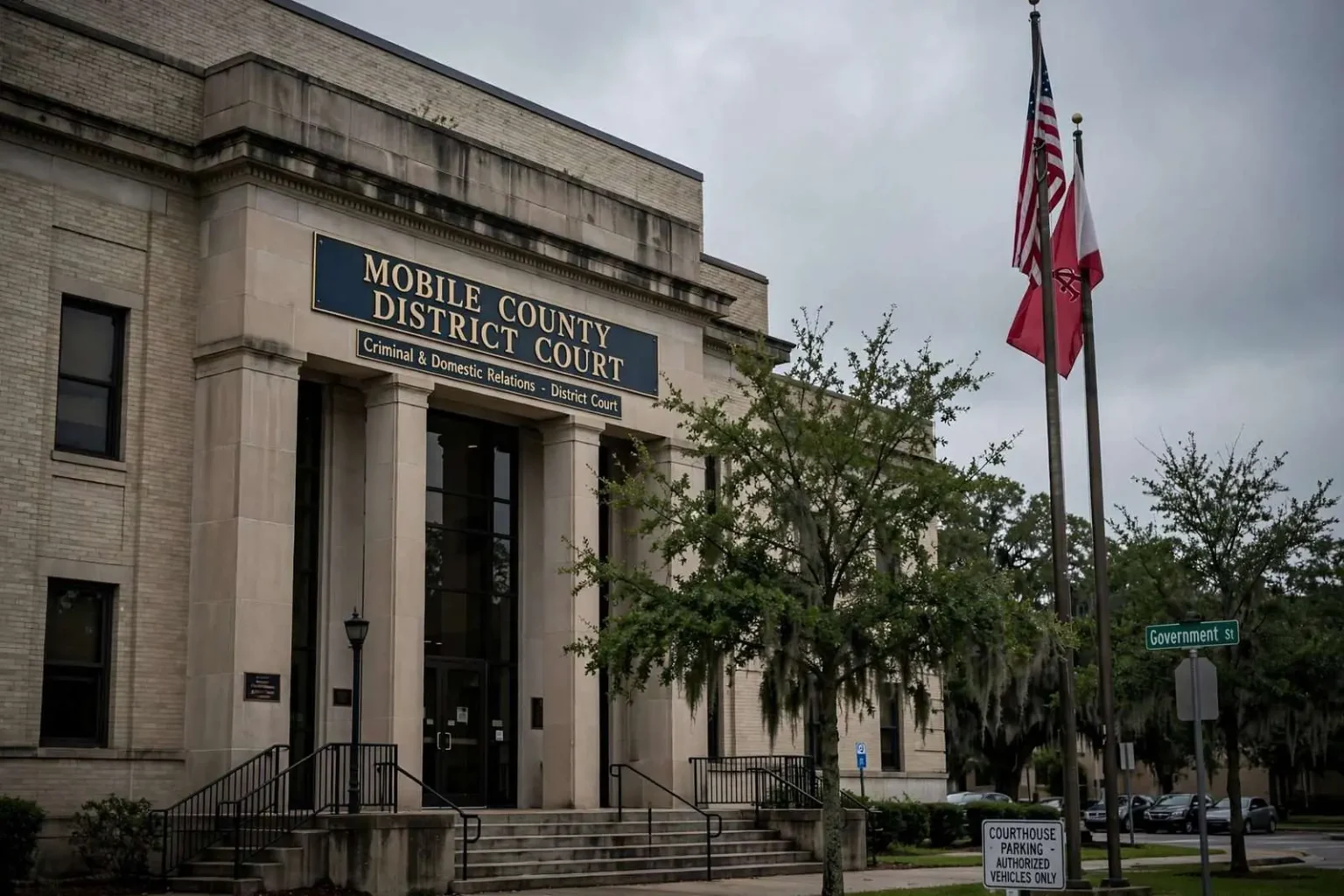
A Mobile woman pleaded not guilty to a manslaughter charge stemming from the stabbing death of a man during a domestic dispute earlier in the summer, with the case moving toward a preliminary hearing. Tamekia Danielle Steele, 35, entered her plea in District Court, breaking down in Judge Bob Sherling’s courtroom as she did so. She was accused of killing 32-year-old Willie LeKeith Coleman in a June 26 domestic incident.
The brief hearing marked the formal start of a case that had already drawn attention for the relationship at its center. Police said Steele and Coleman had at one point lived together or dated, though the status of their relationship at the time of his death was unclear — a detail that will matter in a court system where the history between a defendant and a victim shapes everything from charging decisions to jury arguments.
Found with a neck wound
Coleman was found with a neck wound near the intersection of Circle and North Fairport drives, according to accounts of the case. He was later pronounced dead at the University of South Alabama Medical Center, the trauma hospital in midtown Mobile that receives the city’s most serious injuries. The location — a residential intersection in west Mobile — placed the death in a neighborhood of apartment complexes and busy thoroughfares rather than any single identifiable scene, and authorities released few details about what happened there.
Steele was released on a $25,000 bond and was set to appear for a preliminary hearing before Judge Sherling on July 17. Bond in that range is typical for a class-level felony charge where the defendant has limited prior history, and it allows a defendant to remain out of custody while the case proceeds — under the standard conditions that accompany release in Mobile County District Court.
Both had prior records
Court records reviewed in connection with the case showed that Coleman had several arrests dating back more than a decade, including charges of domestic violence, receiving stolen property and cocaine possession. He had pleaded guilty to the latter two charges, as well as to marijuana possession in 2010. At the time of his death, Coleman was enrolled in a substance abuse program as a condition of his probation, having been arrested on drug charges in late March, the records showed.
Steele had one prior arrest in Mobile County, for third-degree burglary in 2002, according to the records. The asymmetry between the two histories — an extended record on one side, a single decade-old arrest on the other — is the kind of detail that prosecutors, defense attorneys and judges weigh as a case moves from initial charge toward any final resolution.
Prior records do not determine outcomes, but they frame the conversations that follow. A defendant with little history presents differently at bond hearings and plea discussions than one with repeated contacts, and a victim’s record becomes part of the account a defense will build. In this case, both histories were public record before the first hearing had concluded.
A case headed to a hearing
The manslaughter charge, rather than a more serious count, signaled the way prosecutors initially framed the case as it entered the court system. In Alabama, manslaughter generally describes a death caused recklessly — a killing without the intent or deliberation that more serious homicide charges require. The distinction between those categories is where much of the legal fight in such cases takes place, and early charging decisions are only the opening position.
A preliminary hearing serves as an early checkpoint, giving a judge the chance to weigh whether there is enough evidence for the case to proceed. Prosecutors present a portion of their proof — often through a lead investigator — and the defense can probe it before the case ever reaches a grand jury. If the judge finds probable cause, the charge is bound over to the grand jury, which decides whether to return an indictment; if not, the case can end there.
For defendants, the hearing is the first live test of the state’s evidence, and it often sets the tone for negotiations that follow. For the families of victims, it is the first public airing of the facts in a courtroom, months before any trial. The July 17 hearing in Steele’s case would offer the most complete public account yet of what happened near Circle and North Fairport drives on June 26.
Domestic cases occupy difficult ground
Domestic killings occupy a difficult place in the criminal courts, where prior relationships, disputed accounts and the histories of those involved all shape how a case unfolds. The details that emerged in Steele’s case, including the earlier ties between the two and the records of both people, reflected the complicated background that often accompanies such incidents. Cases between current or former partners rarely present the clean narrative that stranger crimes do, and they frequently turn on questions — who lived where, when the relationship ended, what each party said in the days before — that only testimony can resolve.
Mobile County’s courts handle a steady stream of domestic-violence matters, from protective-order hearings to felony prosecutions, and the system has dedicated specialized handling for cases involving intimate partners. District Court is where those cases begin, and judges there see the full range: arguments that turned fatal, incidents with surviving victims, and everything between. Steele’s case joined that docket with an unusually visible profile because of the death at its center.
Steele’s visible distress in the courtroom underscored the personal weight of the proceeding. Defendants in domestic cases are frequently arraigned while the fallout of the underlying incident is still fresh — the relationship has ended in the most final way possible, and the court appearance itself is often the first time the parties’ families occupy the same room since the death.
What comes next in the process
With her plea entered and bond set, the matter turned toward the July 17 preliminary hearing, where the evidence against her would face its first formal test. The hearing would not decide guilt — that question belongs to a trial jury if the case reaches one — but it would determine whether the manslaughter charge survives its first contact with the evidence, and it would give both sides their earliest read on the other’s theory.
Authorities released few additional details about the confrontation that led to Coleman’s death or about what may have precipitated it. The location where he was found, near a residential intersection in Mobile, offered one of the few concrete markers in an account that otherwise left key questions for the court process to resolve. The medical center where he died is a regular part of the county’s criminal cases, its trauma records and personnel often called into evidence when a death reaches the courthouse.
As the case moved forward, it joined the roster of domestic-violence matters working through Mobile County’s courts, each carrying its own set of facts and its own path toward resolution. Some end in plea agreements within months; others run through a grand jury, an indictment and a trial that stretches out over a year or more. The route Steele’s case takes will depend on the evidence presented on July 17, the decisions of the grand jury that follows, and whatever negotiations the parties conduct once each side has heard the other’s case in open court.
The wider picture of domestic violence cases
Deaths between current and former partners remain among the most common categories of homicide in American court systems, and Alabama is no exception. The pattern is familiar to prosecutors and judges: an escalating dispute, a relationship whose official status does not match its actual one, and a weapon close at hand. Each case that reaches the courthouse prompts the same institutional questions about intervention — whether the system saw warning signs, whether protective orders or prior arrests played any role, and whether anything could have changed the outcome.
In this case, the record shows prior domestic-violence charges against Coleman from years earlier, though the records reviewed did not connect those older cases to Steele. That gap — between a history of incidents and the specific relationship that ended in death — is precisely what preliminary hearings and, if the case proceeds, trial testimony are designed to clarify. Until then, most of what happened on June 26 exists only in accounts the court has not yet heard tested.
For the neighborhood where Coleman was found, the case marked another entry in a familiar pattern: a residential intersection, a sudden death, and a slow procession of hearings that follows. The July 17 hearing will be the first public step in that procession, and the first time the full account of the state’s evidence becomes a matter of courtroom record rather than police summary.
Judge Sherling’s courtroom will see the case again before any grand jury does, and the proceedings that follow will unfold on the schedule that Mobile County’s criminal docket allows. From the not-guilty plea entered this week to the hearing two weeks away, the case begins the long, documented passage through the courts that every death in the county must take.