

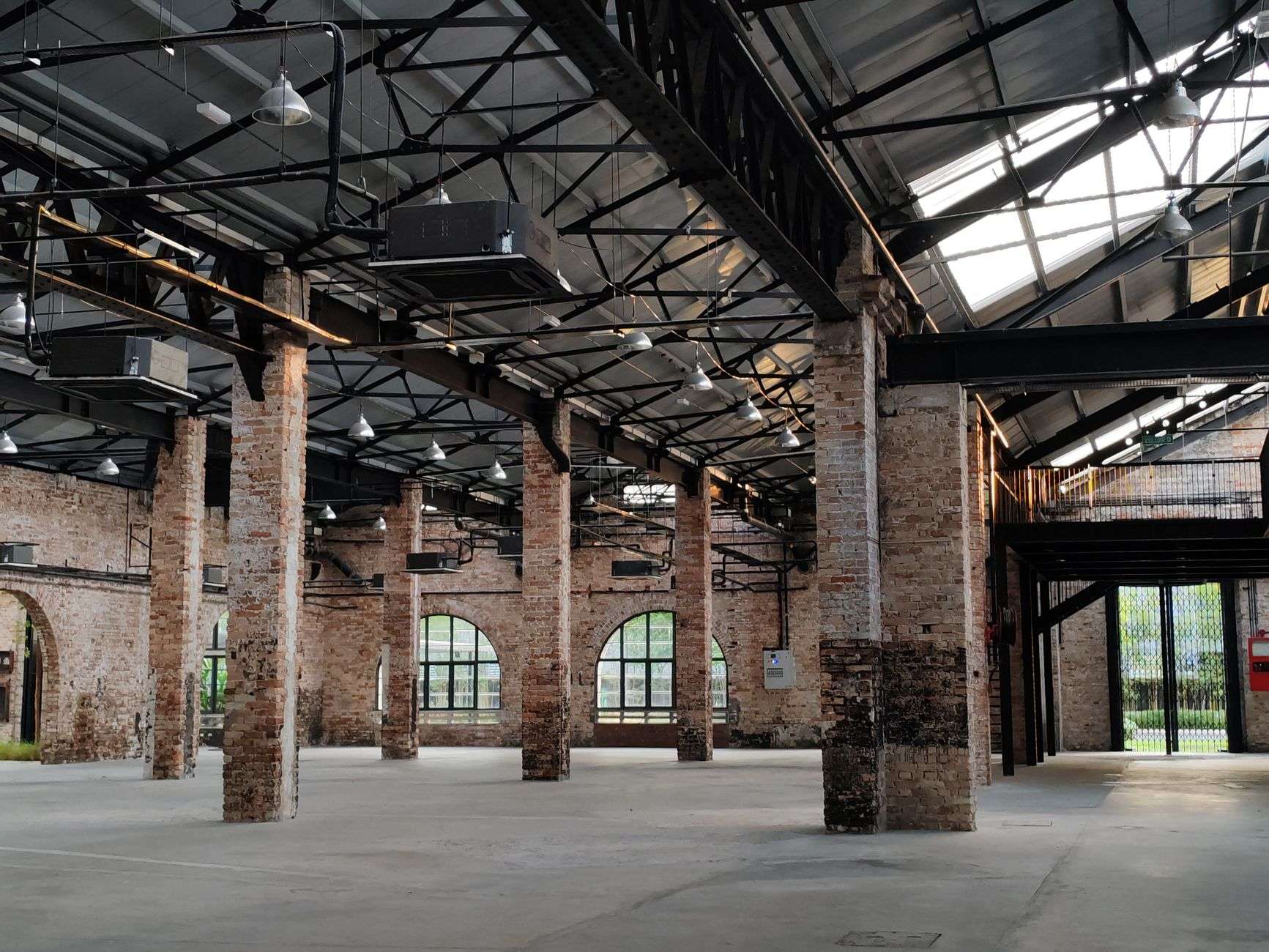
Some developers see an abandoned warehouse, a boarded-up schoolhouse or a shuttered ice plant and think about demolition. Taylor Atchison sees floor plans. Over little more than a decade, the Mobile native has helped turn a string of forgotten buildings in downtown and midtown Mobile into loft apartments, restaurants, a bar, event venues and co-working space — work that, by the summer of 2022, had earned him a seat on the Mobile Planning Commission and a reputation as one of the city’s most active historic redevelopers.
In late August 2022, Atchison was heading into a Planning Commission meeting where the future of the Mobile Civic Center was on the agenda. Then-Mayor Sandy Stimpson had appointed him to the commission, citing his experience redeveloping successful projects in the city’s historic areas. His path there says a lot about how downtown Mobile has been rebuilt, one old building at a time.
Restoration Runs in the Family
Atchison comes by his interest honestly. His parents, Tony and Sylvia Atchison, renovated the old Walker Warehouse, one of the last remaining Mobile brick warehouses from around 1900, and opened Atchison Home, the well-known furnishings and design center on Dauphin Street. For years the family lived in a home carved out of about a third of the warehouse, sharing the building with the store.
Tony and Sylvia ran the business for decades before selling it to Jack McCown. The family kept the building, and Taylor recently completed a full renovation of its top three floors into 18 apartments known as Atchison Lofts, entered from Conti Street. Atchison Home now occupies the entire ground floor, with its entrance still on Dauphin Street.
Tony’s own history with old buildings goes back to leasing space for his fledgling antique business from his father. He also inherited a dilapidated building at Dauphin and Cedar streets and waited ten years for the right use to come along. He bought and renovated the old Smith’s Bakery on Dauphin Street, which became the home of Red or White wine shop. Tony credits Wendell Quimby with paving the way for much of downtown Mobile’s historic renovation; Quimby bought and rehabilitated buildings now occupied by Wintzell’s Oyster House, Moe’s Original BBQ, Callahan’s Irish Social Club and The Garage. Sylvia, a sought-after interior designer, helped build Atchison Home into what it is and continued as its top designer.
A Recession-Era Education
Taylor graduated from the University of Alabama in 2008 and came home to Mobile just as the Great Recession took hold. He wanted to get into real estate development, but the market had essentially shut down. On a mentor’s advice, he took a job as a claims adjuster with Pilot Catastrophe Services, hoping the work would teach him about buildings and property. It was steady but grueling, often from 7 a.m. to 7 p.m. After two years, he joined the family furniture business.
With help from his parents, he bought a small house on the edge of the Oakleigh Garden District that needed major work — he called it “an eyesore.” The family did the renovation themselves, opening up the floor plan and modernizing the interior to create an appealing home close to downtown’s entertainment district. Taylor went on to reimagine and flip six or seven more houses, “one at a time.”
Marine Street Lofts and the Historic Tax Credit Playbook
His big break came after he read that Pace Burt, a developer from South Carolina, was working on the multi-story building at 951 Government Street. Taylor reached out, the two met at Callahan’s and hit it off, and three weeks later Burt asked him to serve as project manager on what became Marine Street Lofts, a 48-unit apartment building with commercial space on the ground floor.
Burt gave him wide latitude to plan, design, manage construction and lease the finished apartments. Because Burt preferred to keep work in-house, Taylor left the furniture business to focus on the project full time, in part so as not to complicate his parents’ plans to exit Atchison Home. Marine Street Lofts succeeded, and its ground floor included a co-working space Taylor created and named The Container Yard.
Working with Burt, Atchison learned the historic tax credit process — the financing tool behind much of downtown Mobile’s revival. Under the federal program administered by the National Park Service and the IRS, owners who rehabilitate certified historic, income-producing buildings to federal preservation standards can claim a tax credit equal to 20 percent of qualified rehabilitation costs. Alabama offers its own state historic rehabilitation credit as well. The credits can make otherwise unworkable projects pencil out, but they come with strict design review.
The pair next approached the Mobile County Public School Board about buying two boarded-up schools — the Old Shell Road school in midtown and the Russell School on Broad Street — to convert into apartments. Taylor took on growing responsibility, including getting the properties properly zoned before closing and securing approval from the city’s Architectural Review Board to qualify for the credits. The process can be frustrating, but he said he enjoyed it and treated every step as part of his education. Old Shell Lofts and Broad Street Lofts were both fully leased upon completion.
From Lofts to Restaurants, Event Halls and a Bar
Atchison’s projects then branched into commercial space:
- Dauphin and Cedar: His father’s long-vacant corner property became his first commercial project, home to Chuck’s Fish, a Gulf-to-table restaurant. The tenant-led renovation taught him how to navigate Mobile County Health Department requirements, and the landlord-tenant relationship continues today.
- The old Red Cross building: With his father and partner Bestor Ward, he bought the vacant building at Dauphin and Broad streets and used historic tax credits to turn it into loft apartments, Crown Hall event space run by Bay Gourmet, and the restaurant The Crooked Crown. The Container Yard moved there, growing from 2,000 square feet to 7,500. Around the same time, he added newly built lofts at the Old Shell Road school property.
- Crystal Ice: Taylor and Tony bought the old Crystal Ice Manufacturing buildings on Monroe Street near Broad, now the Ice Box bar. It was his first industrial property; there was no original plan for a bar, but he liked the idea of a neighborhood watering hole and connected with Stoney Boatman to run it. In 2022, they were doubling its size by turning the former freezer area, with its 22-foot ceiling, into event space, and he planned to update a garage building across the street that was part of the original ice plant property to see “what emerges.”
After those projects, he went straight to converting Atchison Lofts — a two-year effort during the height of the pandemic, complicated by supply chain problems and subcontractor challenges. Bringing a century-old structure up to modern building codes while meeting historic tax credit standards, he found, was not for the faint of heart.
A Seat on the Planning Commission
That experience made Atchison a natural fit for the Mobile Planning Commission, the appointed board that reviews subdivision plats, rezoning requests and other land-use matters and makes recommendations to the City Council on zoning changes. Its decisions shape what gets built, where and how — questions that were very much in play in 2022 as the city weighed what to do with the aging Mobile Civic Center, a 1960s-era complex on the western edge of downtown.
For a developer who has spent years working through zoning, permitting and design review from the applicant’s side of the table, the commission offered a chance to help shape the rules from the other side.
Walkable Neighborhoods and “What’s Next”
Asked what drives him, Atchison pointed to the change these projects bring to their surroundings. “The rewarding part of my education so far has been taking properties that have been a blight on the communities and giving them a new life, creating real value within the neighborhoods,” he said. He likes the uniqueness of old, forgotten buildings. “I enjoy getting things permitted and seeing the way forward.”
He also has strong views about how new development should work. “There are too many segmented developments being built where you have to get in your car to access goods and services. We need more thought into future development,” he said. “The future is in better planning, more mixed-use communities that have what you need most right there.”
That philosophy echoes a broader movement among planners and developers nationally toward walkable, mixed-use neighborhoods, where housing sits above or beside shops, restaurants and offices. In Mobile, the reuse of historic buildings downtown and in midtown has been a key driver of that kind of density, bringing residents back to neighborhoods that had emptied out over previous decades.
Why Adaptive Reuse Matters for Mobile
Mobile is one of the oldest cities on the Gulf Coast, founded by the French in 1702, and its downtown and surrounding historic districts hold an unusually rich inventory of 19th- and early 20th-century buildings — warehouses, commercial blocks, schools and industrial plants built for a busy port city. Many sat vacant for years as businesses and residents moved to the suburbs. Adaptive reuse — giving old buildings new purposes — preserves that architectural character while adding housing and business space without new sprawl.
Projects like the ones Atchison has worked on show both the promise and the difficulty of that approach: old structures bring charm and history, but also code upgrades, environmental surprises, lengthy reviews and financing puzzles. For residents, the results are visible along Dauphin, Conti, Government, Broad and Monroe streets, where once-empty buildings are again full of people.
For Atchison, the lesson from his parents’ warehouse to the Ice Box is the same: the past, handled with care, can be the foundation of the city’s future.