

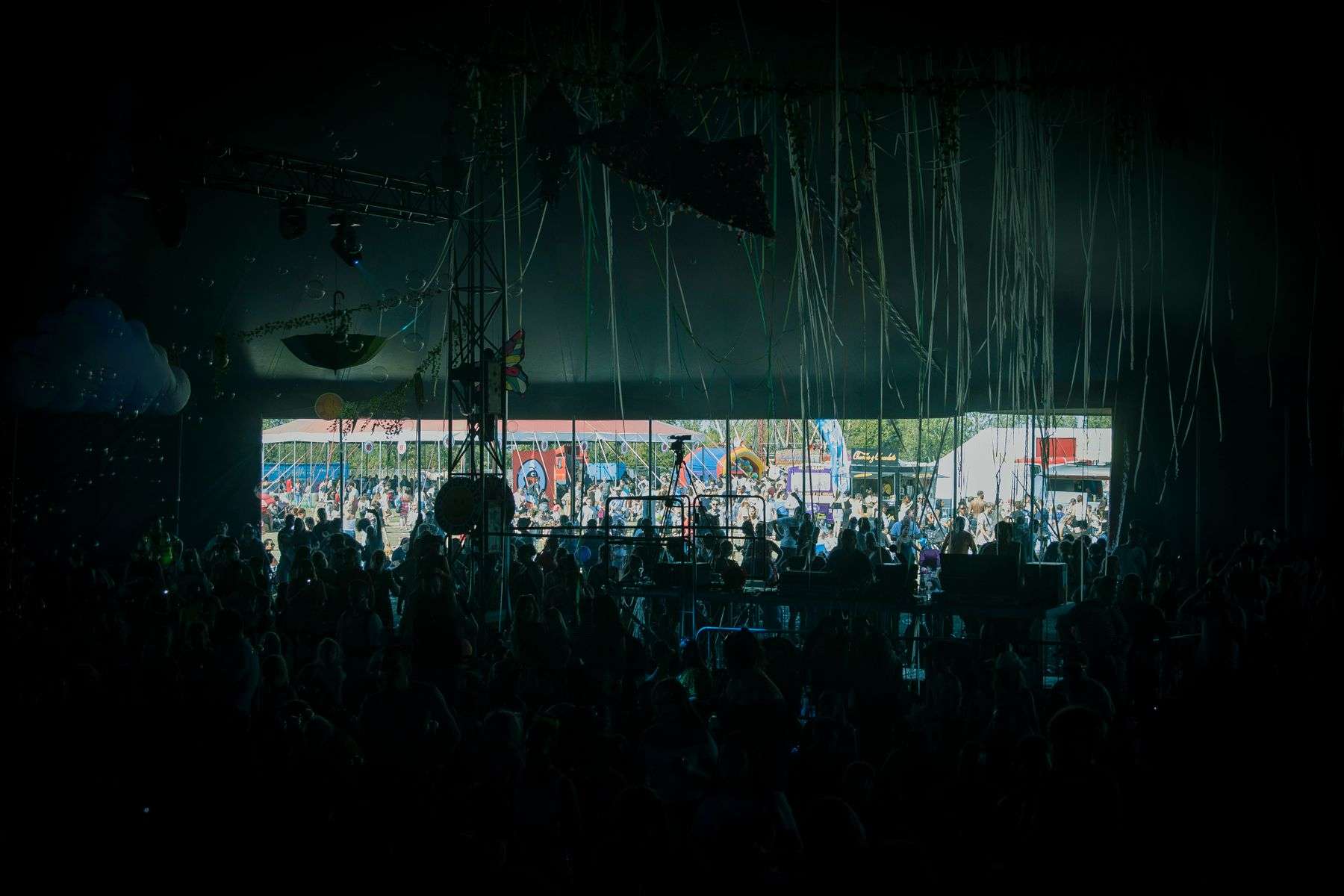
Organizers of the inaugural Hangout Music Festival confirmed in early May 2010 that the Roots would step in for the Flaming Lips, who withdrew from the festival’s first-ever lineup after the psychedelic rock band’s longtime multi-instrumentalist, Steven Drozd, became ill. The swap came just days before the three-day festival was set to open on the beach in Gulf Shores, and it landed amid a separate and far more consequential story unfolding just offshore: the Deepwater Horizon oil spill, which had begun less than three weeks earlier and was raising questions about whether a beachfront festival should proceed at all.
Festival organizers pressed ahead with their plans despite the uncertainty. The Hangout Music Festival was scheduled for May 14-16, 2010, staged on the sand around The Hangout, the restaurant and entertainment complex on the Gulf Shores public beach that gave the event its name. It was the first time a large-scale, multi-day touring music festival had been attempted on the Alabama Gulf Coast, a stretch of shoreline better known at the time for spring break crowds and family beach vacations than for hosting national touring acts.
A Late Lineup Change Before the Festival’s Debut
The Flaming Lips had been among the higher-profile additions to the Hangout Fest bill, joining a lineup that already included Alison Krauss, the Zac Brown Band, John Legend, the Black Crowes, Ben Harper and Relentless7, Ray LaMontagne and Grace Potter and the Nocturnals, among dozens of others. The Oklahoma band, known for elaborate, theatrical live shows built around frontman Wayne Coyne’s stage antics and Drozd’s intricate multi-instrumental arrangements, had built a reputation over more than two decades as one of the more unpredictable and visually ambitious acts in rock music.
Drozd, who had played with the Flaming Lips since the early 1990s and was widely regarded as central to the band’s sound on albums like “The Soft Bulletin” and “Yoshimi Battles the Pink Robots,” became sick shortly before the festival, forcing the band to pull out of a stretch of scheduled tour dates that included the Hangout Fest performance. The source material available on the cancellation does not specify the nature of Drozd’s illness, and no further details were available in the festival’s public statements at the time.
With the Flaming Lips out, festival organizers turned to the Roots, the Philadelphia hip-hop group known for its full live band instrumentation, a format that set it apart from most acts in the genre. The Roots had already built a following well beyond hip-hop audiences by the time of the 2010 festival, thanks in part to their reputation as one of the most dynamic live acts in popular music and their eclectic willingness to blend hip-hop with jazz, soul and rock influences on stage.
Booking Under Pressure: How Festivals Handle Late Cancellations
Last-minute lineup changes are a routine, if stressful, part of running a multi-day outdoor music festival. Illness, injury, scheduling conflicts and logistical problems can force artists to withdraw with little notice, and festival promoters typically maintain informal lists of backup acts, or lean on relationships with booking agents and other artists already confirmed for nearby dates, to fill gaps quickly. Because major festivals sell tickets months in advance based on an announced lineup, promoters generally aim to replace headline-caliber cancellations with acts of comparable draw whenever possible, both to protect ticket sales and to preserve the event’s reputation with fans who built travel plans around specific artists.
For a first-year festival in particular, a high-profile cancellation carries added risk. Without a track record to fall back on, new festivals depend heavily on their inaugural lineup to establish credibility with fans, media and future artists considering whether to play the event in later years. Securing a well-regarded replacement act like the Roots on short notice would have been seen as a meaningful save for organizers working to launch Hangout Fest as a lasting fixture on the festival circuit rather than a one-off event.
Lineup changes of this kind are typically communicated to the public through official festival channels rather than through the artists themselves, since promoters control ticketing and want to manage the announcement in a way that keeps fans informed without discouraging attendance. In most cases, a festival’s official statement on a swap like this focuses on framing the replacement as an exciting addition rather than dwelling on the reasons behind the original act’s exit, both out of respect for the departing artist’s privacy around personal or health matters and to keep the focus on the show that will actually take place. Refunds tied specifically to a single act’s cancellation are rare at multi-artist festivals, since ticket buyers are generally understood to be purchasing access to the overall event rather than a guarantee of any one performer’s appearance; festival terms of service typically make that distinction explicit.
The Backdrop: An Oil Spill Just Weeks Before Showtime
The lineup shuffle took place against an unusually tense backdrop for coastal Alabama. On April 20, 2010, an explosion aboard the Deepwater Horizon drilling rig in the Gulf of Mexico killed 11 workers and triggered a massive, uncontrolled release of oil roughly 50 miles off the Louisiana coast. Over the following weeks, an expanding oil slick threatened Gulf Coast beaches from Louisiana to the Florida Panhandle, and by early May, with the well still not capped, communities across the region, including Gulf Shores and the rest of Baldwin County, were monitoring the spill’s trajectory and bracing for the possibility that oil could reach Alabama’s beaches.
That uncertainty put pressure on any event tied to the coastline, and a beachfront music festival was no exception. Despite the concerns, Hangout Fest organizers opted to proceed with the festival as scheduled rather than postpone or relocate it, a decision that reflected both the practical difficulties of rescheduling an event with dozens of booked acts and a bet that the festival’s debut mattered enough to see through even under a cloud of regional uncertainty. The spill would go on to become the largest marine oil spill in U.S. history, and its economic and environmental effects on the Alabama and greater Gulf Coast tourism industry played out over the following months and years, but the festival’s first edition went forward on the beach as planned in mid-May.
Gulf Shores and Baldwin County’s Tourism Economy
Gulf Shores sits at the western end of Baldwin County’s beach communities, along with neighboring Orange Beach, and the area’s economy has long depended heavily on tourism tied to its white-sand beaches. Spring and summer visitor traffic, driven by spring break crowds, family vacations and beach rental income, represents a significant share of local business activity in a county that has grown rapidly as a coastal tourism and retirement destination. A new large-scale festival promised organizers, and local businesses, an additional draw capable of extending the traditional tourist season and bringing visitors to the coast outside of the peak summer weeks.
The Hangout Music Festival’s launch in 2010 reflected a broader trend of communities positioning multi-day music festivals as economic development tools, aiming to draw visitors who spend money on lodging, dining and retail well beyond the festival grounds themselves. Coastal and beach-town festivals in particular have used their setting as a selling point, marketing the combination of live music and beach access as a distinct alternative to festivals held in urban parks or fairgrounds.
Two Bands, Two Very Different Sounds
The swap from the Flaming Lips to the Roots also represented a notable shift in the type of performance festivalgoers could expect from that particular set. The Flaming Lips built their live shows around large-scale visual spectacle, confetti cannons, giant balloons, elaborate costumes and Coyne’s often surreal stage presence, layered over psychedelic rock arrangements that leaned on Drozd’s multi-instrumental contributions. The band had earned critical acclaim and a dedicated fan base over a career that, by 2010, stretched back more than two decades.
The Roots, by contrast, built their reputation on musicianship, anchored by drummer Ahmir “Questlove” Thompson and a rotating cast of instrumentalists performing hip-hop with the instrumentation and improvisational sensibility of a jazz or funk band. Their appeal often crossed genre lines, drawing hip-hop fans alongside listeners more typically associated with jam bands and rock acts, a crossover appeal that would have made them a fitting, if stylistically distinct, replacement on a bill built around genre diversity.
What Came Next for the Festival
The Hangout Music Festival’s first edition in May 2010 marked the start of what would become an annual fixture on the Alabama Gulf Coast, drawing large crowds to Gulf Shores each spring in the years that followed its debut. The event’s early willingness to adapt, both to artist cancellations and to the regional uncertainty created by the oil spill, set a pattern that festival organizers across the industry regularly face: outdoor, multi-day events depend on flexibility, contingency planning and strong relationships with the broader music industry to keep a show moving forward when circumstances change on short notice.
For fans who had bought tickets specifically to see the Flaming Lips, the substitution likely came as a disappointment, but the addition of a well-regarded act like the Roots offered organizers a credible way to preserve the strength of their debut lineup. The episode also illustrated, in miniature, the kind of behind-the-scenes scrambling that goes into keeping a large festival on schedule, work that mostly stays invisible to attendees unless a marquee name suddenly disappears from the bill days before the gates open.