

Tucked into a century-old cottage behind the Walter Anderson Museum of Art, The Traveler in Ocean Springs, Mississippi, is a small restaurant built around a big idea: that a meal can carry the same curiosity and resourcefulness that defined one of the Gulf Coast’s most celebrated artists. Nearly everything inside — the furniture, the native plantings outside, even the coffee mugs — is artist-designed, curated or handmade, and the menu draws its inspiration from Walter Anderson’s adventurous spirit and his travels around the world.
In early 2026, visitors from across the region, including a group of friends from Fairhope, were discovering the restaurant under chef Dannie Landry, who took over the kitchen in July 2025 and rebuilt the menu around locally sourced ingredients and a few Anderson-inspired touches.
Art on the Table, Literally
At The Traveler, the art is not confined to the walls. Diners may find themselves seated at a table whose legs are shaped like blue jays, a nod to Anderson’s famous bird paintings. Coffee arrives in handmade mugs from Shearwater Pottery, the Ocean Springs pottery founded by the Anderson family in 1928 and still operated by the family today. Around the renovated house are more family touches: a door painted by Anderson’s daughter, Leif Anderson, and silk-screened curtains printed with bird motifs.
Outside, a pollinator garden holds a bicycle sculpture, and the bell on the counter was inspired by the bell on Anderson’s bicycle. Those details point to the book Landry calls the main inspiration for his concept, The Bicycle Logs of Walter Anderson, a collection of the artist’s personal travel journals.
Biscuits With a Story
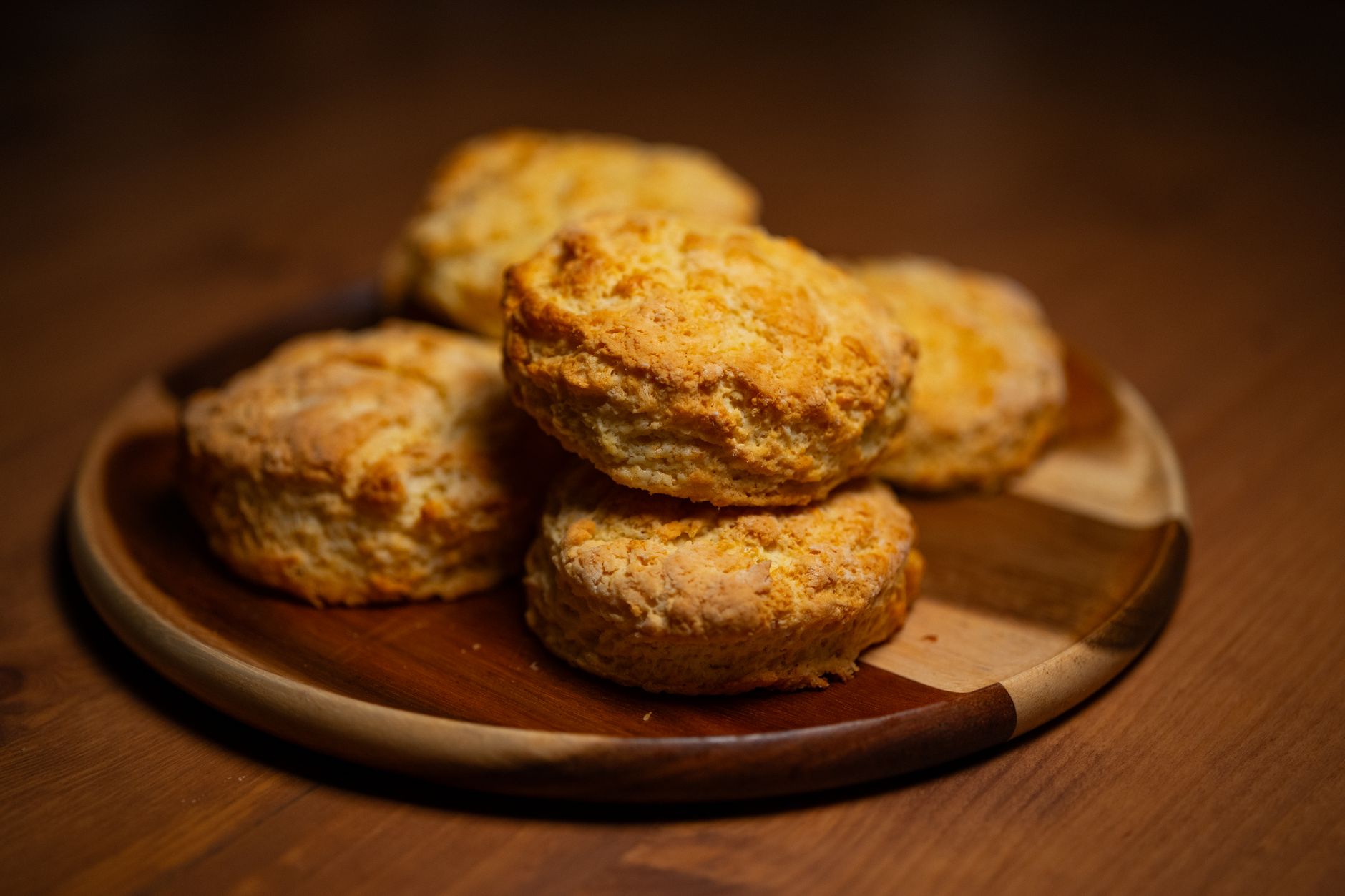
Breakfast at The Traveler centers on homemade biscuits, and Landry makes them from scratch using a decades-old Betty Crocker recipe — the kind many Southern families remember from the red gingham-covered cookbook on the kitchen shelf.
One biscuit, called the Marigold, pairs house-made pimento cheese with bacon jam for a savory-sweet combination. Landry explained that it takes its name from marigold, one of Walter Anderson’s favorite colors. More traditional versions come topped with bacon and eggs.
Landry’s signature ingredient is his homemade chow chow, a Southern relish he calls “Delta Tang,” which he uses as a secret ingredient in his sauces and dressings.
Both of those flavors have deep roots in Southern kitchens. Chow chow is a tangy relish of chopped, pickled vegetables — often cabbage, peppers, onions and green tomatoes — that home cooks across the South have long put up at the end of the growing season so nothing from the garden goes to waste. Pimento cheese, a spread of sharp cheddar, mayonnaise and pimentos, is so common across the region that it is sometimes called the pâté of the South. Building a menu around staples like these, and making them in-house, fits Landry’s goal of finding meaning in ordinary things, the same quality he admires in Anderson’s art.
“I revamped the entire menu, using locally sourced ingredients,” Landry said. “In the spirit of Walter Anderson, I like to find use and meaning in things. Walter was resourceful and found beauty in ordinary things.”
The Chef’s Winding Road to Ocean Springs
Dannie Landry was born in New Orleans and moved with his family to St. Martin, Mississippi, as a boy. With an Italian mother and a Creole father, he grew up in a household where cooking and good food were central to family life.
His first job in the service industry was at Wendy’s, where founder Dave Thomas’s emphasis on fresh ingredients made a lasting impression. He went on to management roles at other fast food chains, working every position along the way — bartending, prep work, grill tending, frying and more.
Later, a job with GNC taught him about nutrition and supplements and deepened his appreciation for plant-based eating. After some ups and downs, he reached a crossroads, and his husband encouraged him to enroll in the culinary program at Mississippi Gulf Coast Community College. There, he made the contacts that eventually led the museum to hire him as chef for The Traveler.
Community college culinary programs like the one at Mississippi Gulf Coast Community College have become an important pipeline for the Gulf Coast’s restaurant and hospitality industry, which depends heavily on tourism, casinos and a busy dining scene from Bay St. Louis to Pascagoula. For career changers like Landry, those programs offer hands-on kitchen training, food safety instruction and connections to local employers without the cost of a private culinary school.
Landing the job required a tryout. “I had to audition,” he said, “and create a Father’s Day Brunch. I used wooden boards shaped like a painter’s palette as a charcuterie board. This was an homage to Walter Anderson.” The audition was a success, and he started the following July.
Who Was Walter Anderson?
To understand The Traveler, it helps to know the artist behind it. Walter Inglis Anderson (1903–1965) was born in New Orleans and spent most of his life in Ocean Springs. Trained at the Pennsylvania Academy of the Fine Arts, he became known for vivid watercolors, block prints, murals and drawings of the plants, birds and animals of the Mississippi coast. He famously rowed a small boat roughly a dozen miles to Horn Island, a barrier island in the Gulf, where he spent long stretches living rough and painting the island’s wildlife.
Anderson was also a restless traveler who often journeyed by bicycle, recording his trips in logs and sketches, and his journeys took him far beyond Mississippi. Much of his work was little known to the public during his lifetime; after his death, his family discovered a locked room in his cottage covered floor to ceiling with murals. Today his reputation as one of the South’s most original artists is secure.
The Walter Anderson Museum of Art, which opened in downtown Ocean Springs in 1991, showcases his work along with pieces by his brothers, Peter Anderson, the potter who founded Shearwater, and James McConnell Anderson. The Traveler sits just behind the museum, making it an easy stop before or after a visit.
Music, Markets and Themed Dinners
In the six months after Landry took the helm, business at The Traveler grew steadily. The restaurant added live music on Friday nights, paired with a small pop-up market where local artists showcase and sell their work.
In January 2026, the restaurant scheduled two special events:
- A Sip and Paint event on January 23.
- Travels with Taste, a ticketed dinner on January 26, featuring food stations themed around places tied to Anderson’s travels: New Orleans, Tex-Mex, Costa Rica, Paris and China.
The Friday market reflects a tradition that runs deep in Ocean Springs. The town’s identity as an artists’ haven owes much to the Anderson family and Shearwater Pottery, and generations of painters, potters, printmakers and craftspeople have since set up studios and galleries in the city. Giving local makers a regular place to show and sell their work alongside live music keeps that creative spirit tied to the museum grounds, and it gives diners one more reason to linger over dinner at the end of the week.
The Traveler also offers a catering menu and can be rented as an event space for small gatherings.
Landry has said he found in The Traveler the ideal place to be creative and intentional, bringing art and beauty to both his food and its surroundings.
Visiting Ocean Springs
Ocean Springs is one of the Mississippi Gulf Coast’s most charming small cities and an easy drive west from Mobile along Interstate 10. It traces its roots to 1699, when French explorer Pierre Le Moyne d’Iberville established Fort Maurepas on the shores of Biloxi Bay, among the earliest European settlements on the Gulf Coast. Today the city is known for its walkable downtown, with galleries, boutiques and restaurants beneath live oaks along Washington Avenue and Government Street, as well as its long-standing arts community, much of it shaped by the Anderson family.
Visitors often pair a stop at the museum and The Traveler with a walk through downtown, a visit to Shearwater Pottery’s showroom, or time along the beach and harbor. The Peter Anderson Arts and Crafts Festival, held downtown each fall and named for the Shearwater founder, is among the largest events of its kind on the coast and draws crowds from across the region.
Hours and What to Know Before You Go
As of January 2026, The Traveler was open Monday through Saturday from 8 a.m. to 5 p.m., with extended Friday hours until 9 p.m. The restaurant also planned to reopen on Sundays for brunch from 8 a.m. to 2 p.m. beginning in March 2026.
- The restaurant is located in a renovated cottage behind the Walter Anderson Museum of Art in Ocean Springs.
- Friday evenings have featured live music and a pop-up artists’ market.
- Catering and small private events are available.
- Hours, menus and events can change, so check with the restaurant or the museum for the current schedule before visiting.
Whether it serves as the capstone to a museum visit or a destination on its own, The Traveler offers a thoughtful way to experience Walter Anderson’s world — one biscuit, one handmade mug and one well-traveled flavor at a time.