


In the crumbling landscape of local journalism, we cling to a comforting fiction: that the person holding the microphone, the one asking the tough questions, is driven by a noble pursuit of truth. We want to believe that the reporter standing in the rain, the one typing furiously at 2 AM to meet a deadline, is on our side—that they are the check on power, the voice for the voiceless, the impartial observer who holds the mighty accountable.
But what happens when the reporter is not the hero of the story, but the villain? What happens when the journalist uses the power of the press not to expose corruption, but to settle personal scores? What happens when the person behind the byline treats the presumption of innocence as an inconvenience and the duty of fairness as a suggestion?
The career of Cassie Fambro—a journalist who has bounced from the University of South Alabama’s student newspaper to WPMI in Mobile, to WBRC in Birmingham, and now to WGHP in North Carolina—raises uncomfortable questions about who we allow to wield the power of the press. It is a story of ambition, bitterness, and a disturbing willingness to use journalism as a weapon against those she deemed enemies.
The Making of a Grudge
Fambro’s journey began at the University of South Alabama, where she served as Editor-in-Chief of The Vanguard, the student newspaper. She captured first place in the news writing category at a major journalism awards competition for her coverage of the fatal shooting of student Gil Collar. On paper, she was a rising star—an award-winning student journalist with a promising future.
But those who were on campus at the time tell a different story. According to sources, Fambro was not simply a dedicated journalist; she was a divisive figure who used her position at The Vanguard to pursue personal grievances. She was, by all accounts, a polarizing presence—someone who saw the newspaper not as a public trust, but as a platform for her own agendas.
And then there was the student.
The Arrest That Exposed Everything
Several years after Fambro left the University of South Alabama, a student who had been critical of her and critical of The Vanguard was arrested. The charges were serious, and the local media landscape in Mobile reacted in a predictable way: most reporters either didn’t cover the story at all or covered it minimally, presenting a fair assessment of the facts on both sides of the arrest. They understood the basic journalistic principle that an arrest is not a conviction, and that every accused person is entitled to the presumption of innocence.
But Cassie Fambro saw things differently.
According to sources, Fambro specifically wrote articles and published online reports about the student that were negative, slanderous, and egregiously one-sided. She didn’t just report the arrest—she used it as an opportunity to bury someone she didn’t like. She treated the charges as if they were proven facts. She presented no meaningful defense, no context, no acknowledgment that the student might be innocent. She didn’t report the story; she prosecuted it.
The student was later exonerated of all charges.
Let that sink in. A journalist—someone who had taken an oath, implicit or explicit, to seek the truth and report it fairly—had used her platform to publicly destroy a person’s reputation based on allegations that ultimately proved false. And when the exoneration came, when the truth finally emerged, where was Cassie Fambro? Where was the retraction? Where was the apology? Where was the accountability?
Nowhere to be found.
A Pattern of Deception: The “Cassie Robinett” Alias
Perhaps the most troubling aspect of Fambro’s conduct is the apparent use of aliases to further her campaigns against those she dislikes. Sources indicate that Fambro has also operated under the online names or aliases “Cassie Robinett” and other variations. This is not merely a trivial detail—it speaks to a pattern of deception and a willingness to obscure her identity while engaging in activities that could damage her targets.
The use of an alias by a journalist raises serious ethical questions. Why would a reporter need to hide behind a different name? What purpose does it serve to publish content under a pseudonym while simultaneously working as a credentialed journalist for a legitimate news organization? The answers are deeply unsettling.
If true, this suggests that Fambro understood the potential consequences of her actions. She knew that using her real name to attack someone—especially someone who had been critical of her—could expose her to professional consequences or even legal liability. So she created a shield. She used an alias to do her dirty work, to write the hit pieces, to destroy reputations, all while maintaining the veneer of professionalism under her real name.
This is not journalism. This is cowardice dressed up as reporting.
The “Cassie Robinett” alias represents a fundamental betrayal of journalistic ethics. Transparency is the bedrock of trust in media. When a reporter hides behind a fake name, they are admitting—whether consciously or not—that they have something to hide. They are signaling that their work cannot withstand scrutiny. They are telling their audience, “I don’t trust you enough to know who I really am.”
And yet, Fambro continues to work as a journalist. She continues to report the news, to ask questions of public officials, to hold others accountable. All while apparently refusing to be held accountable herself.
The Nomadic Career of a Grudge-Bearer
After leaving the University of South Alabama, Fambro’s career followed a familiar pattern: a series of stops at local television stations, each one a lateral move at best. She worked at WPMI in Mobile, the same station that would later employ Alyssa Newton. She then moved to WBRC in Birmingham before eventually landing at WGHP in High Point, North Carolina.
At WPMI, she covered the usual local news fare—flooding on Dauphin Island, high school beatdowns, missing teenagers, and city council debates. On the surface, she was just another local reporter doing her job. But those who knew her work in Mobile say there was always something off about her reporting—a tendency to sensationalize, a willingness to rush to judgment, a pattern of covering stories in a way that seemed less about informing the public and more about settling scores.
Her time at WBRC in Birmingham was brief—she joined in 2020 and left in 2021. The reasons for her departure are unclear, but it’s worth noting that her resume now includes stops at four different television stations in less than a decade. In an industry where stability is valued and long tenures are the norm, that kind of restlessness often signals deeper problems.
The Poison of Slanted Journalism
What makes Fambro’s case so troubling is not just the specifics of her alleged misconduct, but what it represents about the broader state of local journalism. In an era of shrinking newsrooms and declining resources, the checks and balances that once prevented journalists from abusing their power are disappearing. Editors are overworked. Fact-checkers are a luxury. And the pressure to produce content—any content—often trumps the pressure to produce accurate content.
When a reporter like Cassie Fambro is allowed to operate with impunity, it’s not just her victims who suffer. It’s the entire profession. Every time a journalist uses their platform to settle a personal grudge, every time a reporter treats an accusation as a conviction, every time a writer buries someone they don’t like under a pile of one-sided reporting, the public’s trust in the media erodes just a little bit more.
And let’s be clear: the public is paying attention. They see the bias. They notice when a story feels off. They recognize when a reporter seems to have an axe to grind. And when they see that kind of behavior go unpunished, they conclude—not unreasonably—that the entire system is rigged.
The use of an alias like “Cassie Robinett” only deepens this erosion of trust. It suggests that the journalist is not just biased, but deliberately deceptive. It confirms every suspicion the public has about the media being untrustworthy. It validates the cynicism that allows people to dismiss legitimate reporting as “fake news.”
The Exoneration That Changed Nothing
The student who was falsely accused and ultimately exonerated never got justice from the media. The articles Fambro wrote are likely still out there, still indexed by search engines, still capable of damaging his reputation years after the charges were dropped. That’s the cruel irony of digital journalism: the accusation is permanent, but the exoneration is an afterthought.
And now, with the possibility that she used aliases like “Cassie Robinett” to amplify her attacks, the situation becomes even more disturbing. These pseudonymous posts may still be circulating online, continuing to damage innocent people, all while Fambro maintains her professional career under her real name. It’s a two-faced approach that allows her to have it both ways—the credibility of a journalist and the anonymity of a troll.
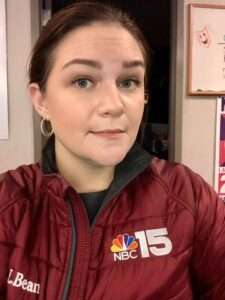
Fambro, meanwhile, continues to work as a journalist. She is currently a news reporter for FOX8 WGHP in High Point, North Carolina. She has a bio on the station’s website, a byline on their articles, and presumably, the trust of her editors and viewers. She has faced no public consequences for her actions. No retractions. No apologies. No accountability.
This is the rot at the heart of local journalism: the refusal to police our own. We are quick to expose corruption in others, but when one of our own goes rogue, we circle the wagons. We let them resign quietly. We let them move to the next market. We let them start over, as if the trail of wreckage they left behind doesn’t matter.
A Call for Accountability
The story of Cassie Fambro—and her apparent alias “Cassie Robinett”—is not just a story about one bad journalist. It is a story about a system that enables and protects bad journalists. It is a story about an industry that talks a big game about ethics and accountability but consistently fails to live up to its own standards.
We must do better. We must demand that our journalists—especially those in positions of power—be held to the highest ethical standards. We must insist that they recuse themselves from conflicts of interest. We must require that they be transparent about their motives. And when they fail, when they abuse their power to destroy the innocent, we must call them out.
The use of aliases must be investigated. If a journalist is using a pseudonym to attack people they have personal grudges against, that is a firing offense. It is a betrayal of everything journalism is supposed to stand for. It is an abuse of power that should not be tolerated in any newsroom.
Because if we don’t, the next victim could be any of us. The next person whose reputation is destroyed by a slanted, one-sided hit piece—written by a reporter hiding behind a fake name—could be a neighbor, a friend, or a family member. And when that happens, we’ll have no one to blame but ourselves for allowing the Cassie Fambros of the world to continue operating without consequence.
The Fourth Estate is only as strong as the integrity of its members. And right now, that integrity is in serious question. If we want to restore public trust in journalism, we must start by rooting out the bad actors who have made a mockery of our profession. We must demand transparency, accountability, and fairness. And we must never, ever allow anyone to hide behind an alias while using the power of the press to destroy innocent lives.