University of South Alabama Mobile
USA Children’s Hospital Confirms Six Enterovirus D68 Cases Amid Respiratory Surge
USA Children's & Women's Hospital confirmed six cases of enterovirus D68 as Mobile doctors treated an unusual surge of respiratory illness.
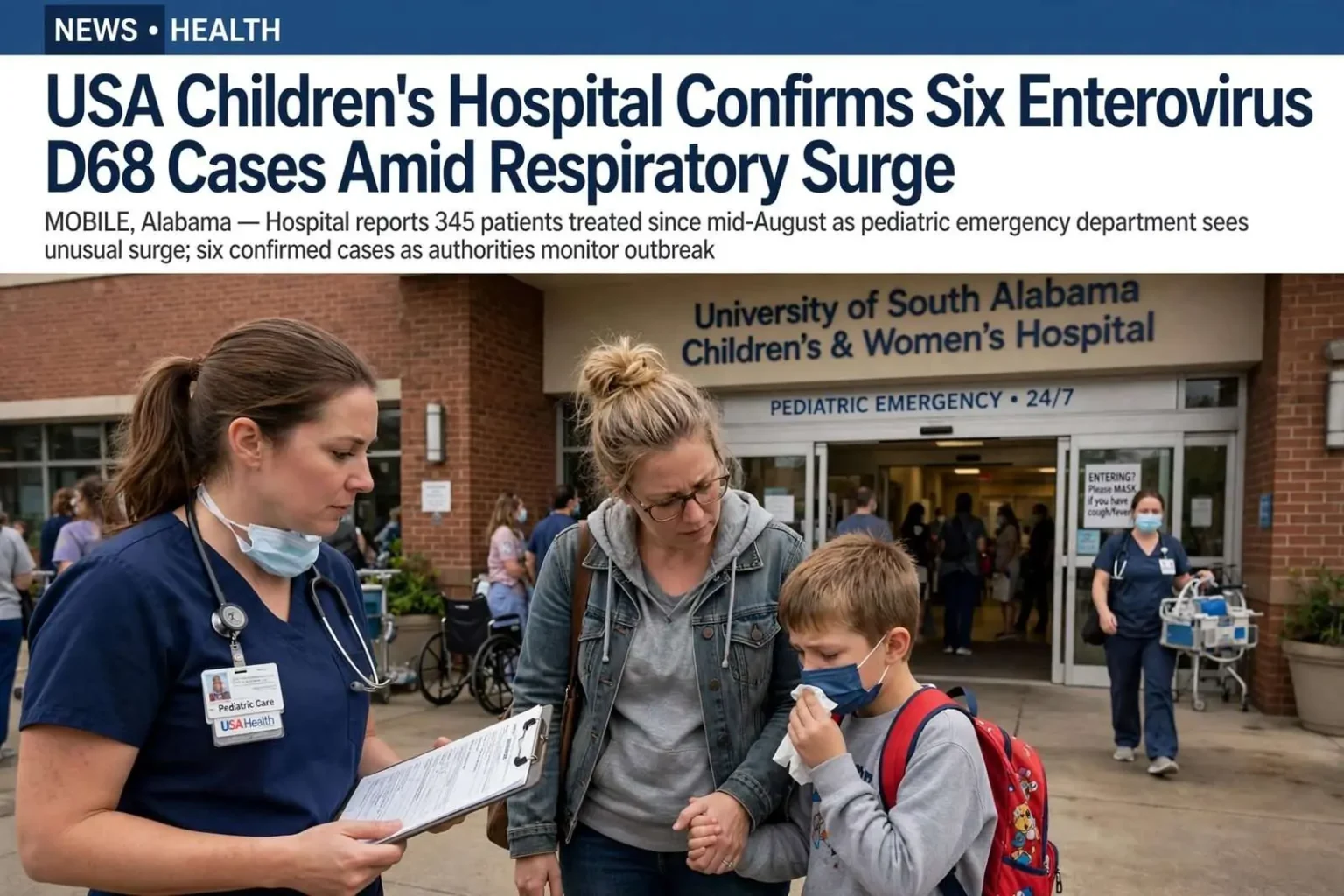
MOBILE, Alabama — Doctors at University of South Alabama Children’s & Women’s Hospital have confirmed six cases of the respiratory illness enterovirus D68, part of an unusually large wave of young patients showing up with breathing problems over the past several weeks. The confirmations, which come as pediatric emergency rooms across the region report heavier-than-normal traffic, have turned a routine late-summer virus season into something local physicians describe as anything but routine.
The Mobile County Health Department confirmed the six positive tests this week, making the county the latest addition to a list of communities where the virus has been identified. Hospital physicians said the facility has treated 345 patients with respiratory symptoms since mid-August, with 40 to 50 of those children admitted for one or two nights because of severe wheezing and related complications. Additional samples had been sent to the health department and the Centers for Disease Control and Prevention for further testing, meaning the confirmed count could rise as results come back.
A sharp rise in patients
The numbers represent a sharp departure from a typical late summer at the hospital. Emergency departments serving children normally see an uptick in respiratory complaints once school returns and germs begin circulating among classmates, but the volume recorded since mid-August has overwhelmed the usual rhythm. Staff describe waiting rooms filled with coughing children and a steady stream of admissions for overnight observation, mostly for children who needed help keeping their oxygen levels stable until the worst of the wheezing passed.
Most of the children treated at the facility have been released within a day or two, physicians said, but the admissions add up in a department that is also managing its regular caseload of births, injuries and other pediatric emergencies. The hospital serves families from across the central Gulf Coast, including Mobile, Baldwin and Washington counties in Alabama and parts of Mississippi and Florida, so a respiratory surge in Mobile County quickly ripples across the region’s pediatric care network.
An unusual pattern for a common virus
Enterovirus strains are common and typically do not cause serious respiratory illness, according to the hospital’s pediatric infectious disease specialist. Dozens of enterovirus types circulate every year, and most produce nothing worse than a summer cold. What has alarmed doctors this time is the sheer volume of children arriving with lower respiratory tract symptoms rather than the milder, cold-like illness usually associated with these viruses.
The strain behind the current outbreak was first identified decades ago and has caused sporadic clusters of illness in other parts of the country over the years, but staff say they have not previously seen a surge this widespread locally. Nationally, the virus has drawn attention in past years for producing sudden waves of severe wheezing illness in children, and the pattern now playing out in Mobile matches what other communities have reported when the strain circulates heavily.
Most affected patients are school-age children and teenagers, a demographic that mirrors the virus’s habit of spreading quickly in classrooms, athletic teams and other settings where older children gather. Infants and younger children can also be infected, but the bulk of the local cases so far have involved children old enough to be in school.
Who is most at risk
Physicians say children with a history of asthma appear especially vulnerable, with symptoms ranging from typical cold-like congestion to severe wheezing and respiratory distress. For a child whose airways are already prone to tightening, the virus can turn a manageable condition into an emergency, and several of the children admitted locally have needed breathing treatments before their symptoms settled enough to go home.
Some children have also developed fevers or a mild rash on the torso and palms, features that have helped doctors recognize the infection even before laboratory confirmation arrives. The rash itself is not considered dangerous, but its appearance alongside wheezing has been a useful clue for emergency room staff sorting through a crowded waiting room.
In many cases, particularly among healthy children without asthma, symptoms have been mild enough to manage at home, and adults who contract the virus are unlikely to need medical treatment at all. That distinction — mild illness for most, serious breathing trouble for a vulnerable minority — is what makes the outbreak so difficult for parents to navigate, doctors acknowledge. No deaths connected to the outbreak had been reported as of this week.
State health officials also investigating
State health authorities said they are looking into two separate clusters of pediatric respiratory illness, one centered in the Mobile area and another in north Alabama, as part of a broader effort to understand the scope of the outbreak across the state. The Alabama Department of Public Health works with hospitals and county health departments to track positive specimens, and the samples forwarded to the Centers for Disease Control and Prevention will help federal researchers confirm which strain is circulating and how it compares with outbreaks elsewhere.
The two-cluster pattern suggests the virus is moving through more than one community at the same time rather than spreading from a single source, which complicates efforts to contain it. Public health officials emphasize that surveillance — identifying which children are actually infected with D68 rather than other common respiratory viruses — is the main tool available, since no vaccine exists for enteroviruses.
Guidance for worried parents
Hospital officials said emergency room wait times have grown noticeably longer because of the volume of cases. They are urging parents to treat mild cold symptoms at home with over-the-counter medication and to call their child’s regular pediatrician first rather than heading straight to the emergency department, a step that both shortens waits for families and keeps the ER focused on the children who need it most.
Families were advised to seek immediate medical attention if a child is struggling to breathe, remains wheezy after using rescue inhalers or breathing treatments, or has a high fever that will not respond to standard medication. Doctors also recommend that parents of children with asthma keep rescue medications close at hand and make sure the child’s asthma action plan is up to date while the outbreak continues.
Common-sense prevention measures apply as they do with any respiratory virus: frequent handwashing, keeping sick children home from school, and disinfecting shared surfaces. Health officials say the outbreak will likely run its course in the coming weeks, but they expect the hospital to remain busy until the seasonal wave of enterovirus infections finally recedes.
How the hospital is managing the surge
Inside the hospital, the response has centered on triage. Nurses and physicians screen arriving patients for breathing difficulty first, moving children who are struggling to the front of the line while stable patients wait with their families. Children admitted overnight are typically monitored while they receive scheduled breathing treatments, and most are discharged once their oxygen levels hold steady without intervention.
The surge also tests the region’s capacity in ways that extend beyond Mobile. Because USA Children’s & Women’s is a referral center for pediatric care along the central Gulf Coast, children with serious respiratory illness from surrounding counties and neighboring states are often directed there when community hospitals cannot manage them. That means the volume of patients seen locally is not just a Mobile County story — it reflects the entire region’s burden, and it makes the hospital’s advice about calling a pediatrician first all the more important for keeping the system from overflowing.
Lessons from past enterovirus outbreaks
Pediatricians who have practiced through previous enterovirus seasons say the current pattern matches what the medical literature describes when D68 circulates heavily: several weeks of intense wheezing illness concentrated in school-age children, followed by a gradual return to baseline as the virus works through the community. Past national experience with the strain has shown that most children recover fully, with the most severe outcomes concentrated among children with underlying asthma or other lung conditions.
That history is one reason health officials have emphasized calm alongside caution. The virus is not new, and the tools for managing it — supportive care, asthma control and early attention to breathing trouble — are well established. What has changed locally is the scale, and the hospital’s public guidance is aimed squarely at keeping the scale from overwhelming the emergency department while the outbreak runs its course.
What comes next for the Gulf Coast
The weeks ahead will determine the shape of the outbreak. Health officials expect laboratory confirmations to continue arriving as the samples sent to the state and the CDC are processed, and the two clusters under investigation in Mobile and north Alabama will help the state understand whether the surge is peaking or still building. School attendance patterns, athletic schedules and the weather all influence how respiratory viruses spread, and none of those variables can be predicted with precision.
For parents, the practical takeaway remains unchanged: treat mild symptoms at home, keep sick children out of school until they recover, and take breathing trouble seriously the moment it appears. Physicians stress that the children most likely to need emergency care are those with asthma, and that parents of those children should not hesitate to escalate if rescue medications stop working.
The outbreak has also served as a reminder of the role the hospital plays in the region. From routine births to intensive pediatric care, USA Children’s & Women’s anchors the Gulf Coast’s children’s health network, and its staff say the current surge, while demanding, has shown how the system responds when families across south Alabama need it at once. Officials say they will continue updating the public as the number of confirmed cases changes in the weeks ahead.