

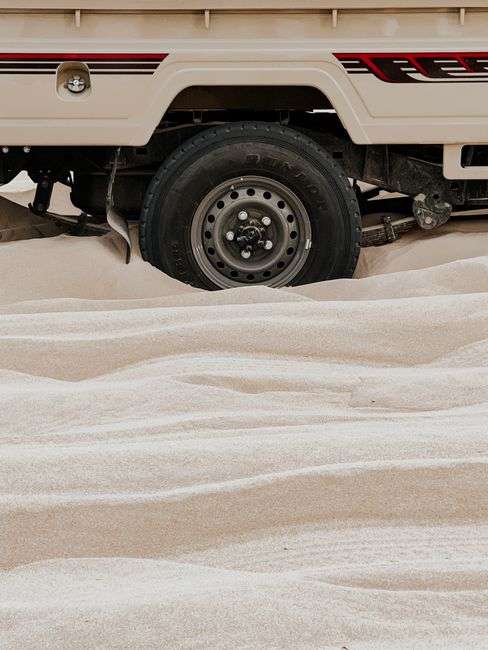
Rising water and pounding surf overnight left several vehicles trapped in sand on Dauphin Island’s west end, according to neighbors who watched conditions deteriorate as Tropical Storm Bertha pushed through the area.
By Wednesday, a white SUV was among the vehicles stuck fast in the sand. Onlookers grabbed shovels and worked to dig out the tires in hopes of freeing it, but as of Wednesday evening at least one vehicle was still stuck in place, a monument to how thoroughly the storm rearranged the western end of the barrier island.
Among those caught off guard was a family on the island for a senior trip. Brenton Linehan, a recent high school graduate, said he had known Bertha was approaching but did not anticipate how much it would affect the island overnight.
“I woke up and walked outside and the sand was about this tall up underneath the trucks, my mom’s car, and my cousin’s truck so it was a sight to see,” Linehan said.
Reana Linehan said the scene was especially unfamiliar for her family, who are used to different kinds of road trouble back home.
“It’s been a little crazy. We’re from Texas so we’re used to pulling out of mud, not sand,” she said.
The family’s experience captured the strange nature of overwash events on a low-lying barrier island, where wind and waves combine to move sand across roads in drifts deep enough to swallow axles, leaving vehicles that would shrug off a rainstorm completely immobilized.
Flags up and water closed
As surf and water levels continued to climb, officials raised double red flags and closed the water to swimmers. Double red flags are the most serious warning a beach can fly, signaling that the water is closed to the public and that entering it is prohibited, a step reserved for conditions dangerous even for experienced swimmers.
Public safety officials also urged residents and visitors against driving through flooded roadways, warning that saltwater exposure can cause serious and costly damage to vehicles. Unlike freshwater flooding, which a car may survive with minor consequences, saltwater works quickly into brakes, electrical systems and undercarriages, often producing failures days or weeks after the water recedes.
Thursday’s cleanup picture
Update: Cleanup crews were still working through Bertha’s aftermath on Dauphin Island’s West End Thursday, with Bienville Boulevard near Tonty Court remaining inaccessible near West End Beach because of flooding.
Robert Vincent, an account manager for Waste Pro, said downed trash cans and storm debris scattered across the road have been one of the more visible impacts crews are working to clear. Waste collection on a barrier island becomes a logistical puzzle after a storm, with cans scattered into yards and roadways and collection routes adjusted around flooded and sand-covered stretches.
Dauphin Island Police closed part of Bienville Boulevard because of the flooding, detouring drivers and limiting access to residents and renters in the West End Beach area. The closures concentrate traffic onto the routes that remain passable, and officers have been stationed to turn back vehicles that do not belong in the affected area.
Dauphin Island Police Chief Matthew Emlich said a significant amount of sand was pushed onto the boulevard and into the West End beach parking lot, and that the area will likely remain closed through the weekend while cleanup continues.
Emlich’s assessment reflects the scale of the job facing the town’s small public works operation. Clearing a barrier island road after an overwash event means moving cubic yards of wet sand that bulldozers and front-end loaders must push back toward the beach, a process that can take days even after a modest storm.
An island built to take the hits
Dauphin Island’s west end has long been the first part of the island to feel tropical weather. The narrow, low-lying strip west of the town’s center bears the brunt of storm surge moving through the inlet, and residents there have learned to measure storms by the sand left behind on Bienville Boulevard as much as by wind speeds.
Overwash like Wednesday’s is part of the island’s natural geography. When waves and surge crest the beach, water carries sand inland across the road and parking areas, depositing it in the streets and yards of the west end. The process reshapes the island with every significant storm, and it is the reason structures on the west end are built high and roads are engineered to be reopened quickly after flooding.
Tropical Storm Bertha’s arrival caught some visitors by surprise even though it had been forecast for days. Senior trip families like the Linehans arrived expecting a beach getaway, and the speed with which the storm rearranged the landscape overnight became its own memorable, if unwelcome, chapter of the trip.
For residents, the routine is more familiar: park vehicles on high ground or inside elevated structures, secure trash cans and loose items before the wind picks up, and wait out the water before attempting to drive. The vehicles still buried Wednesday evening serve as reminders of how quickly conditions outrun plans on a island where a single tide cycle can redraw the edge of the road.
What comes next for the West End
Through the weekend, town crews and contractors will continue pushing sand off Bienville Boulevard and restoring access to the West End Beach parking lot, while police maintain the closures needed to keep the work zones clear. Residents and renters with credentials will be allowed through, and town officials typically reopen flooded roads only after crews confirm the surfaces underneath are intact.
The weekend closure carries an economic cost for the island, which depends on weekend visitors for much of its rental and tourism income. Beach towns along the Gulf Coast have learned to absorb these interruptions, but each storm that closes access for even a few days is felt by rental owners, restaurants and the ferry and fishing businesses that serve the island.
Utility and service providers face their own recovery lists. Waste Pro’s collection routes were among the immediate casualties, and crews will work to restore regular pickup as soon as the roads allow. Downed cans and scattered debris are among the first signs of normal life returning once collection resumes on schedule.
Public safety officials repeated their standing advice for the days ahead: stay out of the closed water, keep vehicles off flooded and sand-covered roads, and give cleanup crews room to work. On Dauphin Island, the storm’s aftermath is expected to linger on the west end through the weekend, and officials say the priority is reopening safely rather than quickly.
Residents with questions about road access, trash collection or beach conditions are encouraged to follow official town and police updates as the cleanup progresses through the weekend.
The sight of neighbors digging vehicles out by hand became one of the defining images of the storm’s aftermath on the west end, with shovels passed around and strangers working together through the day to free tires packed with wet sand. In a town of roughly two thousand year-round residents, that kind of informal response is common, and storm days tend to bring out crews of neighbors before any official equipment arrives.
Sand removal at that scale is beyond shovels, though. Wet sand weighs substantially more than dry, and once sand drifts over a roadway several inches deep, only heavy equipment can clear it efficiently. That reality is why the town’s closure of Bienville Boulevard included the flooded segments where crews would need to work without dodging traffic.
Lessons in storm preparation
Emergency managers across coastal Alabama use storms like Bertha as reminders of the basics that matter on barrier islands: heeding flag warnings at the beach, never driving through standing water of unknown depth, and securing property before wind and water arrive. Each of those rules featured in the responses to this storm, from the double red flags hoisted as surf climbed to the warnings about saltwater damage to vehicles.
The saltwater warning carries particular weight for visitors. Vacationers unfamiliar with coastal flooding sometimes assume a flooded street is passable if other cars have crossed it, but saltwater can hide a washed-out road surface, and the damage it causes to a vehicle’s mechanical and electrical systems often surfaces only after the trip home, in the form of corrosion and failures that repairs may not fully fix.
Double red flags, meanwhile, exist because rip currents and heavy surf in the aftermath of a tropical system remain deadly long after the rain stops. Lifeguard coverage is limited along much of the Alabama coast, and the flag system is the primary warning visitors receive. Officials stressed that the closure applies to everyone, including strong swimmers, because conditions beneath the surface can be far worse than they appear from the beach.
For the Linehan family and other visitors whose trips were upended, the storm offered an unplanned education in barrier island life. The sand that swallowed their vehicles will be cleared, but the memory of waking to find trucks and cars buried to their frames is likely to outlast the cleanup.
Town officials said updates on the status of Bienville Boulevard and West End Beach access will be posted as conditions improve, with the goal of restoring normal access before the next weekend crowd arrives.