

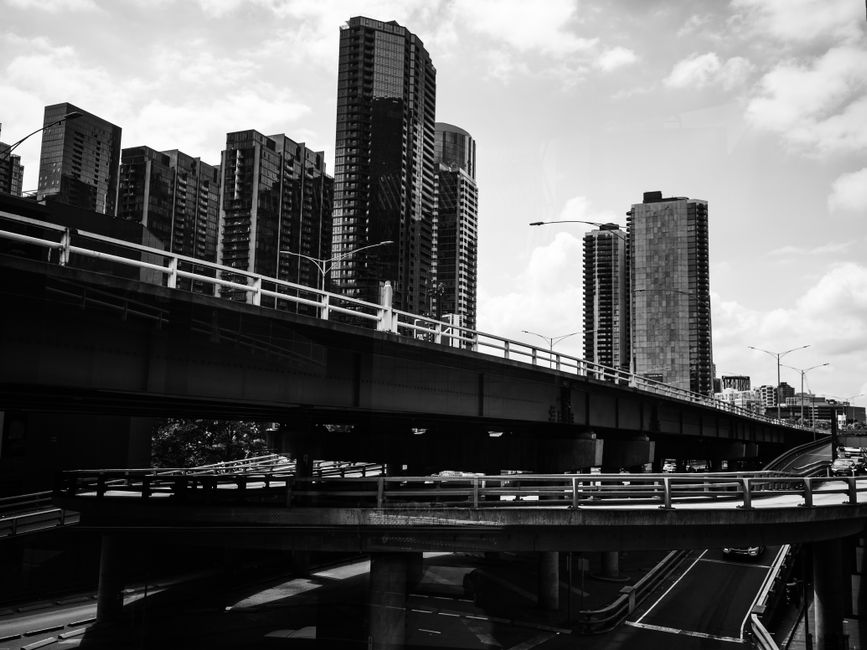
Mobile’s mayor has a wish list for the city’s riverfront, and near the top of it is the disappearance of the highway ramps that connect Water Street to Interstate 10.
Mayor Spiro Cheriogotis said he was pleased to notice something in the renderings the Alabama Department of Transportation released with its announcement that the long-delayed I-10 Mobile River Bridge and Bayway project will break ground by the end of 2026: the on-ramps and off-ramps connecting Water Street to the interstate are nowhere to be seen.
Part of the original plan was to take down that Water Street off-ramp and on-ramp, the mayor said, adding that he would ultimately like to see that happen — and that he would love to see the overpasses go away.
Why the ramps matter
The ramps are more than an aesthetic quibble. Water Street runs along the eastern edge of downtown Mobile, between the historic street grid and the Mobile River, and for decades it has functioned primarily as a high-speed connector feeding interstate traffic to and from the tunnels. The ramps looming over it make it feel like what it is: a highway stub in the middle of downtown.
In March, Cheriogotis unveiled his plan to slow traffic on the riverfront roadway and remake it into a pedestrian-friendly thoroughfare lined with retail and residential development. The City Council has commissioned an $800,000 traffic study to examine what that transformation would take, and the city has applied for $25 million in federal funding to help achieve the vision.
Removing the interstate ramps, the mayor argues, is the key that unlocks the rest of the vision. Without them, Water Street could become the walkable promenade city planners have envisioned, connecting downtown businesses to the waterfront instead of cutting them off from it.
What ALDOT’s plan calls for
ALDOT’s announcement laid out a phased approach to the decades-long project. The new plan calls for building the new bridge over the Mobile River first — a six-lane cable-stayed span — and then constructing a new Bayway across Mobile Bay with revenues from the bridge’s tolls. In the meantime, the existing Jubilee Parkway will be restriped to carry three lanes of traffic in each direction.
The department currently estimates the new bridge will be finished by 2031 at the earliest. The ramp removal would be considered when the project enters its second phase, following completion of the Mobile River Bridge — meaning downtown Mobile could be living with the ramps for several more years, even in the best case.
A decades-long fight over the waterfront
The fight over Water Street is nearly as old as the interstate itself. Mid-century highway planners routed I-10 through downtown Mobile, and the city has spent decades debating how to live with — or undo — that decision. The new bridge project represents the biggest change to the corridor in generations, and city officials have been eager to make sure the state’s multi-billion-dollar investment also serves the city’s own goals for its waterfront.
The mayor’s hope is that as the state rebuilds the interstate, the city can negotiate the removal of the infrastructure that separates downtown from the river. Cities across the country have spent the past few decades tearing out waterfront highways — from San Francisco’s Embarcadero to Milwaukee’s Park East corridor — and reclaiming the land for parks, housing and commerce, often with dramatic economic results.
What happens next
Groundbreaking on the Mobile River Bridge is expected by the end of 2026, with the bridge open as early as 2031. The City’s traffic study will inform how Water Street itself is reconfigured, and the $25 million federal grant application represents the city’s down payment on its remake of the corridor.
Cheriogotis has made the riverfront a signature issue of his administration, and the renderings that quietly omitted the ramps suggest the state has at least left the door open to the city’s vision. Whether the overpasses actually come down will depend on the second phase of the bridge project — and on whether the funding follows through.
For now, the message from City Hall is clear: the city sees the bridge project as a once-in-a-generation chance to fix a downtown mistake, and it intends to press for every part of it, including the ramps.