Weeks Bay Foundation Lands Federal Grant for Gulf Coast Training Program
Fairhope's Weeks Bay Foundation received a $270,566 federal grant to fund coastal training workshops for Gulf Coast decision-makers over the next three years.
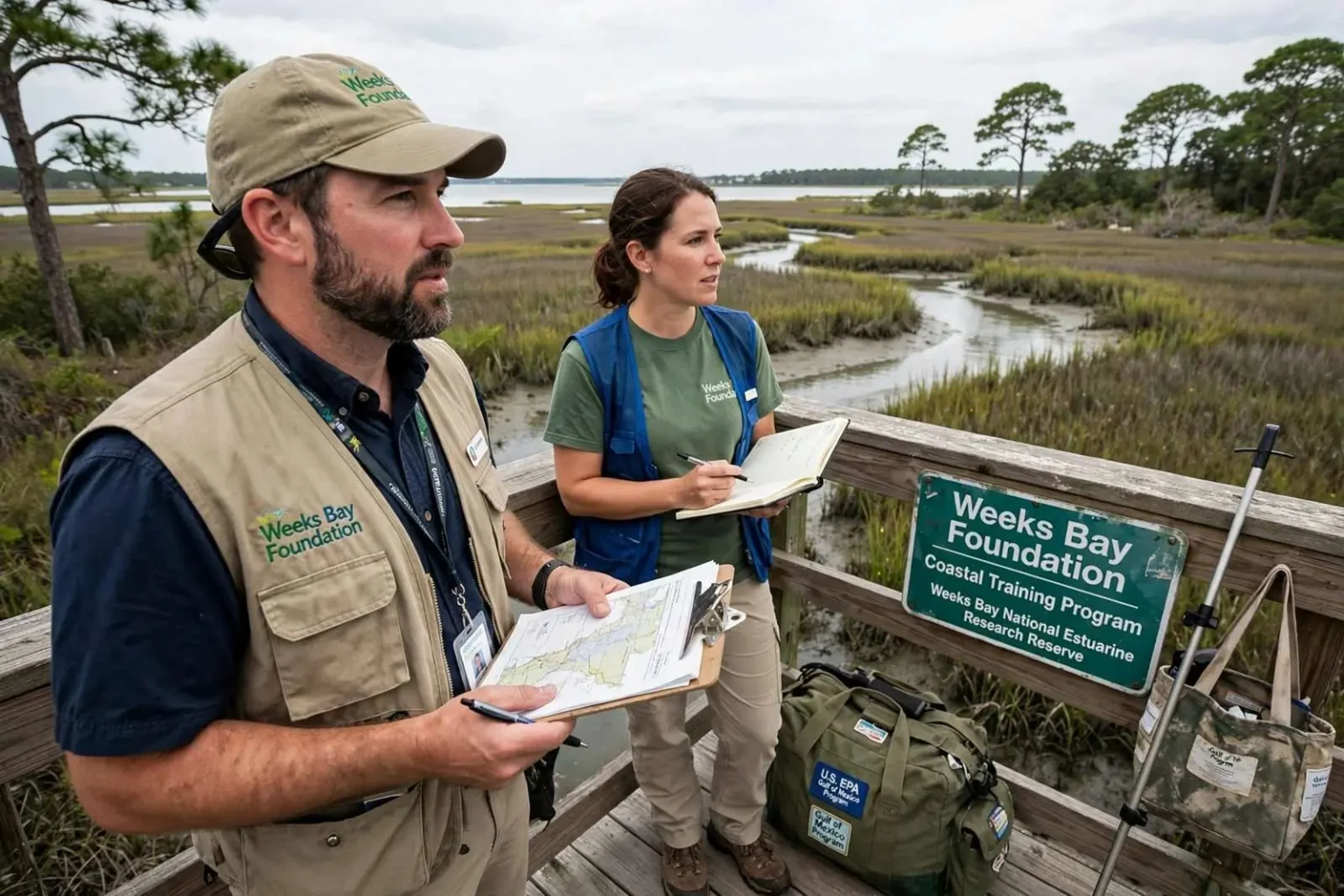
A Fairhope-based conservation group is getting a substantial boost from federal coffers to expand its coastal training work along the Gulf Coast. The Weeks Bay Foundation has been awarded $270,566 through a cooperative agreement with the U.S. Environmental Protection Agency’s Gulf of Mexico Program, funding to support a multi-year initiative aimed at improving how local officials and resource managers handle coastal issues.
The award positions the Baldwin County organization as a regional convener at a time when coastal communities across the Gulf are grappling with rapid development, storm vulnerability and the long-term health of the bays and bayous that anchor their economies. For a foundation whose work has traditionally centered on one estuary, the grant marks a deliberate expansion of reach.
The project, formally titled the Gulf of Mexico Coastal Training Initiative, will be led by Michael Shelton, the foundation’s Coastal Training Program Coordinator. Over the life of the grant, the foundation plans to hold 15 workshops across the Gulf Coast region and provide direct technical assistance to five coastal communities, with a goal of building longer-term capacity for local decision-makers to manage environmental resources responsibly.
Shelton and his colleagues will structure the workshops around problems that municipal staff encounter in their day-to-day work — stormwater management, shoreline stabilization, habitat protection, land-use planning near sensitive waters — rather than abstract environmental science. The direct technical assistance component pairs foundation staff with individual communities to work through a specific challenge from start to finish.
A federal strategy built on local partners
Federal officials framed the award as part of a broader push to protect the health of the Gulf of Mexico through partnerships with organizations already embedded in coastal communities. The Gulf of Mexico Program has increasingly relied on regional groups like the Weeks Bay Foundation to deliver training that might otherwise be difficult to coordinate directly from Washington or from EPA regional offices.
The logic behind that approach is practical. Federal agencies can fund research and set broad priorities, but the decisions that actually shape a coastline — zoning votes, drainage projects, permit reviews — are made in city halls and county courthouses. Training the people who make those decisions is widely seen as one of the most efficient ways to translate environmental science into on-the-ground results.
Cooperative agreements like this one differ from conventional grants in that the federal agency remains an active partner in the work, reviewing plans and coordinating with the grantee rather than simply disbursing funds. For EPA, the arrangement extends the reach of its Gulf of Mexico Program; for the foundation, it provides stable, multi-year funding for work that grant cycles often treat as an afterthought.
Part of a national network
Shelton said the initiative fits into a wider network of National Estuarine Research Reserves working regionally to address coastal management challenges through locally based training rather than one-size-fits-all federal guidance. The idea, he said, is that resource managers and local officials are better equipped to make sound decisions when they have access to practical, hands-on training tailored to their own stretch of coastline.
The reserves are partnerships between the National Oceanic and Atmospheric Administration and coastal states, established to protect estuarine areas for research, education and stewardship. Weeks Bay, on the eastern shore of Mobile Bay, is one of the sites in that system, and its training program draws on the research conducted at the reserve and at comparable sites around the Gulf.
That network model means lessons learned in one community can travel quickly to others facing the same pressures. A workshop developed for a rapidly growing town on Mobile Bay can be adapted for communities in Mississippi, Alabama’s other coastal counties or beyond, stretching the value of each federal dollar.
The estuary at the center
Weeks Bay Foundation has long served as a steward of the Weeks Bay estuary and surrounding watershed in Baldwin County, an area that drains into Mobile Bay and supports a mix of fisheries, wildlife habitat and recreational use. The watershed’s creeks and marshes filter water moving toward the bay, provide nursery habitat for commercially important fish and shellfish, and buffer nearby development from flooding.
The new grant extends that mission outward, giving the foundation a role in shaping how other coastal communities beyond Baldwin County approach similar environmental pressures. Foundation leaders have described the shift as a natural progression: the organization spent decades learning what works in its own watershed, and the grant allows it to share that experience across the region.
The pressures the foundation sees at home are familiar across the Gulf Coast. Baldwin County has ranked among Alabama’s fastest-growing counties for years, with new subdivisions, retail centers and roads steadily converting land within the Weeks Bay watershed. Each acre of new hard surface sends more stormwater — and whatever it carries — toward the estuary, a dynamic that is repeating itself in coastal counties throughout the region.
What the training will look like
Organizers say the training sessions will roll out over the next three years, with workshops open to municipal staff, resource managers and other local decision-makers grappling with the balance between development pressures and coastal ecosystem health. Sessions are expected to combine classroom instruction with field components, giving participants direct exposure to the habitats and infrastructure under discussion.
Topics on the agenda for programs of this kind typically include green infrastructure techniques that absorb stormwater on site, options for protecting and restoring living shorelines, tools for incorporating watershed considerations into comprehensive plans, and funding mechanisms that help small communities pay for resilience projects. Continuing education credits and certification opportunities, where available, help attract busy local officials to the sessions.
The five communities selected for direct technical assistance will receive sustained, one-on-one support designed to produce a concrete outcome — a completed plan, an implemented project or an adopted policy — rather than a single workshop. Foundation staff say that model, drawn from the reserve system’s established Coastal Training Program approach, is what converts training into lasting change.
Additional information about the broader Gulf of Mexico Program is available directly through the EPA’s regional offices. For the Weeks Bay Foundation, the grant represents both a validation of its decades of local stewardship and a new responsibility: helping the rest of the Gulf Coast learn from what Baldwin County has experienced firsthand.
Why Mobile Bay country makes a good classroom
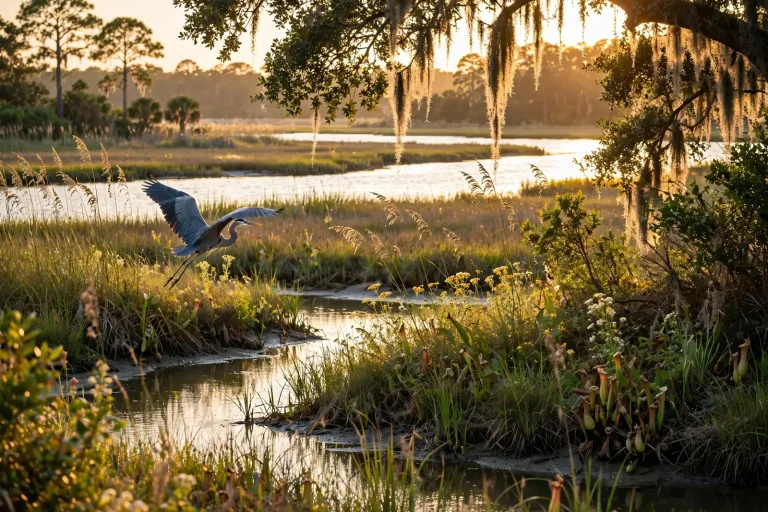
The waters around Weeks Bay offer a compact illustration of nearly every issue coastal managers face. The bay itself is a shallow estuary where fresh water from the Fish and Magnolia rivers mixes with salt water moving in from Mobile Bay, creating the brackish conditions that make estuaries among the most productive ecosystems on earth. Marsh grasses, submerged vegetation and surrounding swamp forest shelter juvenile fish, blue crabs, shrimp and the birds that feed on them.
That productivity has economic weight. Mobile Bay’s seafood industry, charter fishing operations and recreational boating all depend on water quality and habitat health, and coastal county officials are increasingly explicit that environmental protection and economic development are intertwined rather than opposed. Training that helps local staff protect the resource is, in that framing, also job training for the region’s traditional industries.
The reserve and the foundation around it grew out of decades of local advocacy for the Weeks Bay watershed. The foundation supports land acquisition, research and education around the estuary, and its supporters include landowners, anglers, scientists and municipal leaders from across the eastern shore. That constituency gives the new regional training initiative a ready-made audience and a credibility that a purely federal program would struggle to build on its own.
Growth pressures across the Gulf
The five communities selected for technical assistance will work through issues that differ in detail but share a root cause: the Gulf Coast is growing, and growth that once stopped at city limits now spreads through watersheds that were previously farmland or forest. Counties along the northern Gulf have posted some of the fastest population gains in their respective states, and each new rooftop adds driveways, roofs and roads that shed rainwater faster than the natural landscape ever did.
Unchecked, that runoff carries sediment, nutrients and pollutants into estuaries, contributing to the water quality problems that Gulf programs have worked on for decades. The EPA’s Gulf of Mexico Program was created in large part to coordinate those efforts across the five Gulf states, bringing federal agencies, states, universities and local organizations into a shared framework for restoring and protecting the Gulf.
Training initiatives like the one the Weeks Bay Foundation will run are the local end of that framework. Federal officials have repeatedly found that rules and guidance handed down without local buy-in tend to sit on shelves, while communities that help shape their own responses are far more likely to follow through. The cooperative agreement formalizes that lesson for the next three years.
Looking ahead
Foundation staff say the first workshops under the grant will be scheduled as planning gets underway, with notices expected through the reserve’s usual channels and through partner organizations around the region. Municipal officials, public works staff, planning commissioners and others interested in participating can expect sessions designed to be immediately applicable to work they are already doing.
For Shelton, the coordinator leading the initiative, the assignment extends a career spent translating coastal science for the people who make decisions about it. The workshops ahead will take that work from the Weeks Bay watershed to communities across the Gulf — carrying with it the central lesson of the reserve’s own history: that healthy bays and healthy local economies rise and fall together, and that the people best positioned to protect them are the ones who live alongside them.