Infected Sentinel Chicken in Dauphin Island ZIP Code Shows West Nile Still Circulating in Mobile County
A surveillance chicken in the 36528 ZIP code has tested positive for West Nile virus, prompting extra mosquito spraying, door-to-door checks and trapping in Mobile County.
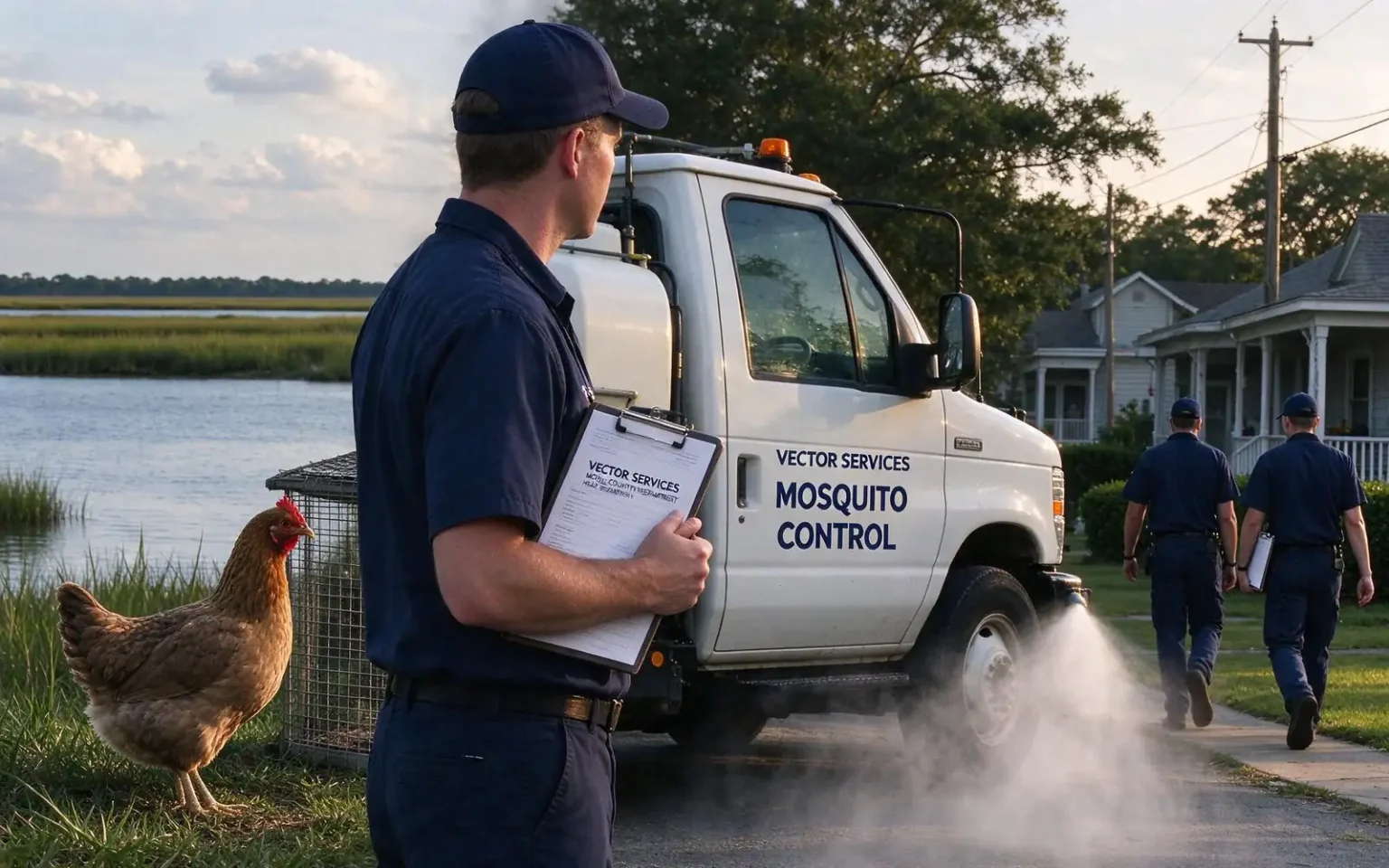
MOBILE, Ala. — West Nile virus is still active in Mobile County as Thanksgiving approaches. A chicken kept in one of the Mobile County Health Department’s surveillance flocks has tested positive for the mosquito-borne virus, health officials said this week, and crews are stepping up mosquito control around the coop, which sits in the 36528 ZIP code that covers Dauphin Island.
The positive result confirms that the virus is circulating locally even this late in the year. The detection comes after a season in which Mobile County has already recorded three confirmed human West Nile cases in 2026.
What crews will do next
The health department’s Vector Services program, which handles mosquito control for the county, plans a three-part response in and around the area where the infected chicken was found:
- More spraying to knock down adult mosquitoes that may be carrying the virus.
- Door-to-door surveys in nearby neighborhoods to find standing water and other places where mosquitoes breed.
- Trapping and testing of adult mosquitoes to learn whether infected insects are present and where.
Officials also said they will keep monitoring the county’s sentinel flocks and work to pinpoint mosquito populations that may be carrying West Nile. A health department official said the finding shows the virus is present in Mobile County and serves as a signal for residents to guard against bites.
How the chicken early-warning system works
Sentinel chickens are an old and reliable public health tool. Chickens are bitten by mosquitoes like any other bird, and they can become infected with West Nile without becoming seriously ill. When they are infected, their immune systems produce antibodies that show up in blood tests. A positive chicken tells health workers that infected mosquitoes have been feeding in that area recently, often before any human illness appears.
Mobile County’s Vector Services program has kept sentinel poultry flocks at strategic locations around the county since 1985. Today it monitors 13 sentinel chicken coops. Every Monday, workers draw blood samples from the birds and send them to a laboratory, and results usually come back later the same week.
The chickens are only one part of the surveillance effort. Vector Services also traps mosquitoes and tests them for three viruses that can cause brain inflammation, or encephalitis, in people:
- West Nile virus
- Eastern equine encephalitis, often called EEE
- St. Louis encephalitis
Why the virus is still around in late November
In Mobile County, the risk of mosquito-borne encephalitis is typically highest from August until the first freeze of the fall. Along the coast, and especially on a barrier island surrounded by water that holds heat, that first freeze can arrive later than it does inland. Until temperatures drop low enough and long enough to shut down mosquito activity, the insects can keep biting and spreading disease.
Cooler weather is on the way this week, with overnight lows forecast in the 30s across the region after Thanksgiving. A hard freeze is what usually ends the season, however, and a few chilly nights may not be enough to stop mosquitoes completely, particularly in sheltered areas. Rain expected before the holiday may also leave fresh standing water behind.
How West Nile spreads
West Nile virus lives in a cycle between birds and mosquitoes. A mosquito picks up the virus when it feeds on an infected bird, and it can then pass the virus to people, horses and other animals when it bites again.
People and horses are considered dead-end hosts. The virus cannot spread from one person to another, and a person cannot catch it from a horse.
Symptoms to watch for
Most people infected with West Nile never feel sick. Some develop a mild illness, which can include:
- Fever
- Headache
- Body aches
- Nausea or vomiting
- Rash
In a small number of cases, the virus attacks the nervous system and causes serious illness. Warning signs include a high fever, a severe headache, a stiff neck, confusion or disorientation, muscle weakness, tremors, seizures and paralysis. Older adults and people with weakened immune systems are generally at greater risk of severe disease. Anyone with severe symptoms should get medical care right away.
There is no specific antiviral treatment for West Nile; care focuses on relieving symptoms and, in severe cases, hospital support.
Vaccines exist for horses, not people
Horse owners can protect their animals with a West Nile vaccine, and veterinarians commonly recommend keeping horses current on vaccines against both West Nile and EEE in mosquito-prone areas like the Gulf Coast. No vaccine is available for people, which makes avoiding bites the main line of defense.
Steps residents can take
The health department urges residents, and especially anyone who works or plays outdoors, to take a few simple precautions:
- Use an insect repellent registered with the Environmental Protection Agency that contains DEET or another approved active ingredient, and follow label directions.
- Wear long sleeves and long pants outside, especially around dawn and dusk, when many mosquitoes are most active.
- Spend time and sleep in places with air conditioning or with window and door screens in good repair.
- Empty, cover, scrub or treat anything that holds water around homes, yards, job sites and outdoor event areas.
Mosquitoes need very little water to breed. Common sources include buckets, flowerpots and their saucers, old tires, birdbaths, pet bowls, clogged gutters, tarps and outdoor containers of all kinds. Dumping standing water at least once a week interrupts the mosquito life cycle before larvae can mature into biting adults.
About Dauphin Island
Dauphin Island is a barrier island at the mouth of Mobile Bay, connected to the mainland by a causeway and bridge. Its marshes, maritime forest and wetlands, along with its role as a major stopover for migrating birds, make it a natural place for health workers to watch for mosquito-borne viruses that circulate among birds.
A season of activity
The new detection adds to a busy year for mosquito surveillance in Mobile County. Positive sentinel chickens were found in several parts of the county earlier this fall, and the county’s third human case of 2026 was confirmed at the end of October. Health officials have repeatedly urged residents to keep protecting themselves until a freeze ends the season.