

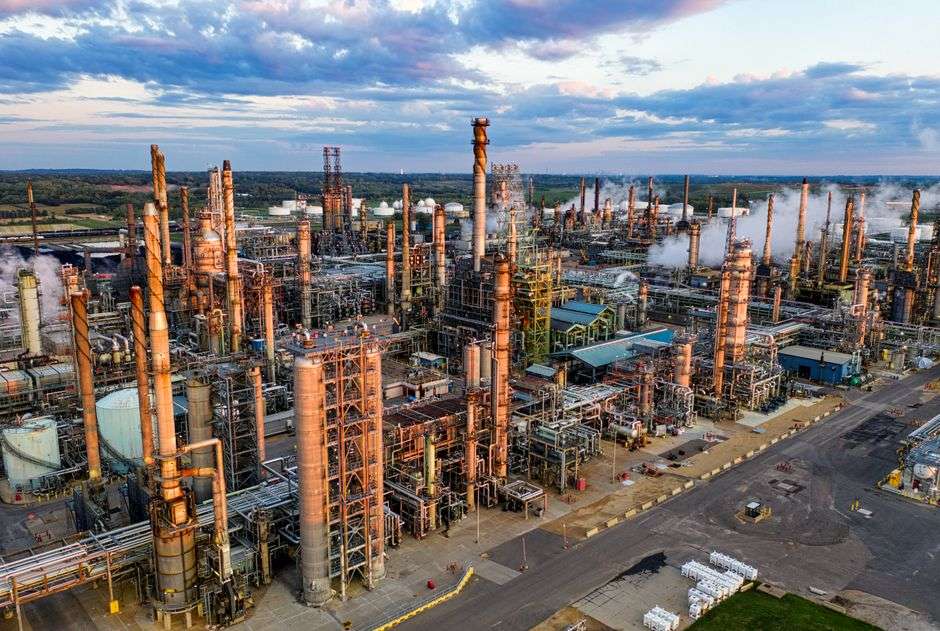
Three major employers have filed layoff notices across coastal Alabama in a span of two weeks, putting 186 workers out of jobs at facilities in McIntosh, Bay Minette and Axis.
The cuts include 79 workers at BASF’s McIntosh facility, 66 workers at Fluor’s Bay Minette operation and 41 workers at FMC’s Axis site, according to state disclosures filed between July 22 and Aug. 6 with Workforce Alabama.
BASF: Shutting Down Production Lines
BASF Corporation, one of the world’s largest chemical producers, operates a sprawling specialty chemicals and additives manufacturing site in McIntosh, in north Mobile County along the Tombigbee River. The company stated the cuts are the result of shutting down multiple production lines at the facility by spring 2027.
The McIntosh complex has been part of the corridor of heavy industry along the river for decades, employing generations of workers from Washington and Mobile counties. Production line shutdowns of this kind are typically the end point of a longer strategic review: when global demand for a particular chemical softens or capacity shifts to other plants in a company’s network, older or less efficient lines are idled first.
Under the terms of the company’s disclosure, the layoffs are planned to begin Sept. 30. Workers affected by a WARN-covered layoff are generally entitled to 60 days’ notice and, in many cases, transition assistance through the state’s rapid response programs.
Fluor: A Construction Job Winding Down
Fluor Enterprises, the engineering and construction giant, reported 66 layoffs at its Bay Minette operation, effective July 31. The company is managing the engineering, procurement and construction — the EPC contract — for Novelis’s greenfield low-carbon aluminum recycling facility and rolling mill in Bay Minette.
Construction-phase employment is inherently cyclical: as a megaproject moves from peak construction into commissioning and startup, the EPC contractor’s workforce shrinks. The Novelis project, billed as the first aluminum recycling and rolling plant of its kind in the United States, drew thousands of construction workers to Baldwin County at its peak, and its wind-down ripples through local employers — hotels, restaurants, equipment suppliers — that built businesses around the influx.
The layoff numbers also underline the scale of what Baldwin County has been building. The $2.5 billion facility is among the largest single industrial investments in the county’s history, and its transition to operations will eventually bring permanent manufacturing jobs, though far fewer than the construction phase employed.
FMC: A Smaller Cut in Axis
FMC Corporation, a global agricultural sciences company, reported 41 layoffs at its Axis site in north Mobile County, effective Oct. 31. The disclosure came days after FMC posted its second-quarter results on July 29, which showed $867 million in revenue — down 17 percent from the same quarter in 2025. The state disclosure does not link the cuts to the company’s earnings report.
The Axis facility is part of the industrial corridor that includes major chemical and specialty manufacturing operations along U.S. 43. FMC’s agricultural products business has faced a prolonged downcycle in crop protection chemicals, with high inventories and soft grower demand pressing margins across the industry.
What the WARN Act Requires
All three notices came under the federal WARN Act — the Worker Adjustment and Retraining Notification Act — which generally requires employers with at least 100 workers to notify state workforce agencies 60 days before a plant closing affecting 50 or more employees, or a mass layoff affecting 50 to 499 employees at a single site.
The law exists to give workers and communities time to prepare. Notices filed with Workforce Alabama trigger the state’s rapid response team, which coordinates with employers to provide on-site services: unemployment insurance assistance, retraining information and connections to open jobs.
The Regional Picture
Individually, each notice is a company-specific decision. Together, they amount to the largest concentrated job losses in coastal Alabama’s manufacturing corridor this year — and a reminder that the region’s industrial economy moves in cycles.
The affected communities are absorbing the losses differently. Bay Minette’s cuts are tied to a project ending, not a plant closing, and Baldwin County’s overall employment picture remains one of the strongest in the state. McIntosh and Axis, smaller communities whose economies are more concentrated in a handful of plants, face a harder adjustment.
For the 186 workers, the immediate questions are practical: final paychecks, benefits continuation, and what state retraining dollars are available. Workforce Alabama’s WARN list remains the public record of who has been affected — and the first place displaced workers can turn for help.