

The director of Alabama's top environmental regulator has been granted another year on the job despite a wave of public criticism that included calls for his ouster, in a decision that has renewed frustration among South Alabama environmental advocates and residents living near industrial sites along the Gulf Coast. The Alabama Environmental Management Commission, the seven-member panel that oversees the Alabama Department of Environmental Management, voted unanimously to extend the contract of longtime director Lance LeFleur for another year, keeping his salary at the maximum allowed rate of just over $172,000 annually. The vote came during the commission's first meeting of the new fiscal year, following a lengthy public comment period that produced overwhelmingly negative feedback.
As part of LeFleur's annual performance review, the commission opened a public comment window lasting more than a month over the summer. Of the 224 responses submitted, only a small fraction offered praise for the director's leadership. The remainder ranged from pointed critiques of specific enforcement decisions to blunt characterizations of LeFleur as an ineffective steward of the state's natural resources. Despite the volume of criticism, commissioners largely declined to address specific complaints during two public meetings held in Montgomery. Several commissioners instead characterized the negative letters as general statements lacking substance, while pointing to a handful of supportive letters from business and industry groups as evidence that ADEM is functioning well under LeFleur's leadership.
One commissioner, who also chairs the panel's personnel committee, suggested that a lack of communication between the agency and the public was the common thread running through the critical letters, rather than any substantive policy failures. Another commissioner said the process exists to make the public aware of the commission's role and responsibilities, while a third argued the negative comments actually reflected an agency performing at a high level, saying ADEM has "a very engaged staff" and simply needs to do a better job telling its story. The three commissioners who addressed the evaluations at the meetings were Thomas Walters, a retired engineer who chairs the personnel committee and was appointed to the panel last year by Gov. Kay Ivey; Ruby Perry; and Kevin McKinstry.
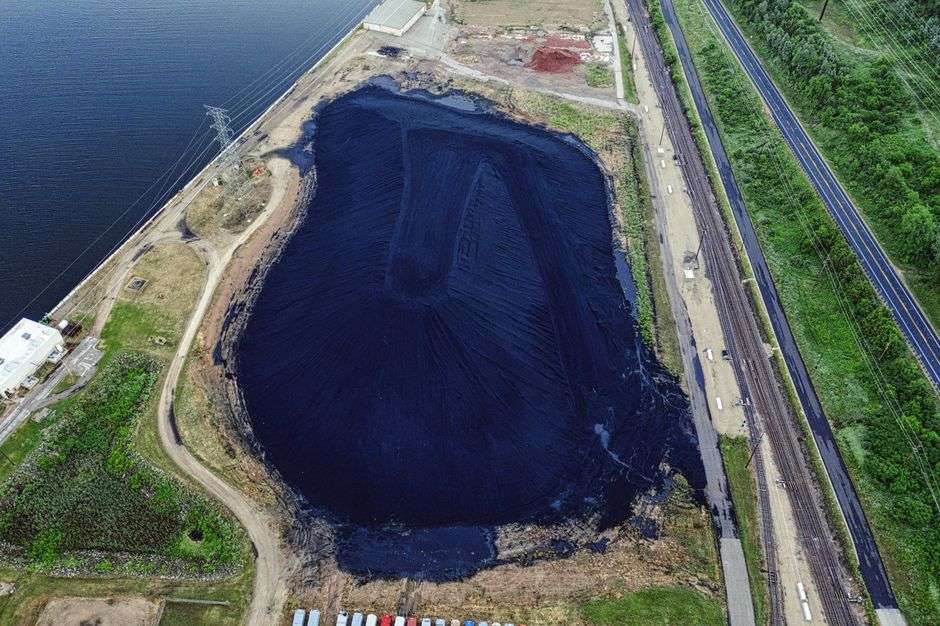
For residents along the central Gulf Coast, the criticism directed at LeFleur and ADEM has centered on a cluster of local environmental concerns that have simmered for years. Chief among them is Alabama Power's plan to cap its coal ash storage ponds in place rather than fully excavate them, including the utility's largest such site at Plant Barry in Mobile County. Environmental advocates have long warned that leaving the ash in unlined pits near the Mobile River risks long-term groundwater contamination. Letter-writers from the Mobile area also invoked the state's handling of the aftermath of the 2010 BP Deepwater Horizon oil spill, along with a 2014 decision allowing an interstate oil pipeline to cross the county's primary source of drinking water.
Aging and failing sewer infrastructure across the region was cited as another point of frustration, with residents arguing that the agency has not moved aggressively enough to compel upgrades or hold responsible parties accountable.
Background and Context
Among the South Alabama residents who submitted written evaluations were Richard Dollison of Mobile, who wrote that LeFleur's unwillingness to take a tougher stance on coal-fired power plants left the coal ash stored near his home "a disaster waiting to happen"; Brenda Bolton, who pointed to the Alabama Public Service Commission's approval, with ADEM's blessing, of the interstate Plains Southcap oil pipeline permitted in 2014; and Michele Harmon, who cited a $250,000 fine levied against Alabama Power for groundwater pollution at its coal ash ponds as evidence that penalties amount to little more than "a slap on the wrist." Mobile Baykeeper, the local watchdog group that monitors water quality across the Mobile Bay watershed, was among the organizations whose members submitted public comments during the review period.
In a statement following the vote, the group's executive director said the organization never expected the commission to remove LeFleur from his post, but hoped the volume of criticism would prompt meaningful change at the agency. She said ADEM has become too focused on accommodating industry rather than fulfilling its stated mission of ensuring Alabama residents have a safe and healthful environment, and noted that the agency remains among the least-funded state environmental regulators in the country. That statement was issued by Mobile Baykeeper's executive director, Casi Callaway.
A joint letter submitted by Waterkeeper Alliance affiliates across the state, representing organizations that monitor numerous Alabama waterways, raised similar concerns about inconsistent enforcement, a lack of transparency in how penalties are calculated, delayed public notification of spills and the handling of groundwater contamination tied to coal ash storage. The letter argued that under LeFleur's leadership, the agency has moved further from rather than closer to fulfilling its mission.
Much of the broader criticism directed at LeFleur originated from north Alabama, where the agency has faced scrutiny over its handling of a multi-year release of toxic industrial chemicals into the Tennessee River near Decatur, as well as a large fish kill on the Mulberry Fork of the Black Warrior River tied to a massive wastewater discharge from a poultry processing operation. In Birmingham, court records from a separate criminal case have also raised questions about whether the agency softened its stance on expanding cleanup requirements at a federal Superfund site after pressure from the industries responsible for the contamination. The Tennessee River releases were tied to the 3M Company, while the Mulberry Fork fish kill stemmed from a nearly 1-million-gallon wastewater discharge attributed to Tyson Foods.
The Birmingham site at the center of the criminal trial records was the Drummond Coal Superfund site referenced by federal regulators. LeFleur, in comments following the vote, said he read every public comment submitted during the review period and takes the criticism seriously, but argued that the agency must weigh public perception against the facts of its regulatory record. He said a significant share of the negative letters referenced the same handful of high-profile incidents from elsewhere in the state, and suggested many were part of a coordinated letter-writing campaign organized by Waterkeeper-affiliated groups, including Mobile Baykeeper. He pointed to data from the U.S.
Background and Context
Environmental Protection Agency showing Alabama has among the lowest rates of environmental violations in the nation, along with high inspection rates across the more than 30,000 facilities ADEM monitors statewide. LeFleur said the agency's approach favors inspections, technical assistance and timely enforcement over simply imposing harsher penalties, arguing that swift, consistent regulation does more to improve compliance than maximum fines that take years to resolve in court. LeFleur offered a rough breakdown of the letters he received, estimating that about 40 percent focused on some form of factual information while the rest were more general in nature, and that roughly 40 percent referenced one of the three high-profile incidents elsewhere in the state — the 3M discharge, the Tyson Foods fish kill or the Drummond Coal Superfund dispute.
"The topic I understood, but the perception was more prevalent than any factual basis, so I have to weigh those against other things that we look at as far as performance is concerned," he said. Supporters of LeFleur's reappointment, including officials from the state's manufacturing, poultry, coal and paper industries, along with the state commerce director and several sitting commissioners, praised his even-handed approach and credited him with maintaining a regulatory climate that balances environmental protection with economic development. One commissioner wrote that LeFleur has "maintained decorum" amid what he described as unfair media attacks, while the commerce director credited ADEM under LeFleur's leadership with playing a pivotal role in the state's economic development efforts.
Among the 18 letters of support were those from officials representing Manufacture Alabama, the Alabama Pulp & Paper Council, the Alabama Poultry & Egg Association, the Coalbed Methane Association of Alabama and the Alabama Coal Association, along with Commerce Director Greg Canfield and State Treasurer John McMillan. Three sitting commissioners also wrote in support of LeFleur: Jay Masingill, Mary Merritt and Chairman Samuel Miller, who wrote that LeFleur "has maintained decorum and provided an unbiased listening post for all sides" despite what he called "lots of false accusations in the media." Commissioners who spoke in support of the extension said their confidence in LeFleur was rooted primarily in his management experience and temperament, rather than a detailed review of the specific incidents raised in public comments.
One commissioner, a retired engineer appointed to the panel last year, acknowledged he does not closely follow news coverage of the agency's controversies but said he trusts LeFleur's experience navigating the many agencies and processes involved when environmental incidents occur. For now, LeFleur will remain at the helm of Alabama's environmental regulator for at least another year, with the coal ash pond closures at Plant Barry, ongoing water quality concerns tied to the BP oil spill's aftermath and the region's sewer infrastructure challenges likely to remain flashpoints between the agency and South Alabama residents and advocacy groups in the months ahead.