

Ruth Ballard has spent all 85 years of her life in Africatown, the small, historic community just north of downtown Mobile founded by Africans who survived the last known slave ship to reach American shores. For Ballard, a retired nurse, the neighborhood’s legacy of endurance is inseparable from another, darker thread running through her family: cancer.
“I have a sister and two brothers who died as a result of cancer. Then my brother, myself and another brother are twice survivors of cancer,” Ballard said. She has been in remission for 14 years. One of her brothers was just 65 when he died of the disease.
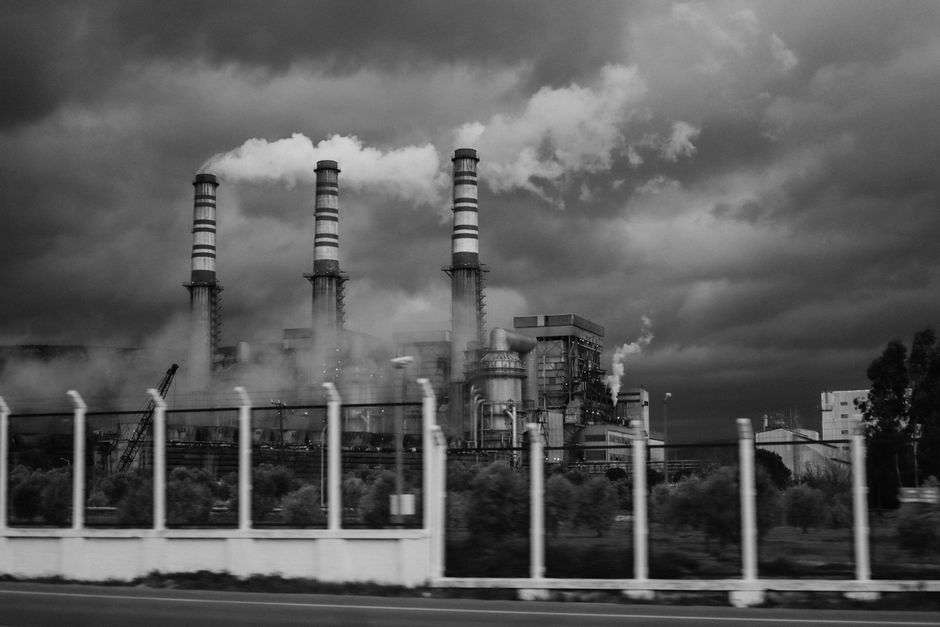
Illness of this kind is common in the one-square-mile neighborhood, which for decades has been ringed by metal recycling operations, paper mills, petroleum tank farms, a power plant, an asphalt plant, a cement plant and chemical facilities. Residents and church leaders say the pattern goes back generations, and it has fueled one of the longest-running environmental disputes in the Mobile area.
W. Mae Jones moved to Africatown from Detroit roughly 50 years ago after marrying a man from the community. Her husband died of cancer nearly four years ago. “I am from Detroit, but my husband was from Africatown, so we moved here,” she said.
When Chris L. Williams Sr., a former Alabama state trooper who became a pastor, arrived at Africatown’s Yorktown Missionary Baptist Church in 2006, he inherited a congregation that was shrinking fast. “We had about 20 funerals right in a row that year, most from cancer. It wasn’t normal,” Williams said.
Concerned, Williams began talking to church members and sent out a questionnaire to residents. Two phrases surfaced again and again: “International Paper” and “smokestack ash.” Longtime residents recalled decades of ash falling from the International Paper mill that opened next to Africatown in 1929, memories passed down like family heirlooms.
Jones described the ashfall as resembling “a snowstorm or dense fog,” so thick that “you couldn’t see five feet in front of you.” Retired U.S. Marine Corps Maj. Joe Womack, who grew up in the neighborhood, remembered it arriving “every day, like clockwork,” prompting him and other children to rush laundry in off the clothesline before it was ruined.
“If you didn’t bring the clothes in off the line, you would get little brown and grey spots and have to wash everything again. The odor was terrible,” Ballard said. Residents also described corrosive effects on cars and homes. “I had a brand-new automobile and in two years it had rusted out from that ash,” Jones said. Ballard recalled that the mills eventually offered free car washes to Africatown residents “anytime, day or night,” though it made little difference against the buildup.
Williams eventually contacted the Centers for Disease Control and Prevention about what he believed was an unusual concentration of cancer cases. “They told me it’s not a cluster. They said it had to be this or that…. They know what they’re talking about, I guess,” he said. Under CDC guidelines, a true cancer cluster must involve the same type of cancer, or types scientifically linked to a common cause, occurring in numbers well beyond statistical expectation.
Public health data offers some context. According to 2018 figures from the American Cancer Society, roughly 21 of every 100 men and 18 of every 100 women worldwide will develop cancer before age 75. CDC data from 2017 put the national rate at 438 new cancer cases per 100,000 people, and Alabama’s rate at 446.9 per 100,000 — a rate that would translate to fewer than eight expected cancer cases in a community the size of Africatown that year. Whether the neighborhood’s experience amounts to statistical anomaly or a recognized “cluster” has been a point of friction between residents and public health authorities for years.
Undeterred, Williams organized community meetings and sought legal help, but he said early efforts stalled. “They take soil samples, then go and talk to whomever and come back and say, ‘nothing’s there.’ Then they wouldn’t answer the phone anymore,” he said of the attorneys he approached.
In 2017, the north Alabama law firm Stewart and Stewart took on the case, filing an initial lawsuit against International Paper on behalf of 248 plaintiffs. For longtime activists such as Womack, industrial pollution is only the latest chapter in a much longer history of hardship endured by the community.
Africatown’s origins trace to the Meaher family, Mobile River businessmen who built their fortune in timber, land and river trade during the cotton boom of the mid-1800s. In 1860, Timothy Meaher wagered that he could defy the federal ban on importing enslaved people from Africa — a ban that had been in place for 50 years. Capt. William Foster guided Meaher’s schooner Clotilda into Mobile Bay under cover of darkness that July with 110 captive Africans aboard. The ship was later burned and scuttled to hide the evidence, and the captives were divided among the Meaher brothers.
After emancipation, the freed Africans asked Meaher to return them to their homeland. He refused, but eventually agreed to sell them small parcels of land from his holdings in the Plateau area near the Mobile River. There, the community built an independent town with its own governance, business district and schools, blending traditions from their homeland with life in the American South. Author Sylviane Diouf, in her award-winning 2007 book “Dreams of Africa in Alabama,” described Africatown as the only community in the country founded and continuously controlled by Africans themselves.
That independence unsettled some in the surrounding area. A former director of the History Museum of Mobile has suggested that lynchings on the edge of Africatown in 1906 and 1907 were intended as a warning to residents.
Heavy industry arrived on Africatown’s doorstep just before the Great Depression, when International Paper broke ground on a mill beside the neighborhood, on land originally leased and later purchased from the Meaher family. Scott Paper later built an adjacent plant on land also leased from the Meahers, and by the late 1960s touted its facility as the largest paper mill in the world.
Basic infrastructure lagged for decades. A 1967 report in the regional civil rights newspaper the Southern Courier found that city sewer, water and garbage service didn’t reach Africatown, and residents complained of outsiders dumping trash in the neighborhood. When Mobile updated its housing code and required the Meahers to repair aging rental homes in Africatown, the family’s holding company chose to demolish them instead, according to the Courier’s reporting at the time. Scott Paper’s mill later expanded over the footprint of those torn-down homes.
The community’s population, once estimated at 4,000 to 10,000 residents by the late 1960s, has fallen below 2,000 today. A new bridge built in the 1980s to handle growing truck and tanker traffic cut through Africatown’s business district, eliminating stores and shops that were never replaced. City-data figures put the neighborhood’s median household income at around $25,000, roughly $14,000 below Mobile’s overall median. The Meaher family still owns more than 260 acres in the Africatown area.
Environmental records document repeated pollution releases from the mills over the years. International Paper’s Mobile facility released more than 200,000 pounds of chloroform, a carcinogen commonly associated with paper and pulp production, into the air in 1989. Scott Paper released 630,000 pounds of chloroform in 1992. In 1995, Kimberly-Clark took over operations at the former Scott Paper site.
In 1999, Environmental Protection Agency scientists found a dozen hazardous pollutants in the air near Africatown, with chloroform levels measured at roughly 100 times safe thresholds. Other volatile organic compounds detected included chloromethane, hexane, naphthalene, toluene, benzene and ethylbenzene. After the 1990 Clean Air Act began regulating highly toxic dioxins, International Paper announced in 2000 that it would close its Mobile mill.
“Ten years is about the time you would expect the largest paper company in the world to explore litigating, getting around those types of regulations and in the end deciding they’d rather close shop than conform,” said Ramsey Sprague, president of the Mobile Environmental Justice Action Coalition, a group Africatown residents formed in 2013.
Today the former International Paper site sits largely empty, overtaken by scrub brush and broken concrete, with the eastern third occupied by Berg Pipe Company. Womack said the company “bulldozed everything, the whole plant, left everything in the ground.” Facilities that handled dioxins and furans are typically required to file remediation plans before closure, but Sprague said he was unable to locate one for the International Paper site even after traveling to the Alabama Department of Environmental Management’s Montgomery offices. ADEM’s online records system likewise showed no remediation plan on file, though ADEM Director Lance LeFleur said a formal plan is only required in certain circumstances, such as when hazardous waste is confirmed in groundwater or soil, and that determination is made through agency inspection.
Concerns about the community’s exposure to industrial hazards resurfaced in 2013, when crews arrived at the neighborhood’s Mobile County Training School to replace a Plains All-American pipeline running beneath the schoolyard that had long carried tar sands crude from Mississippi to a tank farm near the Africatown-Cochrane Bridge. Reversing the flow direction risked damaging the aging pipe, prompting the replacement project. The episode drew public attention, and Plains All-American later donated $75,000 to the school, which used the money for a new roof and baseball diamond.
Separately, testing commissioned through Baaheth Research and Development Laboratories examined soil, water and wildlife around Africatown for signs of industrial contamination, including compounds tied to PCB generators. Researchers involved in that work said they found what they described as substantial levels of known carcinogens, including dioxins, furans and PCBs, and that the findings helped inform the legal claims brought against International Paper. A 2016 World Health Organization report has linked dioxin exposure to elevated cancer rates, noting the compounds can persist in the environment for seven to 11 years and are drawn to fatty tissue, meaning they can accumulate in the food chain — from soil and produce to fish, poultry and meat — long after they are first released.
Across the street from Ballard’s home, between the neighborhood and the former International Paper site, sits a five-acre community garden where residents grow sugarcane, greens, turnips, collards, mustard greens, kale, broccoli, tomatoes and other produce beneath overhead power lines. Researchers who worked on the contamination testing said such accumulation effects are a serious concern for a community that has long relied on locally grown food and fish from nearby waterways.
The lawsuit against International Paper grew over time, eventually including more than 1,000 plaintiffs, with asphalt plant operator H.O. Weaver and Sons added as an additional defendant. The case moved from federal court to Mobile County Circuit Court in 2017. In 2018, the wreck of the Clotilda was discovered in the Mobile-Tensaw Delta, drawing renewed international attention to Africatown’s history around the same time interest surged in Zora Neale Hurston’s “Barracoon: The Story of the Last Black Cargo,” her account of interviews with Cudjo Lewis, the last known survivor of the Clotilda, finally published nearly 90 years after she wrote it. Momentum built for a museum, a welcome center and a recreational blueway along the waterways tied to the community’s founding.
Ultimately, the case against International Paper ended in a confidential settlement rather than a trial. A letter from Stewart and Stewart to plaintiffs dated May 29, 2020, stated that soil testing had shown dioxin and furan pollution at what the firm described as background levels, “meaning the amounts were no different on the Africatown property than from anywhere else,” and recommended plaintiffs accept a proposed settlement. Individual payouts varied widely; some plaintiffs said the highest amount they heard mentioned was around $8,000, while others said they received as little as $200. The settlement required 95% of plaintiffs to sign a release barring future claims in order for anyone to collect. Amid the economic strain of the COVID-19 pandemic, 1,090 plaintiffs ultimately agreed, and a joint dismissal was filed in November 2020.
“As we have stated since this case was filed, we categorically deny the allegations made by the plaintiffs. Nevertheless, we determined it to be in [International Paper’s] best interest to resolve their claims. The terms of this resolution are confidential and may not be disclosed by the parties,” a company representative said in a January 2021 statement.
For many longtime residents, the settlement’s outcome felt anticlimactic given the years of buildup. “It wasn’t what everybody thought it was going to be,” Jones said. “I’ll just put it in the bank, I guess.” Ballard agreed. “It was bittersweet,” she said. “It didn’t do anything for my siblings who died.”
The Meaher family’s real estate holdings were valued at roughly $35 million in 2012 court records, including some 22,000 acres of land along with timber and rental income; the family’s corporation paid about $20 million in property taxes that year. The family has continued its longstanding practice of declining public comment on matters related to the Clotilda or the descendants of the Africans it once enslaved.
Even as the legal fight over pollution wound down, Africatown’s push for recognition and reinvestment has continued. Ground broke in February 2021 on the Africatown Heritage House, a museum built to display Clotilda artifacts, situated within view of both the pipeline-crossed schoolyard and the former International Paper site. A separate welcome center has been planned near the Old Plateau Cemetery, where Cudjo Lewis and other community founders are buried, wedged between an asphalt plant and a busy truck route.
Womack, meanwhile, continues to raise concerns about vacant lots where homes once stood, worried the Meaher family may be holding land for future industrial use, and about whether the city’s newer zoning rules will do enough to keep additional heavy industry out of the neighborhood. For residents like Ballard, Jones and Williams, the fight for Africatown’s health and future remains tied to the same question that has followed the community for generations: who bears responsibility for what was lost, and what it will take to protect what remains.