

A decommissioned natural gas rig roughly 60 nautical miles south of the Sand Island Lighthouse has been converted into two new artificial reef sites off Alabama’s coast — and the company that owned it wrote a $1.5 million check on top of the donation.
The Spirit VK 780A rig was repurposed under an agreement between its previous owner, APA Corporation, and the Alabama Department of Conservation and Natural Resources.
How Rigs to Reefs Works
The new sites are part of Alabama’s Rigs to Reefs program, which allows ADCNR to accept decommissioned oil and natural gas rigs as donations to what is the largest artificial reef program in the country.
The program was implemented in 2013, when current ADCNR Commissioner Chris Blankenship was director of the Marine Resources Division.
The arrangement works for both sides. Removing a rig entirely from the Gulf is expensive — the structure must be cut, lifted, towed and disposed of onshore. Donating the submerged portion to a state reef program eliminates part of that cost for the operator while preserving habitat that has been developing on the structure for decades.
In addition to donating the rig, oil and natural gas companies are required to make a monetary donation to the Marine Resources Division for research, monitoring, habitat restoration and management of Alabama’s marine resources. For this project, APA Corporation donated $1.5 million.
‘Islands of Life’
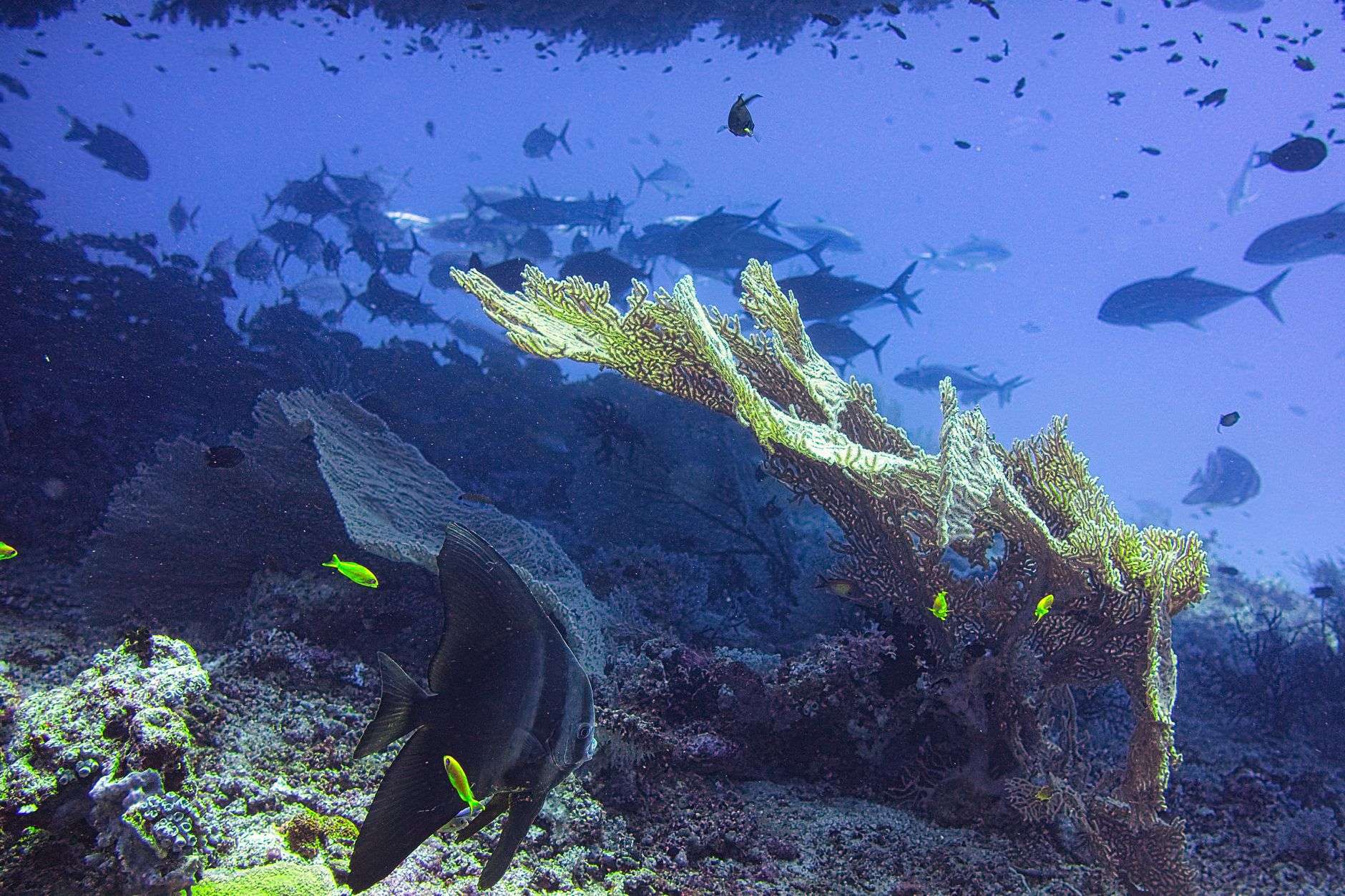
“Alabama’s Rigs to Reefs program allows us to keep these structures in the water to continue serving as productive habitat instead of being moved onshore,” Blankenship said. “The bases of oil and natural gas rigs in the Gulf are often called ‘islands of life’ because they support everything from corals to pelagic fish and sea turtles. Rigs to Reefs keeps these vital ecosystems in place while also allowing great fishing and diving opportunities. We are excited to add these large reefs to our already legendary Alabama Artificial Reef Program.”
The phrase describes a real phenomenon. The northern Gulf seafloor is largely soft mud and sand, offering little hard structure for organisms that need something to attach to. A steel platform standing in open water provides vertical surface from the seafloor to near the surface, and over years it accumulates a full community — encrusting organisms first, then the small fish that feed on them, then the predators that feed on those.
The base of this rig has been accumulating that community since 1998.
How the Rig Was Split
Creating two sites from one structure required cutting it apart.
The platform portion of Spirit VK 780A was removed and towed to shore for decommissioning. The remaining portions — the platform legs and well jacket — were cut at 90 feet below the water’s surface to allow safe navigation above the new 400-square-foot reef zone established around the base.
That 90-foot clearance is a navigational safety requirement. Any structure left in the water has to sit deep enough that vessel traffic passes over it without risk.
VK 780-T: The Top Section
The top portion, listed as VK 780-T on the Marine Resources Division’s offshore reef zone map, is a large rectangular structure measuring 85 feet by 77 feet and extending 107 feet upward from the seafloor.
It now sits in 206 feet of water within the Tatum Winn South reef zone, 45.4 nautical miles south of Sand Island Lighthouse and 55 nautical miles southwest of the Perdido Pass farewell buoy.
VK 780-B: The Base
The base, listed as VK 780-B, remains in 722 feet of water, 59.6 nautical miles south of Sand Island Lighthouse and 67.6 nautical miles southwest of the Perdido Pass farewell buoy.
It rises 632 feet from the seafloor and maintains the habitat that has been growing on the platform since 1998.
A 632-foot structure is a genuinely large artificial reef — taller than most buildings in Alabama, standing on the seafloor in deep water.
The Depth Difference Matters
The two sites will serve very different purposes because of where they sit.
VK 780-T, in 206 feet of water, is within reach of recreational anglers and, at its upper portions, accessible to technical divers. It sits in a named reef zone that boats can locate and fish.
VK 780-B, in 722 feet, is beyond ordinary recreational fishing and diving depth. Its value is ecological rather than immediately recreational — a deep structure supporting a community that includes species not found in shallower water, and serving as habitat and forage that ultimately feeds the broader system.
Reefs That Last Decades
Decommissioned rigs create long-term, stable reef structures that can provide productive marine habitat for more than 50 years.
Alabama has the record to demonstrate it. The Marine Resources Division established the Marathon Reef and Swingle Reef from retired rigs in 1983. Those sites remain productive, functioning reefs more than 40 years later.
That durability is the argument for using steel structures rather than lighter materials. A rig’s legs and jacket are engineered to withstand hurricane forces in open water for decades, which means they stay where they are placed and keep their shape — unlike lighter deployments that shift, settle or break apart.
Alabama’s Artificial Reef Program
Alabama operates the largest artificial reef program in the United States, covering an extensive permitted area off the state’s short coastline.
The scale of the program is a significant reason Alabama’s offshore fishery produces catch volumes disproportionate to its 60 miles of shoreline. Structure concentrates fish, and a state that has systematically deployed structure across a large permitted zone has created fishing opportunity where the natural seafloor offered comparatively little.
The recreational and charter fishing economy built on that structure is a meaningful part of the coastal economy in Baldwin and Mobile counties.
About ADCNR
The Alabama Department of Conservation and Natural Resources promotes stewardship, management and enjoyment of the state’s natural resources through four divisions: Marine Resources, State Lands, State Parks, and Wildlife and Freshwater Fisheries.