

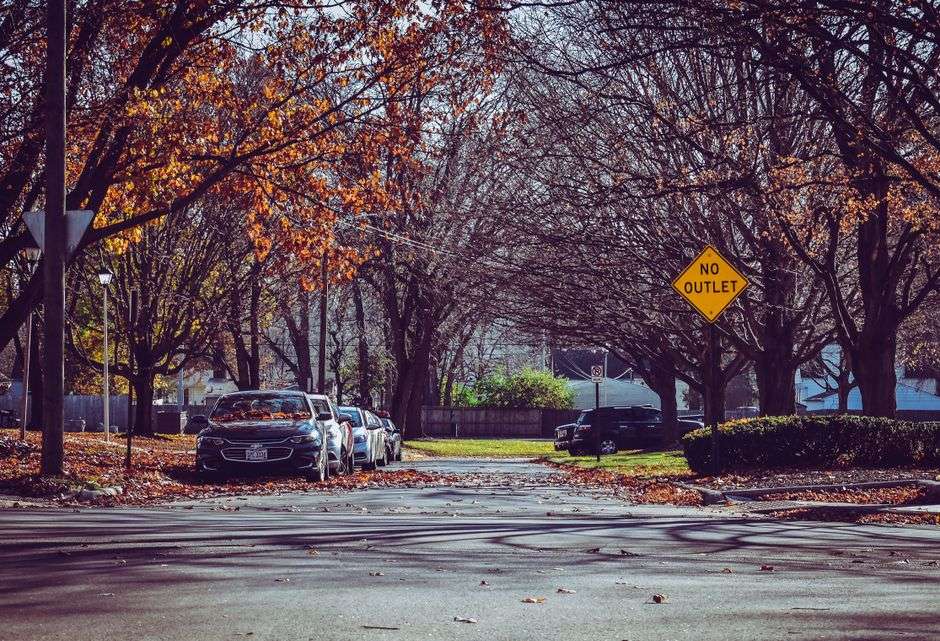
The Alabama Supreme Court has upheld a Mobile County Circuit Court ruling allowing a west Mobile neighborhood to seal off a portion of a public street, ending a legal fight that stretched on for nearly a year and clearing the way for the Airmont Property Owners Association to move forward with construction of a low fence blocking a stretch of Montclaire Way at Airmont Drive.
The high court issued its decision without a written opinion, affirming the lower court’s finding that the Mobile City Council acted within its authority when it voted in January 2015 to allow the closure. The council approved the request by a 6-1 margin at the time, with only Councilman Fred Richardson voting against it. Denials without written opinions are the Supreme Court’s standard handling for cases it views as settled by existing law, and the practical effect here was decisive: the neighborhood’s opponents had exhausted their appellate options, and the fence could be built without further litigation risk.
Alabama’s street-closure framework gave the dispute its legal shape. State law allows municipalities to close or vacate public streets when the governing body finds the closure serves the public interest, and Mobile’s practice in recent years had evolved to entertain requests from neighborhood associations seeking to gate or partially seal streets plagued by cut-through traffic and crime. Each closure, however, requires the council to weigh the access rights of everyone who uses the street — not just the residents of the requesting neighborhood — which is precisely the balance the Airmont case tested, from the council’s 6-1 vote through the circuit court and onto the state’s highest bench.
The yearlong legal fight had moved through the standard appellate ladder after the closure took effect. Opponents challenged the council’s action in Mobile County Circuit Court; when the lower court upheld it, they carried the case to the Alabama Supreme Court, arguing the city had exceeded its authority in sealing a public right-of-way. The high court’s refusal to disturb the lower court’s ruling — issued without elaboration — ratified the council’s judgment call rather than setting new precedent, leaving the statutory framework intact but confirming that the Airmont closure satisfied it.
Why the Neighborhood Wanted the Fence
Airmont Property Owners Association president Eaton Barnard, a Mobile personal injury attorney, said the closure was never about keeping people out for the sake of exclusivity, but about addressing a persistent crime problem that residents say has plagued the neighborhood for years. “Mobile will be safer because of this ruling,” Barnard said. “Crime will go down as a result. It was to stop or substantially deter crime taking place.”
Barnard pointed to a recent burglary in the neighborhood as evidence of the ongoing problem, saying the home of a young family was broken into in broad daylight and televisions were stolen before police tracked down the suspects and recovered the property. The details of that case — a daytime entry into an occupied street’s home, electronics carried out while neighbors were present — illustrated the kind of opportunistic crime residents associate with easy vehicle access: burglars who can drive through, dump and exit in minutes. A sealed street changes that calculus by forcing every vehicle through monitored access points or eliminating through routes entirely.
Crime prevention through environmental design — the criminology field behind gated streets, access controls and defensible-space planning — has documented exactly the mechanism Airmont’s residents invoked. Streets that cannot be traversed by outsiders without a decision point see lower rates of burglary and vehicle crime, because the offenses that depend on quick, anonymous entry become conspicuous. The evidence is strongest for residential closures in urban neighborhoods experiencing persistent property crime, which is the profile Airmont’s association described.
Association leaders had pursued conventional remedies before turning to the fence — increased patrols, neighborhood watch coordination, lighting requests — and concluded that none addressed the structural problem: Montclaire Way functioned as a connector route that gave nonresidents continuous passage through the area, and as long as it did, the neighborhood’s interior streets remained reachable in seconds. The partial closure at Airmont Drive was designed to break that passage without sealing the subdivision off entirely, allowing residents to enter and exit while cutting the through route.
The Opposition
Not everyone in the surrounding area supported the plan. Dr. Janice Morton Hunte, who served as the named plaintiff in the lawsuit challenging the closure, raised concerns in a letter to Mobile Mayor Sandy Stimpson and members of the City Council before the council’s initial vote, questioning how much crime the neighborhood actually experienced. Her letter reframed the factual premise of the request: if the crime problem was less severe than the association claimed, then the council’s public-interest finding rested on shaky ground, and a public street was being sacrificed to perception rather than necessity.
Other residents in adjoining communities argued the closure would create its own safety hazards and would be a significant inconvenience for drivers who rely on the street to get around the area. Those objections carried two distinct weights. The convenience argument was practical: drivers who had used Montclaire Way for years as part of their regular routes — school runs, commutes, errands — would suddenly find their paths severed, with detours adding minutes and funneling trips onto other streets. The safety argument was graver: emergency vehicles, and the redistribution of cut-through traffic onto neighboring streets not designed for it, could make the surrounding area less safe even as Airmont’s interior became more so.
Fire and police access is the standard objection in street-closure disputes nationwide, and cities handle it in the design: gates that emergency crews can open, or barriers low enough to be crossed by apparatus while stopping ordinary vehicles. The low fence contemplated for Montclaire Way reflected that compromise — a barrier that changes driver behavior without presenting an impassable obstacle to responders. Opponents remained skeptical that the balance worked in practice, but the city’s approval process had reviewed emergency access before the council voted.
Barnard said he understood the frustration from residents in adjoining communities who had relied on the street, acknowledging that their routes and routines were disrupted by a decision made largely for the benefit of one neighborhood’s interior. But he maintained that the harm of disruption weighed lighter than the harm of continued through access for people bent on burglary — and the courts, in the end, agreed that the council had weighed it lawfully.
What the Ruling Means Locally
The Supreme Court’s affirmance settles the Airmont dispute but leaves the broader question open for other Mobile neighborhoods. Because the decision came without a written opinion, it sets no sweeping new precedent; its force is confined to confirming that the city council’s process here — a formal request, a public vote, a stated public-interest rationale — satisfies state law. Neighborhood associations elsewhere in the city watching the case will read it as a roadmap: build the factual record of crime, petition the council, and survive the inevitable challenge from affected neighbors.
That roadmap’s feasibility depends on the political environment as much as the legal one. Council members weighing a closure request must balance a requesting neighborhood’s documented problems against the access interests of everyone else in the district, and the 6-1 vote on Airmont showed how the balance landed in this case. Fred Richardson’s lone dissent reflected the concerns of residents outside the requesting association — a constituency every closure request creates. Future petitions will be judged against the same template, and the Airmont outcome gives councils a tested model to follow.
For the residents of Airmont itself, the immediate effect is construction. The low fence at the Montclaire Way and Airmont Drive junction will go up now that the litigation cloud has lifted, and the association’s long-term task becomes maintenance and management: keeping the barrier in repair, coordinating any access arrangements with neighboring communities, and tracking whether the crime reductions its members predicted actually materialize. Homeowners’ associations that install access controls typically take on permanent responsibility for their operation — a cost and administrative burden the Airmont group accepted knowingly.
The Crime-versus-Access Debate
The dispute tested a question that Mobile and cities like it confront repeatedly: when does a neighborhood’s security interest override the public’s right to travel a street paid for with public money? Public streets exist as network assets — their value comes from connectivity — and every closure subtracts a link. Municipalities justify closures when a specific link’s costs — crime, cut-through speeding, heavy through traffic — exceed its connectivity value, and the factual dispute in Airmont was exactly that weighing. Barnard’s side argued the link was a crime corridor; Hunte’s side argued its closure served a perception problem, not a real one.
What the litigation demonstrated is that Alabama’s framework trusts elected councils to make that call, and courts will defer when the council documents its reasoning. The circuit court upheld the closure on the record the city had built; the Supreme Court declined to disturb that judgment. For neighborhood groups, the lesson is that the fight is won or lost at the council stage, in the quality of the evidence presented — incident maps, police statistics, resident testimony — rather than in the courtroom afterward.
The opposing lesson matters equally. Hunte’s challenge established that closures can be contested all the way to the state’s highest court, at the cost of a year of litigation, and that the challenges rest on recordable objections: disputed crime data, safety risks to emergency response, displaced traffic. Any association contemplating a closure should expect a version of that challenge and budget for it — both the legal defense and the neighborhood diplomacy that follows a street’s closure, when the relationships between adjoining communities have to absorb a permanent change.
Aftermath for the Neighborhood
With the fence authorized, Airmont’s residents will measure the closure against the promises made for it. Barnard’s predictions — lower crime, a safer Mobile — are now testable claims, and the neighborhood’s own experience will provide the verdict. Streets that have been sealed in other cities have shown mixed outcomes depending on management: where access controls are maintained and the association stays engaged, property crime typically drops; where barriers fall into disrepair or enforcement lapses, the benefits fade and resentment in surrounding communities grows.
The case also closes a chapter in the relationship between west Mobile’s neighborhoods and their city government. A resident association petitioned for a structural change to the public street network, lobbied its council members, survived a divided 6-1 vote, fought off a yearlong court challenge, and ended with the state’s highest court affirming its right to build. Whatever residents of adjoining communities think of the outcome, the episode documented how the process works from petition to fence — and established that in Mobile, a determined neighborhood with a documented crime problem can close its streets if it persuades six of seven council members that the public interest runs its way.
For Barnard, the ruling vindicated years of advocacy that began with neighbors comparing burglary notes and ended with an attorney-president arguing his community’s case through two levels of court. His summary of the outcome — that crime would go down as a result — remains the standard by which both his association and the city’s decision will now be judged, as the fence rises over Montclaire Way and the traffic that once cut through it finds its way around.