ALDOT Begins Dredging Little Lagoon Pass in Gulf Shores
ALDOT began court-ordered dredging of Little Lagoon Pass in Gulf Shores, work expected to affect nearby beaches for several months.
GULF SHORES, Alabama – The Alabama Department of Transportation began dredging Little Lagoon Pass in Gulf Shores this week, part of a court-mandated effort to keep saltwater flowing into one of Baldwin County’s most ecologically important coastal lakes. The dredge operation marks the continuation of a maintenance obligation the state has carried for more than three decades, and it comes during one of the busiest stretches of the Gulf Coast tourism calendar.
Under a 1992 court order, the state highway department must keep the pass dredged to a depth of at least three feet so tidal water can move freely between the Gulf of Mexico and Little Lagoon, a roughly 2,480-acre lake prized by anglers, paddlers and wildlife watchers. The obligation dates to the construction of the original bridge across the pass, which altered the natural exchange of water between the lagoon and the Gulf and left the state responsible for compensating with ongoing maintenance dredging. Because of its shallow depth, the pass isn’t considered navigable for larger boat traffic, but it remains a vital artery for water movement, small-craft paddlers and the marine life that depends on regular tidal flushing.
Without routine dredging, sand carried westward by longshore currents in the Gulf would quickly close the pass, and Little Lagoon would begin to stagnate. Water quality in coastal lagoons depends on that regular exchange: oxygen levels, salinity and temperature all swing out of balance when tidal flow is cut off, threatening the fish, crabs and shellfish that make the lagoon a favorite destination for local anglers and kayakers.
Where the Sand Will Go
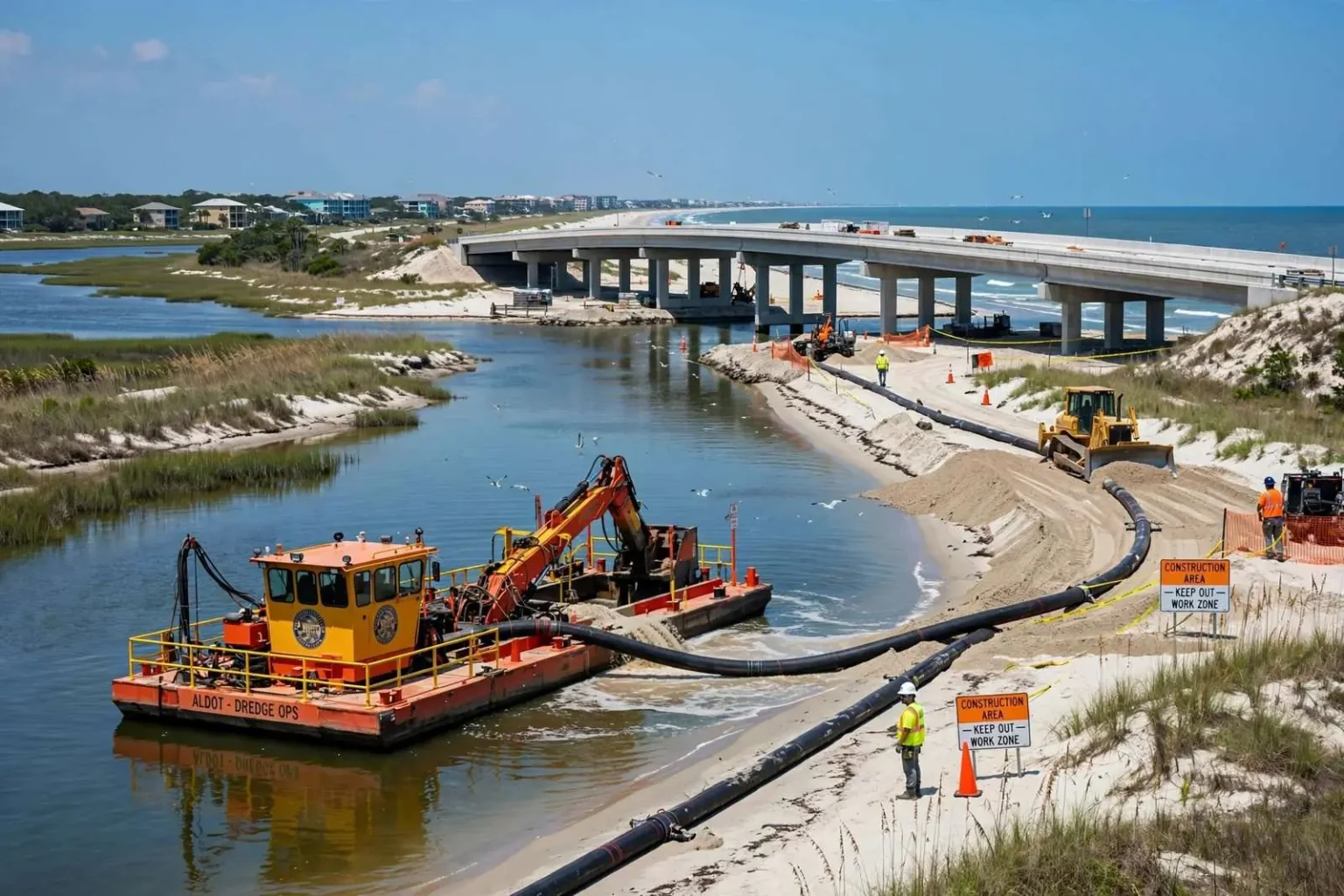
City of Gulf Shores Public Works Director Mark Acreman said the dredging and sand placement work would affect beaches within about half a mile west of the pass, with the impacted stretch estimated to run roughly from the 1755 to 1783 blocks of West Beach Boulevard. Dredged sand is piped onto the adjacent beach rather than removed from the system entirely, a method that keeps sediment in the local littoral zone and helps replenish the shoreline west of the pass.
Acreman said the project is expected to take several months to complete. Residents and visitors in the affected stretch should expect heavy equipment on the beach, pipelines running across the sand, and periodic changes in access as crews work their way along the shoreline. City officials are asking beachgoers to give the work zone a wide berth while construction is underway.
Work Follows New Bridge Construction
The work comes on the heels of major construction nearby. The pass itself was widened to 80 feet as part of the build-out of the new Lee Callaway Bridge, which opened to traffic in April. The new span replaced an aging structure that carried West Beach Boulevard traffic over the pass for decades, and its construction gave crews the opportunity to enlarge the channel and improve the exchange of water between the Gulf and the lagoon.
Final work on the bridge and surrounding roadways is expected to wrap up by the end of summer. Motorists traveling West Beach Boulevard have already navigated months of construction staging, detour-related congestion and temporary lane configurations, particularly during peak morning and evening hours when beach traffic is heaviest. The remaining punch-list work is not expected to require full closures, but drivers should continue to anticipate occasional delays near the pass until crews demobilize.
For Gulf Shores, the bridge and the pass are more than transportation infrastructure – they are part of the working coastline that supports the city’s tourism economy. Anglers launch kayaks near the pass to reach the lagoon’s trout and redfish grounds, while the beach on either side draws swimmers and surf fishermen throughout the year. Keeping the pass open protects all of those uses at once.
A Balancing Act for Baldwin County
Little Lagoon has long been a focal point for coastal management discussions in Baldwin County, balancing recreational use, property values and the lagoon’s delicate water quality. The lake is one of the largest dune-protected coastal lakes on the Alabama coast, and homes ring much of its shoreline, making its health a direct concern for property owners as well as outdoors enthusiasts.
Routine dredging of the pass is considered essential to prevent the lagoon from stagnating, a step that supports fish and shellfish populations many local anglers depend on. Coastal scientists note that periodically open inlets also give marine species a pathway to move between the Gulf and estuarine waters, supporting nursery habitat for juvenile fish. When similar passes elsewhere along the Gulf Coast have been allowed to close, the ecological consequences have included fish kills, algal blooms and degraded fishing for years afterward.
What Beachgoers Should Expect
Beachgoers and residents near the affected stretch of West Beach Boulevard were advised to expect equipment and periodic access changes as dredging crews work through the summer months. Typical dredging operations involve a cutter-head dredge positioned in or near the pass, a pipeline carrying the sand-and-water slurry to the beach, and bulldozers shaping the deposited sand to match the natural grade of the shoreline. The result is a beach that can look temporarily industrial but typically returns to normal once crews move on and the placed sand settles and compacts.
The timing means visitors staying in condos and houses along West Beach Boulevard should plan around construction noise during daytime hours. City officials note that the sand placement will leave that stretch of beach wider than before the project, a benefit that should outlast the construction period itself.
City officials said they would continue coordinating with ALDOT throughout the project to minimize disruptions for beachgoers during the peak of the summer tourist season, while emphasizing that the maintenance work remains necessary. Gulf Shores leaders have made coastal maintenance a priority in recent years, pairing the pass dredging with the city’s broader beach nourishment efforts that keep the sugar-white shoreline the community is known for.
The Long View on the Pass
The 1992 court order that governs today’s work arose from litigation over the environmental effects of bridging the pass, and it has shaped how every subsequent bridge project at the site has been designed. The widened 80-foot channel built with the Lee Callaway Bridge reflects lessons learned over those decades: a larger, better-maintained opening reduces the frequency and intensity of dredging needed to keep the lagoon healthy.
State and city officials say residents can expect dredging to remain a recurring part of life at the pass, with the schedule driven by shifting sands and storm activity rather than the calendar. In the meantime, the current project is intended to carry the lagoon through the coming seasons with the tidal exchange that has kept it one of Baldwin County’s most productive and beloved coastal waters for generations.
ALDOT crews and contractors will monitor conditions at the pass through the duration of the project, adjusting the dredge position as sand accumulates in the channel. The agency typically sequences such work to avoid major holiday weekends when practical, though the court-mandated nature of the maintenance means the schedule cannot slip indefinitely.
Why the Lagoon Matters
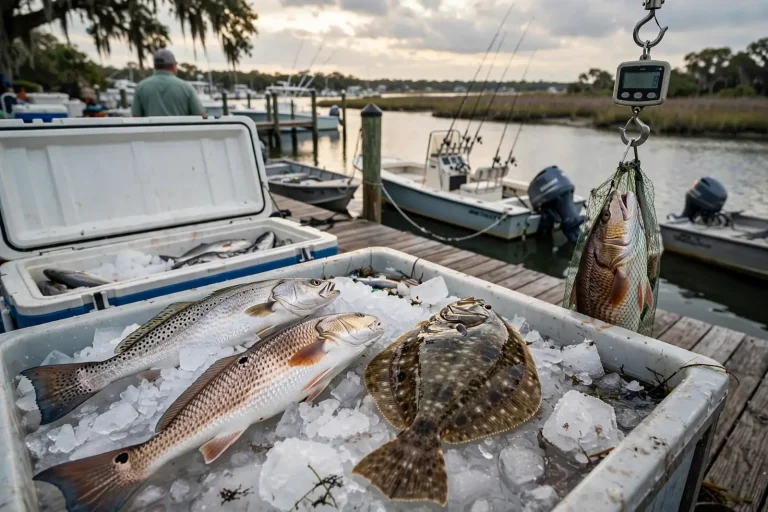
Little Lagoon supports a fishery and ecosystem that many Baldwin County families have enjoyed for generations. Speckled trout, redfish, flounder and blue crab all make use of the lagoon’s mix of fresh and salt water, and the surrounding dunes and wetlands provide habitat for shorebirds, wading birds and other coastal wildlife. Paddlers routinely cross the pass from the public access points on either side, and the lagoon’s calm waters make it a popular training ground for kayakers and paddleboarders of all skill levels.
The lagoon also functions as a natural buffer for the communities around it, absorbing storm surge and heavy rainfall before it reaches homes and roads along West Beach Boulevard. Engineers and coastal planners point to that function as one more reason to keep the system healthy: a stagnant, sediment-choked lagoon loses depth and storage capacity, which can worsen flooding during tropical systems and slow-moving summer storms.
Environmental groups in Baldwin County have followed the pass dredging closely over the years, generally supporting the maintenance as a compromise that preserves both public access and the lagoon’s ecology. The sand-by-pass placement method used in the current project is consistent with regional best practices, which favor keeping beach-quality sand in the active coastal system instead of dumping it offshore.
Questions about the project schedule, beach access and the Lee Callaway Bridge finishing work can be directed to the City of Gulf Shores, which says it will post updates as the dredging progresses. Officials add that once the project is complete, the pass and the refreshed stretch of West Beach Boulevard should be ready well ahead of next year’s tourist season, giving anglers, paddlers and beachgoers the full use of one of the coast’s most distinctive natural assets.