

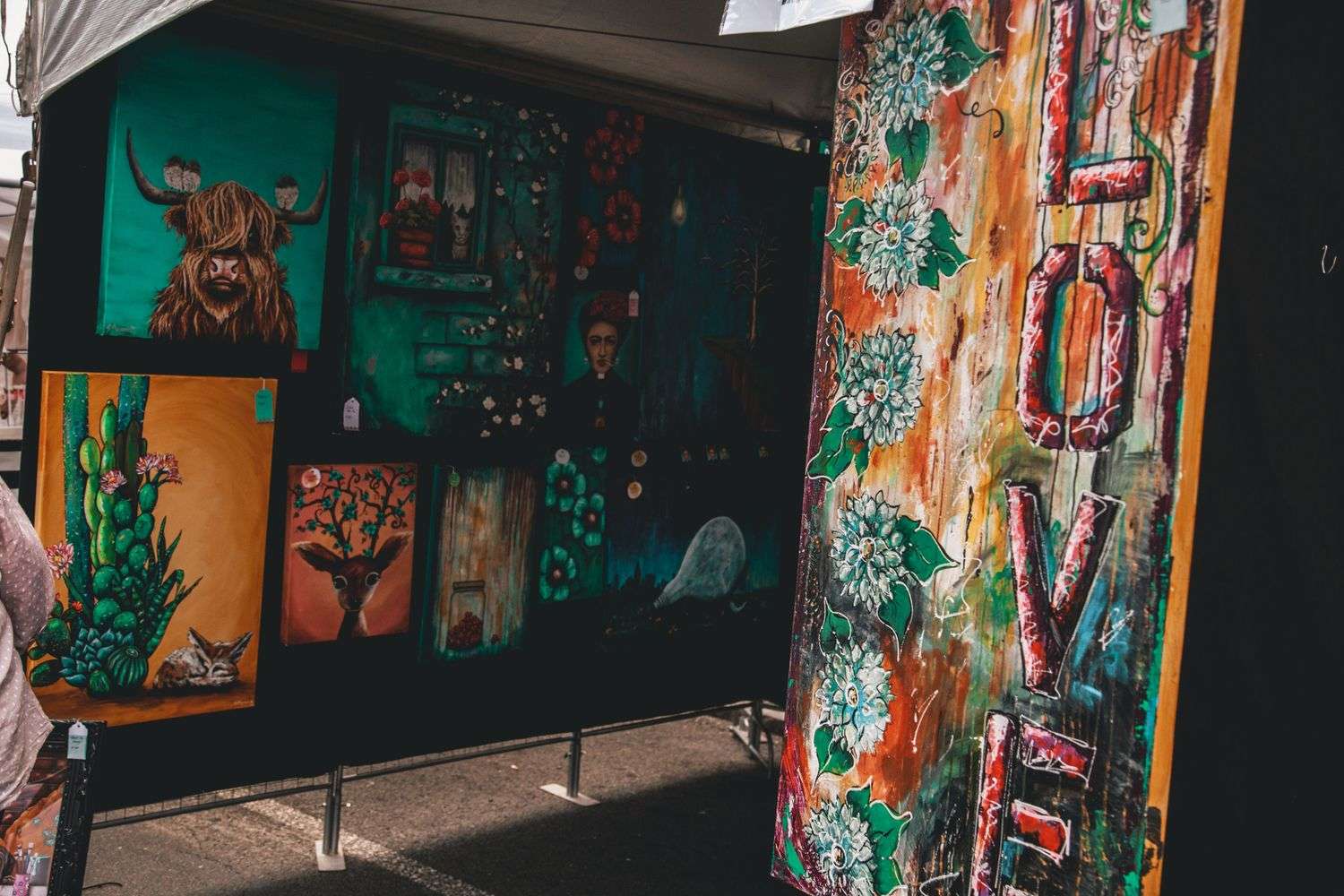
Downtown Mobile’s Cathedral Square Arts District was set to fill with music, dance, theater, film and visual art as the city’s long-running spring arts celebration, Arts Alive!, returned for a three-day run beginning Friday, April 9, 2010. The free, family-friendly festival was scheduled to run through Sunday, April 11, drawing artists and audiences alike to one of the city’s most historic public spaces.
Festival hours were set for Friday from 5 to 9 p.m., Saturday from 2 to 9 p.m., and Sunday from noon to 6 p.m., with no admission charge for any of the three days. Organizers billed the event as Mobile’s premier performing-arts festival, built around the idea that the arts should be accessible, interactive and genuinely hands-on rather than something audiences simply watch from a distance.
A Multidisciplinary Showcase
Since its founding, Arts Alive! has distinguished itself from more narrowly focused festivals by folding several artistic disciplines into a single weekend. Rather than centering on one medium, the festival has traditionally featured a wide selection of art genres — theater, film, visual art, music and dance — performed and displayed by local and regional talent. That structure gives the festival a different feel depending on where visitors wander within Cathedral Square: a painter’s booth in one corner, a small theatrical performance in another, live music drifting across the plaza, and film screenings or interactive art stations elsewhere.
Festival chair David Calametti described the guiding philosophy behind the event in blunt, accessible terms. “Our overall goal is to create personal artistic experiences for everyone who comes out,” Calametti said. “We want to demystify art and stir the muse within each of us.” That framing — art as something to participate in, not merely observe — has shaped how the festival is organized, with an emphasis on interactive activities alongside traditional performances and exhibitions.
Why Cathedral Square
The festival’s setting is not incidental. Cathedral Square is one of downtown Mobile’s most historically layered public spaces, bordered by North Claiborne, Dauphin, North Jackson and Conti streets in the heart of the city’s historic district. The land carries centuries of history: the square once formed part of Campo Santo, Mobile’s Catholic cemetery dating to the 18th century, a burial ground that stretched roughly 400 by 300 feet across what are now several city blocks. When the city expanded its boundaries in the 19th century, most remains were relocated to Church Street Graveyard in 1819, though skeletal remains reportedly continued to surface near Conti Street as late as the 1890s as the area was developed commercially.
The transformation of the square into the public gathering space festivalgoers know today came much later. In 1979, the commercial buildings that had occupied the site were demolished to create a public park facing the Cathedral Basilica of the Immaculate Conception, and the park’s current design was completed in 1996. That design deliberately echoes the cathedral it faces — brick sidewalks mirror the walls and nave of the church, while a semicircular colonnade with fountains mirrors the building’s apse. The result is a plaza that was essentially built to host exactly the kind of open-air cultural gathering Arts Alive! represents, with the cathedral’s twin spires providing a dramatic backdrop for performances and art displays alike.
The Cathedral Anchoring the Square
The Cathedral Basilica of the Immaculate Conception, which the square directly faces, is itself a significant piece of Gulf Coast history. Mobile’s Catholic parish dates to 1703, making it one of the oldest established on the Gulf Coast, predating the city’s eventual move to its current site in 1711. The present cathedral building was commissioned by Bishop Michael Portier after Pope Pius VIII created the Diocese of Mobile in 1829; architect Claude Beroujon designed the Greek Revival structure, construction began in 1835, and the building was consecrated in 1850 despite funding delays that pushed back its portico and twin towers. Those towers, along with the eight-column Doric portico, were not completed until the 1870s and 1884, respectively, and the cathedral’s stained-glass windows, crafted by the Munich firm Franz Mayer & Co., were installed between 1890 and 1910. Pope John XXIII elevated the building to minor basilica status in 1962, and it remains the seat of the Archdiocese of Mobile as well as a contributing property to two federally recognized historic districts. That backdrop of 19th-century Greek Revival architecture, with its 103-foot twin towers, has made the square one of the more photogenic and symbolically resonant public spaces available to festival organizers anywhere in the city.
Mobile’s Broader Arts Ecosystem
Arts Alive! has never existed in isolation. It has been one thread in a longer-running civic effort to keep downtown Mobile anchored as a cultural destination, alongside institutions such as the Mobile Arts Council, a nonprofit founded in 1955 by the Junior League of Mobile to increase cooperation among the city’s artistic and cultural organizations. That council, which brought on its first full-time director in 1958 and has continued to support exhibitions and arts education initiatives from its downtown office, represents the kind of institutional backbone that has allowed events like Arts Alive! to take root and recur year after year rather than existing as one-off happenings.
Mobile’s identity as an arts town runs deeper still. As one of the oldest European-founded cities in the country, Mobile has a centuries-long tradition of public celebration and pageantry, most visibly through its Mardi Gras traditions — the oldest organized Carnival celebration in the United States, predating New Orleans’ festivities. That culture of elaborate float design, costuming, music and public spectacle has long fed a broader appetite in the city for visual and performing arts, and organizations such as the Mobile Museum of Art and Mobile Opera have given that appetite year-round outlets beyond the Carnival season. A spring festival built around demystifying art and inviting hands-on participation fits naturally into that civic tradition.
Downtown Revitalization Context
Arts Alive!’s use of Cathedral Square also reflects a longer pattern in American downtowns of using historic public squares as venues for cultural programming as part of broader revitalization efforts. Like many mid-sized Southern cities, Mobile spent decades working to draw residents and visitors back to its historic downtown core after mid-20th-century suburban growth pulled retail and population toward the city’s outskirts. Public festivals in restored or repurposed civic spaces — squares, waterfronts, historic markets — have been a common tool cities nationwide have used to reintroduce downtown districts as destinations rather than places people simply commute through. Locating an arts festival in a park explicitly designed, as Cathedral Square was, to complement a National Register-listed cathedral is a particularly direct example of that strategy: it pairs a contemporary cultural event with preserved architectural heritage, giving visitors a reason to spend a weekend afternoon downtown who might not otherwise have one.
What Attendees Could Expect
Free, multi-day arts festivals of this kind typically draw a broad cross-section of a city’s residents precisely because they lower the barriers that can otherwise keep people away from the arts — no ticket price, no formal dress code, and programming spread across an entire weekend so that visitors with work schedules or family obligations can find a window that fits. The interactive component that organizers emphasized for the 2010 festival is a common feature of contemporary arts festivals nationally, reflecting a broader shift among arts organizers toward participatory programming — hands-on craft stations, community art projects and workshops — rather than purely presentational formats where audiences watch from folding chairs.
For families, the free admission and daytime Saturday and Sunday hours made the event particularly accessible, while the Friday evening slot offered an after-work option for downtown workers and residents. As with most outdoor festivals in the Gulf Coast region, early April timing was likely chosen deliberately: it falls after the region’s cooler, wetter winter months but before the intense heat and humidity of a Mobile summer set in, giving organizers a comfortable weather window for an entirely open-air event.
Practical Notes for Visitors
Outdoor festivals staged in dense historic districts like Cathedral Square typically come with a handful of practical considerations for visitors, even when a specific event’s logistics aren’t spelled out in advance. Downtown Mobile’s grid of narrow, historic streets generally means street parking is limited near the square itself, and visitors to multi-day downtown events are usually better served by nearby public parking garages and a short walk than by circling blocks looking for curbside spots. Because the festival was staged entirely outdoors and spanned three days with varying hours, attendees were also likely to encounter the kind of practical realities common to any open-air Gulf Coast event in early spring — shifting weather, the need for sun protection during Saturday’s daytime hours, and the general unpredictability that comes with staging a festival at the mercy of the season.
A Recurring Fixture
By 2010, Arts Alive! had already established itself as a recurring feature of Mobile’s spring calendar, with the Cathedral Square Arts District serving as its consistent home base. Festivals of this type typically depend heavily on a mix of volunteer labor, local sponsorship and coordination with city services to close streets, manage crowds and provide the infrastructure — stages, tents, restrooms, security — that a multi-day outdoor event requires. That kind of sustained organizational effort, repeated annually, is often what separates a festival that becomes a lasting civic institution from one that fades after a year or two.
Additional details about the 2010 festival, including specific performer and vendor lineups, were made available through the festival’s own promotional materials at the time. For residents and visitors planning to attend, the basics remained straightforward: three days, free admission, and a downtown historic square transformed into a stage for local and regional artists working across theater, film, visual art, music and dance.