

ROBERTSDALE, Ala. — A Baldwin County commissioner running for reelection has had the county spend more than a quarter of a million dollars at her request on four new vehicles since taking office less than eight years ago, according to a review of public records detailing county vehicle expenses.
At the same time, internal reporting shows Baldwin County’s top elected officials report taking home their government-provided vehicles far more often than any other county staff or department, with the exception of the Baldwin County Sheriff’s Office. The commissioners also do not appear to report where they take the vehicles or how often they use them in the annual reports shared publicly each December — a document they themselves vote on. Other county staff members, by contrast, log the number of times they take a vehicle home and must explain the necessity of doing so.
‘It’s an Honor System’
“It’s an honor system,” District 4 Commissioner Skip Gruber said of commissioners’ use of government vehicles, noting that no one in Baldwin County actively monitors whether commissioners are properly using them. “You’re provided a vehicle, and you’ve got rules and regulations that you know you can’t use for personal use, and that’s it. If you’re going from here to your house, stop and get a loaf of bread or something like that, you can do that, but you know you’re not supposed to take it out, go grocery shopping, and all this other stuff.”
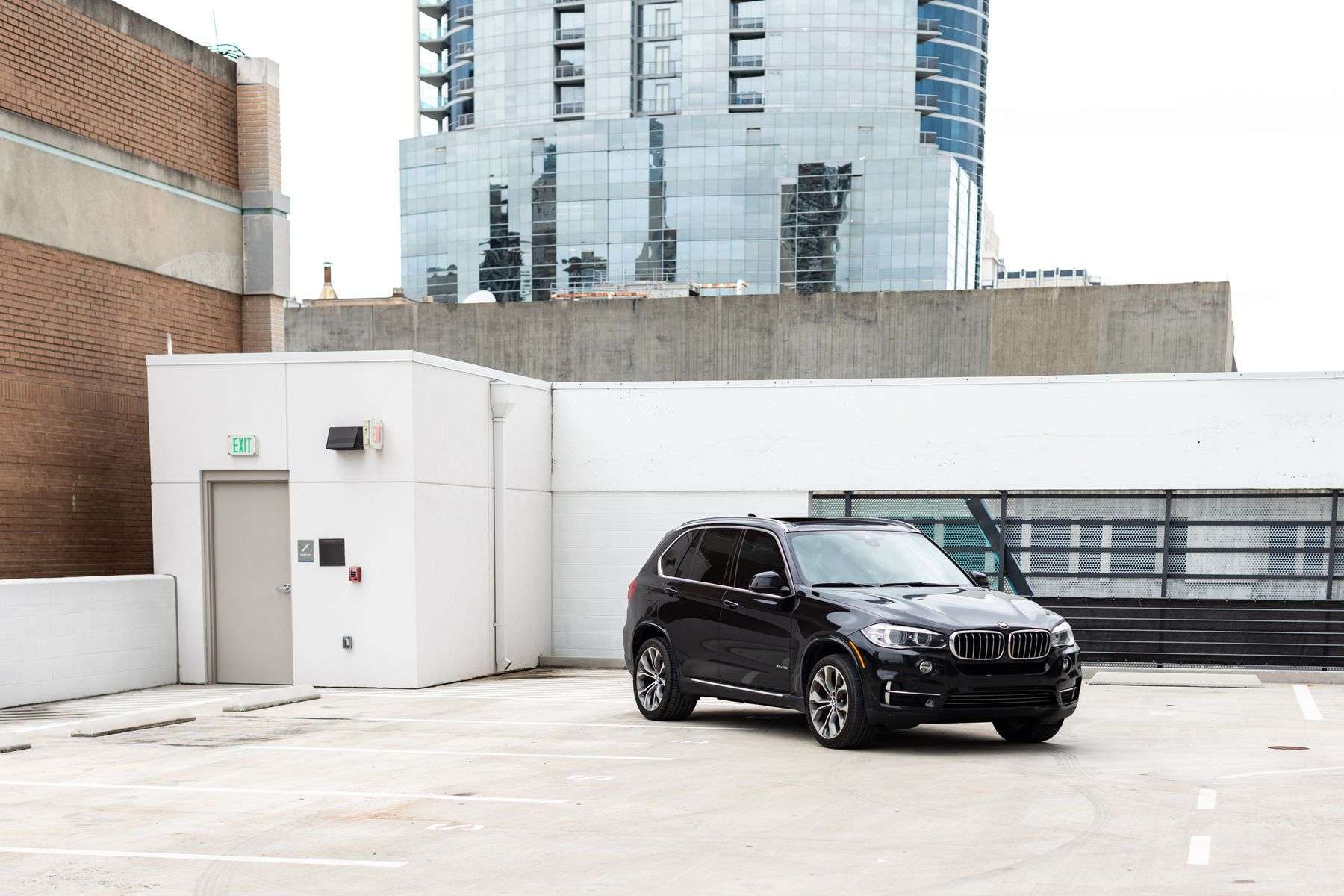
On July 21, the Baldwin County Commission approved a $77,895 purchase for District 3 Commissioner Billie Jo Underwood to receive a black 2026 Chevrolet Tahoe. Her previous county-provided vehicle, a 2023 Tahoe, had been assigned to her that same year.
A Contentious Vote
During the commission’s July 21 worksession, Underwood asked that the vehicle purchase be pulled from the consent agenda so it could be discussed separately during the regular meeting. District 2 Commissioner Matt McKenzie later said the request came after he asked Underwood to justify the new vehicle, which she declined to do, suggesting instead that the matter be taken up during the regular meeting.
“There’s no animosity between us,” McKenzie said. “I just disagree with her getting the vehicle, but that’s OK. It’s a part-time job, she just got one three years ago. You know how many miles she has on the old one that she’s turning in? That’s the question. Wait until we do budget hearings and let’s see what she does with the sheriff’s office when they want new Tahoes, because the sheriff’s office uses them every day. It’s going to be interesting.”
At the regular meeting, McKenzie again pressed Underwood to justify the purchase, calling it a “waste of taxpayer money.” The commission ultimately voted 3-1 to approve the vehicle, with Underwood, Commissioner Jeb Ball (District 1) and Gruber voting in favor and McKenzie casting the lone no vote.
“I just feel that we could use that money somewhere else besides a county commissioner getting a brand new vehicle,” McKenzie said. “I think the vehicle (Underwood) has she can use for another four years … That’s a waste of taxpayers money for somebody to get a brand new vehicle (for) a part-time job.”
Underwood did not respond to McKenzie during the meeting and did not respond to requests for comment before publication. Ball also did not respond to a request for comment. Gruber, in a later interview, defended Underwood and characterized McKenzie’s objection as “petty, petty stuff,” adding that commissioners “are entitled to have a vehicle if they want one.”
A Decade of Vehicle Spending
A review of dozens of pages of public records detailing the expense, regulation and use of county-provided vehicles shows Baldwin County has spent $435,612.97 since 2015 to provide the four current commissioners with eight county-owned vehicles combined.
Underwood has received the most vehicles of any sitting commissioner — twice as many as her closest colleague, Gruber, who has received two vehicles since 2015 and said he had two others between 2006, when he first took office, and 2014. Underwood’s first vehicle was a 2018 Ford Explorer purchased for $39,029 in November 2018. She has since received three Chevrolet Tahoes: one for $45,741 in October 2020, another for $64,324 in March 2023, and the most recent $77,895 Tahoe approved July 21, 2026. In total, the county has spent $226,989 purchasing vehicles for Underwood since 2018.
Gruber’s vehicle purchase records, which extend back to 2015, show he received a Ford F-150 for $38,679 that year and another F-150 in 2023 for $64,471, for a combined total of $102,150. McKenzie and Ball have each had one vehicle: a Ford Expedition for Ball, in use since 2021, and a Ford F-150 for McKenzie, received in 2022. Combined, their two vehicles cost the county $107,471.
Mileage and Take-Home Use
Gruber has logged more miles in a government vehicle than any of his colleagues since 2015, totaling at least 136,622 miles over nearly 11 years — 102,512 miles in the vehicle he received in 2015 and roughly 34,110 miles since 2023, averaging 12,420 miles annually.
Underwood has driven the most miles of any commissioner since 2018, totaling 107,896 miles: 54,500 miles between November 2018 and October 2020 in her first vehicle, 22,716 miles from then until March 2023, and another 30,680 miles as of July 2026, for an average of about 13,487 miles per year — though she averaged closer to 27,000 miles annually in her first two years. McKenzie has driven roughly 55,000 miles on his F-150 since 2022, averaging 13,750 miles per year, while Ball has driven about 37,000 miles since 2021, averaging 7,400 miles annually. Combined, the four commissioners have driven 336,831 miles in government vehicles since 2015 — mileage that, if reimbursed at the county’s personal-vehicle rate of 76 cents per mile, would have cost taxpayers $255,991.56, or $179,621.41 less than what the county has actually spent purchasing commissioners’ vehicles outright.
Of the four commissioners, Ball is the only one who does not take his government vehicle home. Gruber and Underwood have each reported taking their vehicles home roughly two-thirds of the calendar year since 2021: 247 days in both 2021 and 2022, 246 days in both 2023 and 2024, 244 days in 2025, and 124 days so far in 2026 as of July 15. McKenzie reported using his vehicle 104 days in 2022, 246 days in both 2023 and 2024, 135 days in 2025, and eight days so far in 2026.
Why the Reporting Looks the Way It Does
County Administrator Roger Rendleman said commissioners are taxed for the benefit of taking a government vehicle home, similar to how any employee would be taxed for a comparable perk. “You have to be taxed for that benefit (a government car),” Rendleman said. “They may not necessarily use it every day. You actually charge them a certain amount on their check. You tax them a certain amount every pay period because they’re theoretically utilizing every day to commute back and forth to work, whereas for a commissioner they may not be utilizing it all the time. So that’s my understanding [of] why they do that quarterly reporting is for tax purposes, not necessarily indicating that you know ‘I drove 3,000 miles this month.'”
Baldwin County Administrative Services Manager Anu Gary described the arrangement similarly: “Basically, the IRS is saying ‘Hey you were allowed to commute from home to work and back for 60 days. We value that commute at $3 round trip. So you owe us tax on $180.'” Records show all three commissioners’ tax totals reflected them taking their vehicles home on every day they reported using them.
McKenzie and Gruber both said their vehicle use is limited to commission meetings and other official responsibilities. “When I ran for sheriff, I did not use that county vehicle except when I had to go to county commission meetings or county functions,” McKenzie said. “Other than that, you have to leave it. You can’t use it.”
No Formal Oversight in Place
According to several Baldwin County officials, commissioners report their vehicle use only in internal quarterly reports that determine how often they take a car home, along with odometer readings showing how far they’ve driven. A review of take-home vehicle approval lists dating back to 2018 found no instance in which the list detailed how commissioners used their vehicles or offered any explanation for needing one.
Rendleman said commissioners are not required to submit that kind of justification because they are expected to travel frequently and are trusted not to violate the rules governing personal use. “They go all over the county because they don’t just represent their district,” Rendleman said. “They also have a lot of times when they’re involved with county commission association committees and stuff like that, and having to go to Montgomery a good bit. That’s typically when they utilize them.”
McKenzie acknowledged that, in practice, there is little infrastructure to catch a commissioner using a county vehicle for personal reasons. “The only thing I can think of is maybe if somebody wanted to make an anonymous complaint or something, then the county administrator and the county attorney will look into it,” he said.
Despite his concerns about Underwood’s vehicle history, McKenzie said he does not plan to push the issue further before his term ends. “I’m not going to stir the pot or make it worse for the county commissioners,” he said. “I’ve got three more months there with them, and I’ve got to get along with them. At the same time, if I see something that I think needs to be brought up, I’m going to do it. I’m going to do it professionally and move on.” He said he would leave the matter to incoming commissioners to address after November’s election if they choose to.
Future county commissioners Angelo Fermo and Richard Cox did not respond to requests for comment by press time, and Tater Harris declined to comment.