Baldwin County Teachers Turn Empty Classrooms Into Learning Wonderlands Before First Day
As Baldwin County schools prepare to open, teachers spent weeks transforming bare classrooms into themed learning spaces for students.
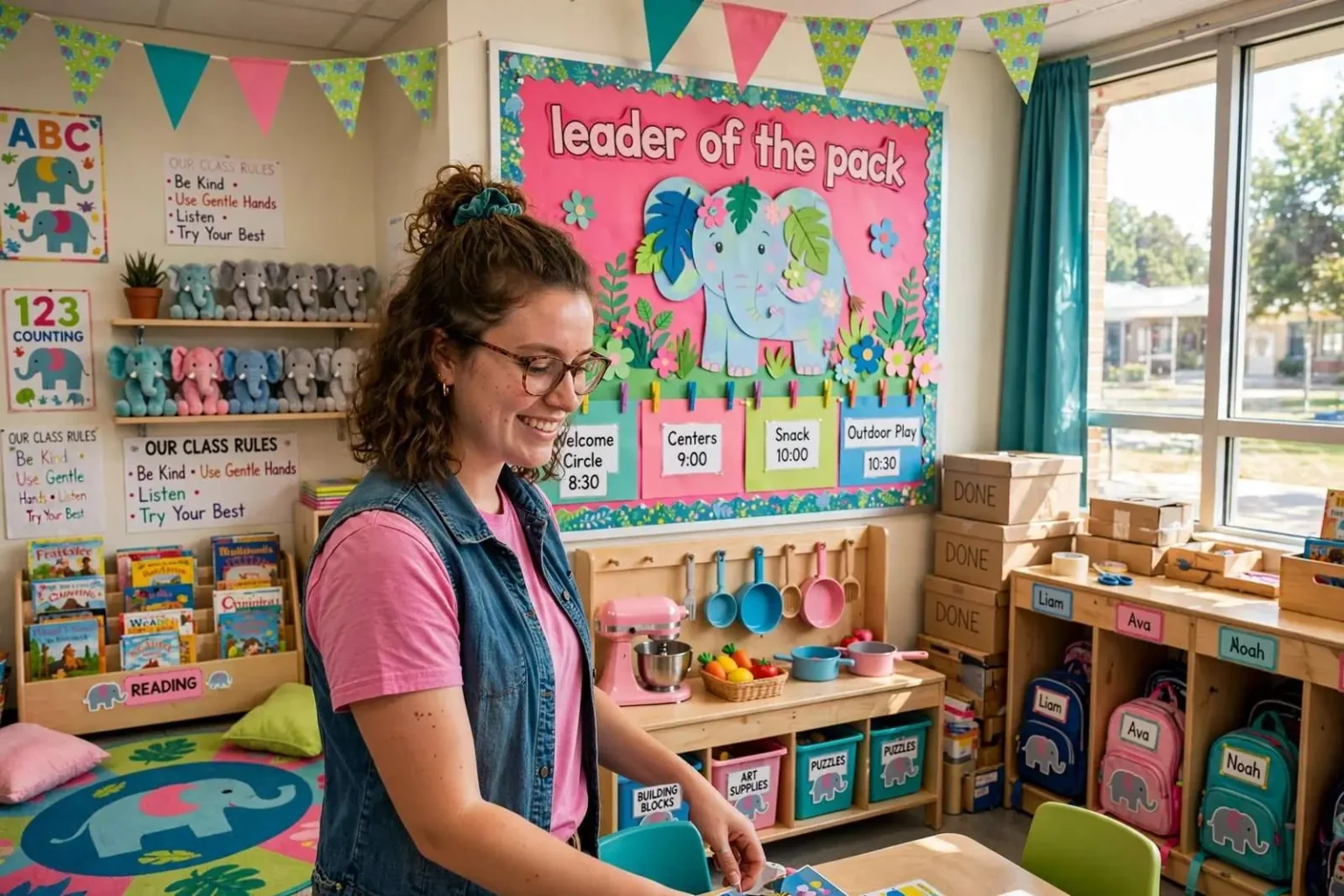
With Baldwin County schools set to open their doors for the new academic year, teachers across the district spent the final weeks of summer transforming empty classrooms into welcoming spaces designed to get young students excited about learning. At one Baldwin County school, a first-year pre-kindergarten teacher found out just three weeks before the start of school that she would have her own classroom for the first time.
Three weeks is a short runway for any teacher, and shorter still for one preparing her very first room. Veteran educators often spend the entire summer planning for the fall; a late assignment compresses that timeline into a scramble of shopping trips, late nights and rapid decisions about how a blank room becomes a functioning pre-kindergarten classroom. What followed was a whirlwind of sorting, decorating and rearranging as she worked to turn a room full of boxes and leftover supplies into a functional learning environment.
From Boxes to a Classroom
The process, she said, began with an overwhelming amount of organizing, since she inherited a mix of materials without a clear sense of what she would actually need for her students. Inherited classrooms are a rite of passage in teaching: cabinets stuffed with a decade of accumulated workbooks, faded posters left on walls, furniture arranged for someone else’s teaching style. Before a single decoration can go up, a new teacher has to decide what stays, what goes and what gets stored — decisions made harder when the incoming students are four years old and the room has to function as a classroom, a play space and, at times, a de facto living room.
Once the sorting was complete, she settled on an elephant theme for the room, opting for bright teal, pink, blue and lime green colors rather than traditional school colors. Themed classrooms have become a signature of early-childhood education, giving young children a consistent visual world that ties the room together — from the welcome sign by the door to the labels on the supply bins. The palette she chose leaned bright and saturated, a deliberate departure from the muted tones that dominate older-grade hallways.
In total, the teacher estimated she spent around 75 hours transforming the space, along with roughly $500 of her own money on decorations and supplies. She said she tried to be frugal, but felt the investment was worth it given how much time she would ultimately spend in the classroom throughout the school year. The figures are familiar ones in the profession: teachers routinely log substantial personal hours before the first bell and spend their own money stocking rooms, particularly in the early grades where the physical environment does part of the teaching.
The Details That Matter to Four-Year-Olds
Among her favorite additions was elephant-print fabric used throughout the room, along with a “leader of the pack” bulletin board featuring a handmade elephant design. The bulletin board serves the practical purpose every pre-K teacher relies on — a place to anchor the class’s routines, celebrate students and post the day’s rhythm — but wrapped in the theme, it doubles as the room’s signature piece. Handmade touches like that one cost time more than money, and they are usually the elements teachers point to first when showing off a finished room.
She also highlighted a play kitchen area stocked with pretend food, cookware and a mini mixer, as well as a reading rug where she plans to spend significant time with her young students throughout the year. In a pre-kindergarten room, those two stations carry most of the instructional weight. Play kitchens build vocabulary, turn-taking and the pretend play that early-childhood research links to language growth, while the reading rug is where the class gathers for stories, songs and the daily routines that teach children how school works.
The layout decisions behind those stations matter as much as the decorations. Early-childhood rooms are typically zoned into areas — building, pretend play, reading, art, circle time — so children can move between activities without chaos, and sight lines are arranged so a teacher can watch the whole room at once. Getting that geometry right in three weeks, in a room stocked with someone else’s furniture, is the kind of invisible work that shows up only when twenty children walk in and the day simply functions.
A District of Teachers Doing the Same Thing
Teachers across Baldwin County take on similar projects each summer, often spending personal time and money to create engaging spaces for the district’s youngest learners. The county’s classrooms stretch across a geographically enormous district, from Bay Minette to Fairhope to Gulf Shores, and behind nearly every classroom door in August is a teacher dragging in supplies from a personal vehicle. National surveys of the profession consistently find that most teachers spend their own money on classroom materials, and early-grade teachers tend to spend the most, because their rooms do double duty as learning environments and, effectively, as playrooms.
Baldwin County schools were set to welcome students back for the new school year, joining dozens of other Alabama districts that had already begun classes in the days prior. Alabama’s school calendar has crept earlier over the years, with many districts now starting in early or mid-August — a shift that shortens the summer window teachers have to complete exactly the kind of transformation the first-year pre-K teacher just pulled off. For teachers on a late classroom assignment, that earlier start turns an already tight schedule into a genuinely compressed one.
The district itself is one of the largest and fastest-growing school systems in Alabama, its enrollment pulled upward by the wave of families moving to Baldwin County’s booming communities along Mobile Bay and the coast. Growth of that kind shows up in schools as new classroom assignments, shuffled grade configurations and, for new teachers, opportunities that arrive on short notice — which is one way a first-year educator ends up with her own room three weeks before the first day.
Why the Effort Pays Off
For many teachers, the classroom transformation process represents both a practical necessity and a chance to set the tone for the year ahead. A room that feels intentional tells students, from the first morning, that someone expected them and prepared for them — a message that matters most to the youngest children, for whom school is still a brand-new environment. The first weeks of pre-kindergarten are largely about teaching children to be comfortable in a setting they have never occupied, and a warm, organized room lowers that hurdle before instruction even begins.
Educators say the extra effort pays off in the form of increased student engagement, particularly among younger children who respond strongly to colorful, themed environments that make the transition into a formal classroom setting feel less intimidating and more like an adventure. Early-childhood teachers describe the room itself as a tool: defined spaces teach routines, bright visuals hold short attention spans, and playful themes give children a shared language for the class — in this case, a herd of elephants watching over the school year.
The payoff compounds across the year. A teacher who knows where every material lives loses fewer minutes to searching; a room with clear zones transitions faster between activities; and children who feel ownership of a space treat it, and the people in it, with more care. Those small efficiencies, multiplied across 180 school days, are the return on the 75 hours and $500 invested before anyone arrived — and they are why, all across Baldwin County, teachers spent the last hot weeks of summer building wonderlands out of empty rooms.
The Money Teachers Spend
The $500 she spent is modest by the standards of some early-grade setups, but it came out of a first-year teacher’s pocket at the moment her paycheck was thinnest. Teachers everywhere describe the same arithmetic: school budgets cover the essentials, and anything that makes a room inviting — rugs, fabric, organizational bins, play food — tends to land on the teacher’s personal receipt. Experienced educators swap strategies for stretching those dollars, shopping discount aisles, repurposing materials and waiting for back-to-school sales, and frugality was exactly the approach she said she tried to take.
The hours are harder to budget than the money. Seventy-five hours of setup spread across three weeks amounts to a second job, unpaid, squeezed between training sessions and the paperwork every new hire confronts. First-year teachers nationally report the summer-before setup as one of the most stressful stretches of their debut year, precisely because everything is being done for the first time with no stock of lessons learned to draw on. Her timeline — assigned late, finished by the deadline — is a small victory most veteran teachers recognize immediately.
Parents rarely see that labor directly, but they see its results on meet-the-teacher night, when children walk into a finished room and decide within minutes how they feel about the year ahead. Pre-kindergarten teachers say those first impressions matter for families too: a room that is obviously prepared reassures parents who are handing over a four-year-old for the first time, and that reassurance smooths the separations that make early August mornings difficult in every school car line on the coast.
What Comes After the First Day
The decorating, of course, is only the opening act. Once students arrive, the room has to live up to its promise: centers have to be rotated, bulletin boards updated, materials replenished as the school year wears down whatever was fresh in August. Teachers describe the school year as a cycle of setup and refresh, with the biggest push coming before the first day and smaller resets following each holiday break. The elephant theme will need touch-ups by spring, the play kitchen’s stock will need replacing, and the reading rug will spend the year absorbing exactly the heavy use she is planning for it.
For the teacher herself, the season ahead will test everything the setup was meant to support — routines, engagement, the slow work of teaching four-year-olds how to be students. First-year pre-K teachers spend the fall learning to manage a room of children who have never done this before, and the environment she built will either absorb some of that challenge or add to it. Her bet, like the one thousands of Alabama teachers placed in their own rooms this August, is that the hours and dollars spent before day one pay dividends every day after it.