Best Buy Announces Move From Springdale Mall to McGowin Park
Best Buy plans to relocate from Springdale Mall to McGowin Park in Mobile after the holiday shopping season, company officials said.
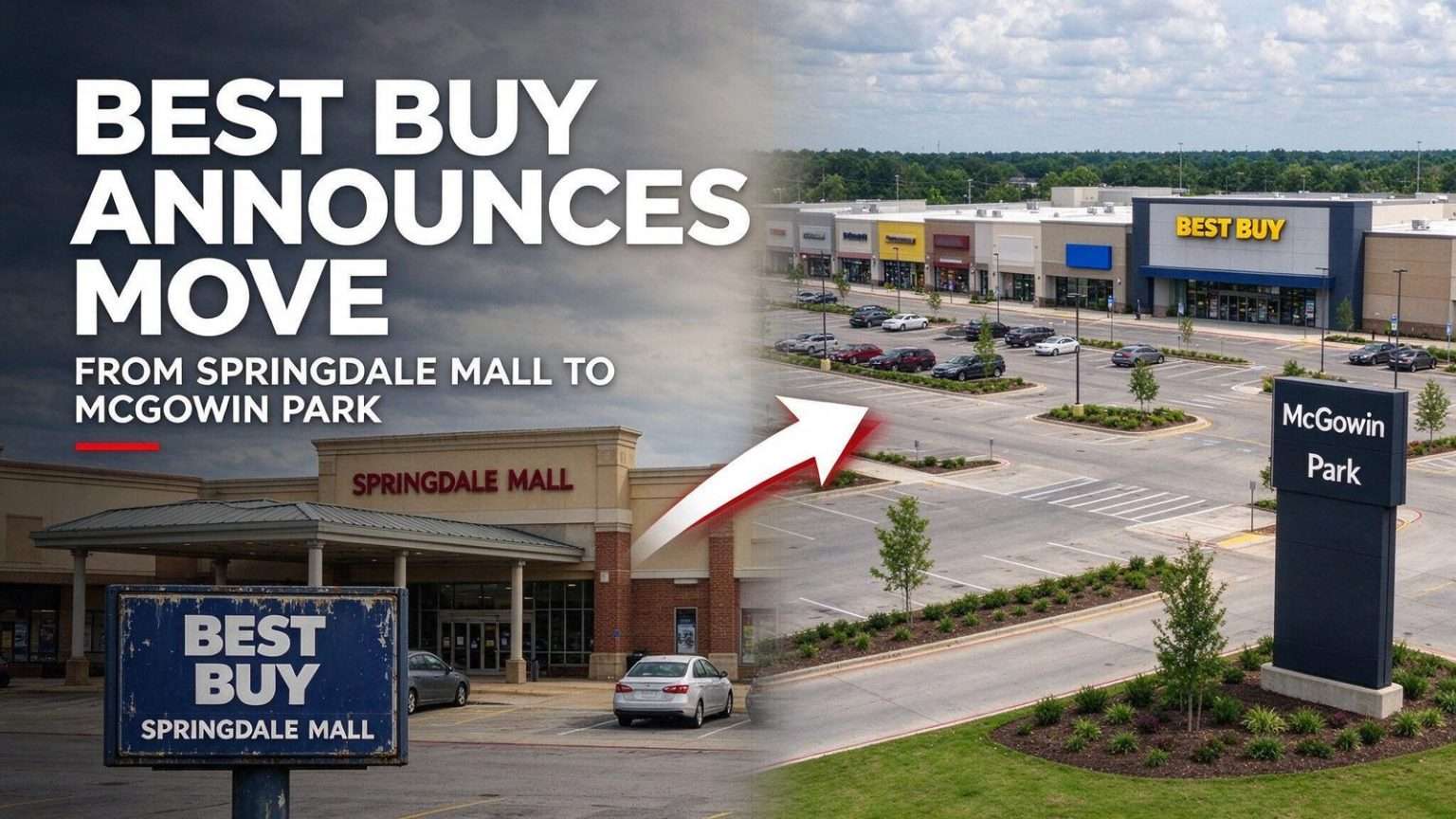
Best Buy is preparing to relocate its Mobile store from Springdale Mall to the McGowin Park shopping center once the holiday shopping season wraps up, according to company officials, marking the latest in a series of departures from the aging mall.
Springdale Mall has struggled with a growing number of vacant storefronts in recent years as tenants have steadily moved out or closed entirely. The mall’s troubles were compounded by the closure of its Sears location, and Belk has since announced plans to leave Springdale as well, with that retailer set to merge its operations into space at Bel Air Mall.
The departures leave the property facing the question confronting aging enclosed malls across the country: what becomes of a regional shopping center built around department store anchors at a time when those anchors themselves are shrinking. Sears, once the anchor of the American mall, has vanished from the retail landscape, and department store chains everywhere have consolidated their footprints, leaving older properties with empty big-box spaces that are difficult to refill.
Springdale’s trajectory mirrors that of many malls built in earlier decades. Enclosed shopping centers thrived for generations as the default destination for back-to-school clothes, holiday gifts and weekend errands, but their fortunes reversed as shoppers moved online and new retail development shifted to open-air centers with convenient parking and flexible store formats. Mobile has followed the national pattern, with newer centers on the city’s growing corridors capturing the retailers and the traffic that once belonged to the older properties.
The move to McGowin Park will place Best Buy in closer proximity to other established retailers at the shopping center, including Field and Stream, Costco and Hobby Lobby, positioning the electronics retailer within a cluster of larger anchor stores drawing steady traffic to the growing commercial corridor.
For Best Buy, that adjacency is the point. The company has spent years reshaping its store portfolio around locations where shoppers are already coming for other errands, betting that visibility among big-box neighbors drives more traffic than a traditional mall storefront. Retail analysts have described the strategy as following the rooftops — putting stores where the population and the spending are moving — and Mobile’s growth patterns have clearly pointed westward.
The Apple factor
The new McGowin Park location will retain the Apple Shop-in-shop concept currently offered at the Springdale store, which company officials noted remains the only Best Buy location in south Alabama to feature a dedicated Apple retail space. Samsung and Sony product displays will also be carried over to the new store in similar dedicated formats, continuing the brand-specific shopping experience customers have found at the current location.
Those brand partnerships have become central to Best Buy’s identity. Rather than competing head-on with online retailers on price alone, the company has leaned into experiences that a website cannot offer — a place to try devices side by side, ask questions of trained staff, and walk out with a product the same day. The dedicated shops for Apple, Samsung and Sony give manufacturers a physical showcase and give customers a reason to visit a store rather than a cart.
Best Buy officials said customers should expect the formal transition to the new location to take place after the conclusion of the Christmas shopping rush, allowing the retailer to capture holiday sales at its existing Springdale Mall location before completing the move into the new year.
The timing is standard practice for major retailers. The weeks between Thanksgiving and Christmas represent a disproportionate share of annual sales for electronics chains, and no company wants to disrupt its highest-revenue season with a move. Relocating in January, by contrast, lets the store work through holiday inventory, schedule the transfer during a slower stretch, and reopen in time for the new-year activity that surrounds tax refunds and the winter product cycle.
Shoppers can expect continuity through the change: the product categories, the brand shops and the service offerings carry over, and the company typically notifies customers of the closing and opening dates as they approach. Employees at the existing store generally move with the operation, which preserves the product expertise that Best Buy markets as its advantage over online-only competitors.
A broader shift in Mobile retail
The relocation reflects a broader shift in Mobile’s retail landscape, as shopping centers like McGowin Park continue to draw major retailers away from older, struggling malls such as Springdale. McGowin Park has steadily built out its tenant roster with a mix of big-box retailers and specialty stores, positioning it as one of the most active retail destinations in the city and a barometer of where Mobile’s consumer spending is headed.
The shopping center sits along one of west Mobile’s principal commercial corridors, in the part of the metropolitan area where residential growth has been strongest for a generation. Developers there have favored the open-air format — rows of large stores ringed by restaurants and smaller shops — precisely because it matches how families shop now: quick trips, multiple destinations, easy parking. The format has proven resilient even as e-commerce has squeezed traditional retail, because it sells convenience and experience along with merchandise.
Costco’s presence at the center anchors that dynamic. Warehouse clubs and destination retailers generate regular, planned trips — shoppers drive there specifically, then fill the visit with stops at neighboring stores. An electronics retailer next door benefits directly from that flow, which is exactly the calculation behind Best Buy’s move.
The consumer electronics business makes the stakes of location especially high. Big-ticket purchases such as televisions, computers and appliances are infrequent and researched heavily, so stores live or die on being convenient at the moment a customer is ready to buy. Being clustered with a warehouse club, an outdoor outfitter and a craft retailer means catching shoppers repeatedly across the year rather than depending on occasional trips to a mall.
The move also fits Best Buy’s national pattern of pruning older stores and reinvesting in locations that fit its updated format. The chain has closed underperforming stores for years while remodeling and opening locations in growth corridors, shifting square footage from properties with declining traffic to centers where it can capture new demand. Mobile’s relocation is a local expression of that same arithmetic.
Commercial real estate observers note that the migration rarely ends with one tenant. When an anchor of any size moves to a competing center, its neighbors take notice, and lease renewals at the aging property become harder to secure. Retail follows retail — a principle that has driven the rise of every major shopping corridor on the Gulf Coast — and Best Buy’s departure is likely to accelerate decisions already pending at Springdale and elsewhere along the corridor.
What the move means for Springdale Mall is the harder question. A property that loses its Sears, then its Belk, and then its Best Buy is left without the traffic-generating anchors that keep smaller tenants in place, and the history of American retail offers two well-worn paths. Some aging malls have been redeveloped entirely — converted into mixed-use projects with offices, medical space, apartments or civic uses — while others have been repositioned as value centers serving discount and independently operated tenants.
Mobile has seen both patterns play out across its commercial history, and city officials have generally encouraged reinvestment in older properties rather than abandonment, since a vacant mall drains tax value from its surrounding neighborhood while a reused one can add it. Whatever comes next for Springdale will depend on the property’s ownership and the economics of redevelopment, but each anchor departure narrows the list of realistic options.
For customers, the practical effect of the announcement is a change of address with a familiar interior. The store that has served Mobile’s electronics shoppers from Springdale will carry its Apple shop, its Samsung and Sony displays and its staff across town, reopening where the shopping crowds already are. For the retail map of Mobile, meanwhile, another line has been drawn between the malls of the past and the centers of the present — and the line runs through McGowin Park.
Holiday shoppers this season will notice nothing different until the calendar turns. The Springdale store will run its usual Black Friday and Christmas schedule, and company officials said the goal is a seamless handoff — inventory counted, trucks routed, and the new building stocked while the old one winds down. Signage at both locations will point customers to the new address as the opening approaches.
For the neighborhoods around Springdale Mall, the store’s long tenure made it a fixture, and some customers will follow it grudgingly if they follow it at all. Retailers accept that attrition in every move, betting that new traffic from the destination center will more than replace the customers who stay loyal out of habit. The next year of sales figures will show whether that calculation holds in Mobile, as it has in most markets where similar relocations have occurred.
The coming months will bring the familiar markers of the transition: closing sales at the old location, opening promotions at the new one, and the holiday season standing in between. What follows after that is the larger story — whether Mobile’s remaining older malls can find a second act, and how the city’s retail corridors continue to redistribute themselves as shopping habits keep shifting.