

Former Employees Allege Fraud, Deceptive Practices and Years of Misconduct at Mobile UPS Store
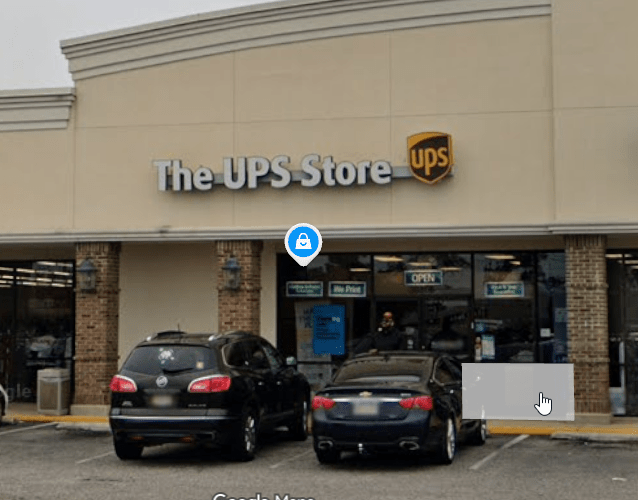
MOBILE, Ala. — The UPS Store at 3688 Airport Blvd., Suite B, operates in the Yester Oaks Shopping Center, a busy commercial corridor near Interstate 65. Customers come to the store to ship packages, make copies, send faxes and purchase packing supplies.
According to former employees, however, the store has also been the site of years of alleged deceptive practices, including the substitution of used packing materials, changes to shipping services after customers paid, charges for services allegedly performed elsewhere, and a dispute involving a teenage employee who says he was threatened with criminal prosecution and ultimately paid more than $2,000.
The allegations center on Ghulam Rasool, identified by former employees as the store’s current operator.
According to former employees, Rasool purchased the franchise from Muhammad Aslam, a longtime associate who later moved to Texas but allegedly remains the owner of record. If that account is accurate, it raises questions about whether the franchise’s ownership and operating arrangements were properly disclosed to and approved by The UPS Store.
The allegations reviewed for this article come primarily from a detailed public account posted by a former employee who worked at the location in 2009, when he was between high school and college, as well as a separate account from another former employee who worked at the store for approximately three months.
The allegations have not been adjudicated in court. Neither Rasool nor The UPS Store, Inc. has publicly responded to the specific allegations described in these accounts.
Allegations of Used Packing Materials
One former employee described what he said was a routine practice involving customers who paid the store to pack their belongings.
According to the former employee, Rasool would place the customer’s item on a scale with a new box, packing peanuts and bubble wrap. He would calculate the shipping charges, print the shipping label and tell the customer the package would be prepared before moving the items to the back of the store.
After the customer left, the employee said, the new packing materials were returned to the shelves. Rasool allegedly retrieved newspaper, used boxes and packing materials that previous customers had discarded and used those materials to pack the shipment.
“Basically he would sell the customer packaging material and then use newspaper,” the former employee wrote.
The former employee said the practice was common rather than an isolated incident.
If the account is accurate, customers were paying for new packing materials without being told that used or discarded materials would be substituted. Such a practice could also create questions about whether packages were being prepared in accordance with the representations made to customers at the time of sale.
The former employee also described instances in which customers arrived with their own boxes. According to the account, Rasool would sometimes tell customers that their packaging was inadequate and that their items could be damaged in transit. The customer would then be encouraged to purchase a new box, packing materials and tape.
The employee alleged that, after the customer left, the original box was sometimes used instead.
Copies and Faxes
The former employee also alleged that the store charged customers for copying and faxing services despite not having functioning equipment for those services.
According to the account, customers requesting copies would be told the work would take several hours. The documents were allegedly taken to other locations, including a medical practice operated by Rasool’s wife, a friend’s business or a university library, where the copies were made.
For fax requests, the former employee said documents were scanned into PDFs and emailed to family members, who then faxed them from their workplaces.

The former employee specifically described customers being charged approximately $3 per page for long-distance fax service.
“He didn’t have an actual fax machine,” the former employee wrote. “He would just take the paper to be faxed from the customer, scan it in as a PDF, and then email it to one of his daughters or his wife.”
The account raises a separate issue involving the handling of customer documents. Copies and faxes can contain personal, financial, medical or other confidential information. Having such documents processed outside the store, particularly at unrelated businesses or by family members, could raise privacy and data-handling concerns depending on the nature of the documents and circumstances involved.
The UPS Store’s corporate location listing identifies fax services as one of the services offered at the location.
Alleged Overnight-to-Ground Changes
The former employee described another alleged practice involving shipping services.
According to the account, customers were sometimes encouraged to purchase overnight shipping even when the package was traveling within Alabama or elsewhere within the same state. The employee said Rasool would sometimes tell customers that ground shipping was unsafe for valuable items or that the shipment should be sent overnight because of its value.
The former employee said Rasool would process some shipments as UPS Next Day Air through the store’s computer system. After the customer left, Rasool allegedly voided the transaction, changed the service to ground and printed a new shipping label.
Because some intrastate ground shipments can arrive quickly, customers might not immediately realize that the service they purchased had been changed, according to the former employee.
The employee said customers would sometimes receive a new tracking number and be told that the replacement resulted from a system issue.
“Obviously, they didn’t know the difference between an overnight tracking number and a ground tracking number,” the former employee wrote.
The alleged practice, if it occurred as described, would involve charging a customer for one shipping service while actually purchasing another.
A 2013 Ripoff Report posting that was later referenced in franchise litigation elsewhere described allegations involving the failure to properly migrate transactions between the iShip CMS and point-of-sale systems and the addition of fees to UPS retail shipping rates. That matter involved a different franchise location and does not establish that the same conduct occurred in Mobile.
Customer Reviews
Public reviews provide a separate record of complaints about the Mobile location.
One reviewer, John Kozachyn, complained about what he described as poor customer service and an attempt to overcharge him, writing that the owner “tried to hustle us and over charge.”
Another reviewer, identified as Kay, described waiting approximately an hour for assistance while other customers were served first. The owner responded to the review under the initials “RR/owner,” saying the customer had been sitting at the computer rental desk and that an employee had failed to tell the owner that she needed assistance.
A detailed Yelp review similarly criticized customer service, wait times, store conditions and pricing. The reviewer said some employees appeared rude or impatient, described unusually long waits and complained that prices were not clearly displayed.
The reviewer also described an interaction that the customer perceived as discriminatory, although the review did not provide specific details. The same reviewer praised one employee, describing a young African American woman with braids as consistently kind and professional.
The reviews are not uniformly negative.
Cindy Hicks wrote in February 2026 that she regularly went out of her way to use the location because she found the service friendly, fast and professional.
Keayata Coleman praised the customer service and staff and specifically mentioned an employee named Kalani.
Ellen Carter, who said she had been a customer for six years, described the business as family-owned and said employees had helped her hold mail, locate deliveries and process Amazon returns.
The public reviews therefore reflect substantially different experiences among customers. While the location has received numerous negative reviews, other customers report positive experiences with individual employees and the store’s services.
The store’s Better Business Bureau profile does not show customer complaints, providing another point of contrast with the volume of complaints posted on consumer-review platforms.
The 18-Year-Old Employee and the $2,000 Payment
A second former employee described a dispute that he said occurred when he was approximately 18 years old.
According to his account, he had been hired at the store while transitioning from high school to college and was earning Alabama’s applicable minimum wage of $7.25 per hour. He was also applying for scholarships.
The former employee said Rasool told him that employees could make copies and send shipments at the store’s cost as an employee benefit.
Relying on that understanding, the employee said he mailed approximately a dozen envelopes containing scholarship applications.
According to his account, Rasool later discovered what had happened and became angry. The employee said he was fired and threatened with arrest and felony charges for allegedly stealing from the store.
The former employee said Rasool then demanded payment. He said the copies and envelopes were ultimately charged at a substantially higher rate, resulting in a total amount exceeding $2,000.
The former employee said he paid the money because he was afraid of being arrested. He later concluded that he had been improperly pressured into making the payment.
If the account is accurate, the circumstances could raise legal questions concerning threats, collection of disputed debts and potentially extortion. Whether conduct meets the elements of a criminal offense would depend on the specific facts and evidence.
The incident also illustrates the significant difference in bargaining power between an 18-year-old minimum-wage employee and a business owner.
Alleged Discount and Upselling Practices
Former employees also described other practices involving customers and pricing.
One employee said Rasool sometimes used an AAA discount to reduce a customer’s price even when the customer was not an AAA member. The circumstances and frequency of the alleged practice could not be independently established.
The same former employee described situations in which Rasool allegedly refused to accept a customer’s existing packaging. Customers would reportedly be told that their box was unsafe or that the contents could be damaged in transit and would then be encouraged to purchase a new box and packing materials.
According to the employee, the original packaging was sometimes subsequently used to ship the item.
The former employee characterized Rasool’s interactions with customers as confrontational, particularly when customers questioned shipping methods, packaging requirements or prices.
Those allegations are consistent with some of the negative customer reviews, although customer reviews alone cannot establish that the specific practices described by former employees occurred.
Questions About Ownership
Former employees also raised questions about who actually owns and operates the franchise.
According to their accounts, Ghulam Rasool purchased the business from Muhammad Aslam, who subsequently moved to Texas. They allege that Aslam nevertheless remains the owner of record while Rasool operates the location.
A transfer of a franchise generally requires compliance with the franchisor’s transfer provisions and, depending on the agreement, prior approval by the franchisor. The specific requirements applicable to this location would depend on the franchise agreement and the circumstances of any transfer.
If the former employees’ description of the ownership arrangement is accurate, determining whether the arrangement was disclosed to and approved by The UPS Store would require reviewing the franchise’s records and applicable agreements.
The ownership question is therefore separate from the allegations concerning customer service and employee treatment. The available accounts do not establish whether The UPS Store was aware of the alleged arrangement or whether it approved it.
The UPS Store’s Responsibility
The allegations also raise broader questions about the relationship between a national franchise brand and an independently operated location.
The UPS Store is a franchise network, meaning individual locations are generally operated by franchisees rather than directly by the corporate parent. Franchise agreements typically impose operating requirements concerning branding, customer service, pricing, advertising and compliance with applicable laws.
That structure creates a distinction between the conduct of an individual franchisee and the responsibilities of the franchisor.
The UPS Store and its franchisees have also faced litigation concerning alleged improper fees and other practices at individual locations. Those cases involve different stores and different allegations and do not establish wrongdoing at the Mobile location.
They do, however, demonstrate that disputes over franchisee practices can result in litigation involving both individual stores and the broader franchise organization.
What the Record Shows
The allegations concerning the Mobile store come from former employees whose accounts describe conduct they say they personally witnessed or experienced. Some of those allegations are consistent with complaints contained in public customer reviews, while others cannot be independently verified from the publicly available record.
The evidence does not establish that every allegation is true.
What can be established is that the location has accumulated a significant number of negative customer reviews over the years, alongside customers who report positive experiences. Former employees have independently described allegations involving packing materials, shipping services, copying and faxing, customer interactions and employee treatment.
The most serious allegation concerns the former teenage employee who says he was threatened with criminal prosecution and ultimately paid more than $2,000 after a dispute over employee use of store services. That account remains an allegation unless supported by additional documentation, witnesses or other evidence.
The former employee who worked at the store in 2009 said there were many other incidents he believed were improper.
More than 15 years later, the location remains open and continues to serve customers under The UPS Store brand.
The unanswered questions are straightforward: What did the franchise know about the conduct alleged by former employees? Who is the actual owner of the location? Were the alleged practices ever investigated? And, if the former employees’ accounts are accurate, what action was taken in response?
Those questions can ultimately be answered only through additional documentation, testimony and responses from the parties involved.