Meredith Backs Sessions in Grand Bay Race for House District 105
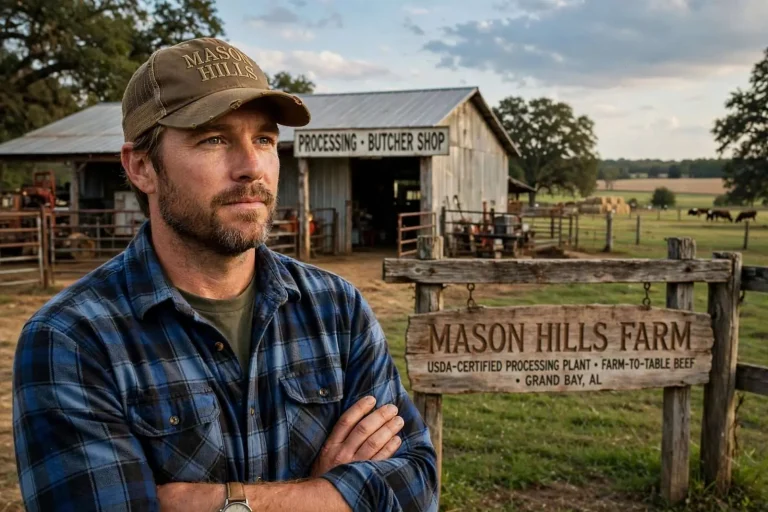
Former school board president Bill Meredith threw his support behind Grand Bay farmer David Sessions in the House District 105 special election, as a third rival signaled he would vote for the Constitution Party candidate instead.

Former Mobile County school board president Bill Meredith, who had himself sought the House District 105 seat, endorsed David Sessions in the special election to fill the south Mobile County legislative post, throwing his weight behind a candidate who had bested him only weeks earlier. The endorsement removed any lingering doubt about where Meredith’s supporters would land, and it gave Sessions a visible show of unity heading into the final weeks of the campaign.
Sessions, a Grand Bay farmer, had defeated both Meredith and Mike Burdine to capture the Republican nomination. He faced Constitution Party candidate Bill Atkinson in the general election set for May 10. The Democratic Party fielded no candidate for the seat, leaving a two-man race in a district that spans south Mobile County’s rural and suburban communities — an area where Republican nominees have historically held the advantage in legislative contests.
From rivals to allies
Meredith framed his endorsement as the product of a shared campaign trail. After months of campaigning together, he said, he had come to know Sessions and appreciate his commitment to the community. Having debated him several times, Meredith added, he was satisfied that Sessions was a conservative who would be the best representative for the district, and he urged voters to support him.
The statement carried weight precisely because of who was making it. Meredith had entered the race as a known quantity in south Mobile County politics, with a record of leadership on the county school board and a network of supporters built over years of public service. His decision to campaign for the man who beat him — rather than simply stepping aside — signaled to those supporters that the primary’s outcome had settled the question of representation.
Sessions accepted the backing warmly. He said he was honored by Meredith’s support and that, having campaigned against one another for the responsibility, he was gratified to know their respect was mutual. For a candidate moving from a contested primary into a general election, the endorsement offered both practical help — Meredith’s volunteers and donors now free to work for Sessions — and a symbolic seal of approval from a rival-turned-ally.
A dissenting voice
Not every former rival fell into line. Burdine declined to formally endorse either candidate but disclosed that he intended to vote for Atkinson. During the primary, Burdine had repeatedly questioned Sessions’s Republican credentials, pointing to his past support for Democratic nominees for governor and agriculture commissioner. The exchange underscored lingering divisions within the local GOP even after the primary had been decided.
Burdine’s stance created an unusual dynamic: the third-place finisher effectively backing the Constitution Party nominee rather than his own party’s candidate. In a district where the Republican nomination has often been the decisive contest, the dispute gave the general election a subplot it rarely receives, and it forced Sessions to spend part of the closing stretch defending his party loyalty instead of focusing solely on policy differences with Atkinson.
Sessions’s response to the credential attacks had been consistent throughout the primary, pointing to his record of support for Republican causes and his standing among local GOP organizations. With Meredith — himself a longtime Republican figure — now vouching for his conservatism, the campaign hoped the question would recede as Election Day approached.
The issues at stake
Sessions said his general election message differed little from his primary campaign, with the same priorities front and center: improved local schools, insurance reform, better jobs and opposition to tax increases. The platform tracked the everyday concerns of a district that stretches across south Mobile County, from the agricultural land around Grand Bay to the growing suburbs along the county’s southern corridors.
Coastal insurance loomed especially large in a district whose residents had absorbed steep premium increases in the years following a string of hurricanes. Homeowners across south Alabama had watched premiums climb after storms battered the Gulf Coast, and in some cases insurers had stopped writing new policies in coastal counties altogether, leaving families with fewer options and higher costs. For legislators representing the coast, insurance had become the constituent issue that overwhelmed most others — one that touched every homeowner in the district regardless of politics.
Meredith said he was confident Sessions grasped the severity of the coastal insurance crisis and would fight alongside state Sen. Ben Brooks and others for reform. Brooks had been among the leading advocates in Montgomery for changes to insurance practices affecting the coast, and the issue had become a defining concern for candidates across Mobile and Baldwin counties. Reform proposals circulating in the Legislature focused on how insurers priced coastal risk and on whether the state could create mechanisms to keep coverage available and affordable for South Alabama homeowners.
Education policy carried its own weight in the district. As a former school board president, Meredith knew the challenges facing south Mobile County schools firsthand, and his endorsement implicitly vouched for Sessions’s seriousness on education funding and school improvement — an issue with immediate consequences for families in communities like Grand Bay, where school pride and local identity run deep.
Toward May 10
With the field set and the endorsements sorting themselves out, the contest turned toward turnout. The seat had opened in the middle of a term, and special elections often draw sparse participation, placing a premium on organization and enthusiasm. Campaigns in low-turnout contests are won by the volunteers who make calls, the yard signs that multiply in front yards, and the church and civic networks that carry a candidate’s name to voters who might otherwise stay home.
Meredith closed his endorsement on a confident note, saying he believed Sessions would do a great job for the district and encouraging everyone to vote for him on May 10. Coming from a man who had debated Sessions across the district only weeks earlier, the confidence read as genuine rather than perfunctory — a statement that the primary had been a contest among neighbors, and that the general election was about the district’s future rather than the primary’s grievances.
For Sessions, the support of a recent opponent offered a measure of unity heading into the final stretch of a campaign shaped, above all, by the anxieties of coastal homeowners. Whether the insurance issue, the schools and the turnout operation would carry him to Montgomery remained to be seen, but with the Republican field reconciled behind him and the May 10 election on the calendar, the district’s choice was set before the voters.
The district and its politics
House District 105 reaches across the southern edge of Mobile County, taking in communities whose politics blend rural tradition with suburban growth. Grand Bay, St. Elmo, Irvington and the surrounding areas have long sent conservative representatives to Montgomery, and the Republican nomination has typically been the race to watch. That history explains both why three credible candidates fought for the GOP nod and why the primary’s aftermath — the endorsements, the grudges, the credential disputes — mattered as much as the general election itself.
The seat opened in the middle of a term, setting up the special election and compressing the campaign calendar. Special elections run on shorter timelines than regular cycles, with less media attention and no shared election-day turnout infrastructure, which shifts the burden onto candidates to identify their own voters and get them to the polls. In a district of small communities spread across a long stretch of the county, that means weeks of church suppers, civic club speeches and door-to-door canvassing rather than expensive advertising wars.
The presence of a Constitution Party candidate added a wrinkle unusual for a legislative special election. With no Democrat in the race, the general election paired the Republican nominee against a minor-party candidate, making the GOP primary effectively the main event. Burdine’s decision to back Atkinson over Sessions gave that minor-party candidacy a splash of local drama it would not otherwise have had, and gave reporters covering the race a storyline beyond the expected outcome.
What the endorsement meant on the ground
In practice, Meredith’s endorsement delivered three things to the Sessions campaign: his public list of supporters, his credibility on education issues and his voice in south Mobile County’s civic circles. A former school board president who tells voters he has debated a candidate at length and found him up to the job is doing more than blessing a party nominee — he is vouching for the man personally, which in small-community politics often decides the question.
For Sessions, the moment also closed off the most dangerous scenario a primary winner faces: a nominally defeated rival whose supporters sit home on Election Day. Instead, the campaign entered the final stretch with the party’s nominal factions aligned, leaving Burdine’s holdout as the exception proving the rule.
The campaign’s closing argument, as Sessions framed it, asked voters to judge him on the same list of priorities he had carried through the primary — schools, insurance, jobs and taxes — while the events of the race itself testified to his standing among the district’s Republican figures. On May 10, the voters of District 105 would render the final judgment on the seat, in an election whose outcome would send one of their neighbors to Montgomery in the middle of a term defined by the coastal insurance fight.