

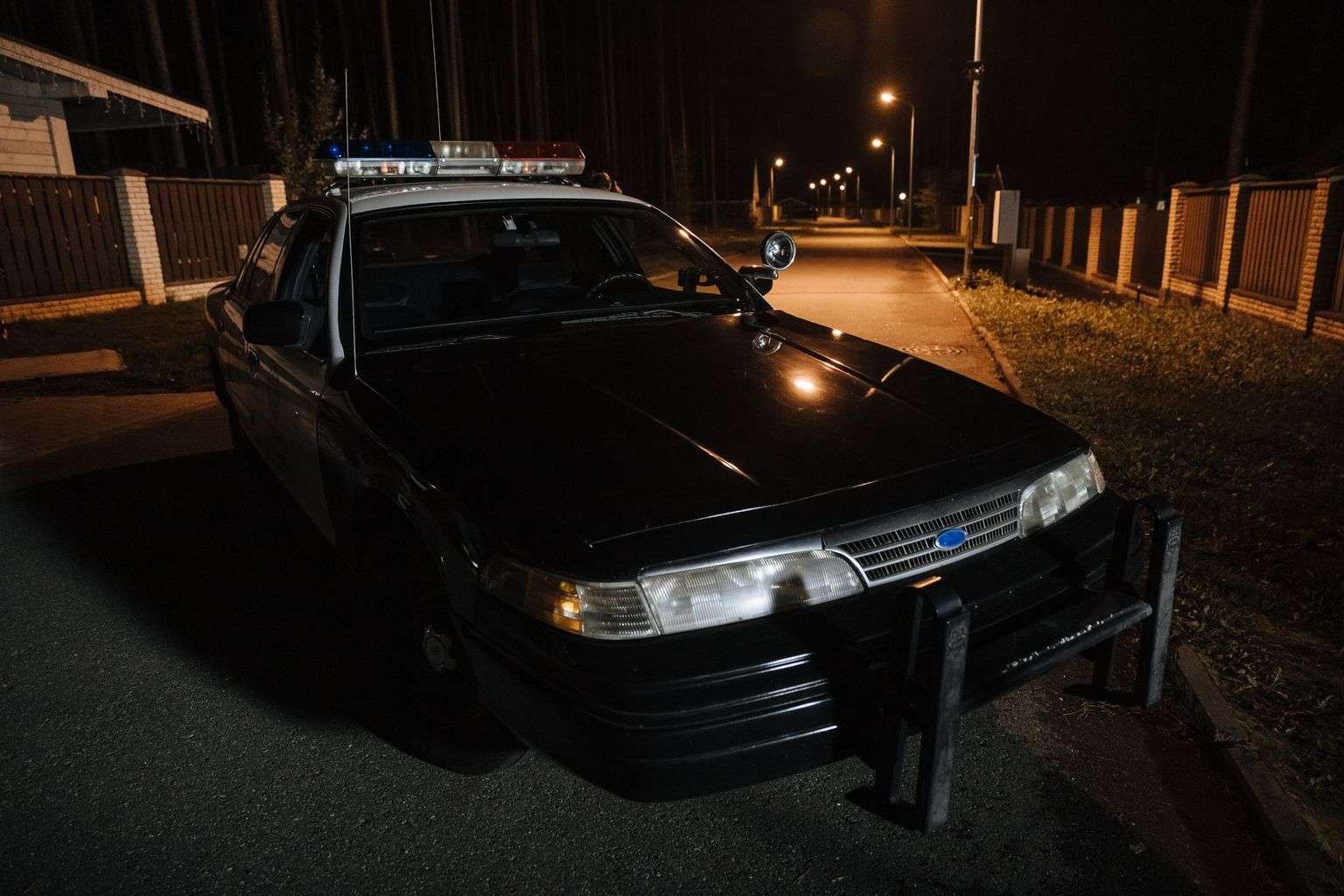
Two Mobile Police Department precincts went dark this week after the City Council declined to approve a one-cent increase in the local sales tax that Mayor Sam Jones had proposed to close a $14 million shortfall in the city budget. The Fourth Precinct and the MLK Mini Precinct were scheduled to shut their doors at 5 p.m. on April 16, 2010, marking one of the most visible consequences yet of the fiscal standoff between the mayor’s office and the council.
The closures came a day after Jones released a public statement laying out the trade-offs the city faced. According to the mayor, his administration had been searching for a way to avoid layoffs affecting hundreds of city employees and to prevent broader cuts to city services, and the proposed sales tax increase was central to that plan. With the council declining to sign off on the tax, the city was left to make up the difference through cuts that included the precinct closures, a smaller police force on the street, and reduced pay for the officers who remained on the job.
A Budget Deficit Meets Election-Era Tax Politics
The dispute over the one-cent sales tax landed squarely in the middle of a period when opposition to new and higher taxes was unusually organized and vocal across the country. The Tea Party movement, which had emerged nationally in 2009 in response to federal stimulus spending, bank bailouts and rising government debt, had by the spring of 2010 grown into a significant force in local and state politics as well, with chapters and informal groups pushing back against tax increases proposed by city councils, school boards and state legislatures. Alabama saw its own wave of Tea Party organizing in this period, with activists showing up at public meetings, contacting elected officials directly and framing local budget fights as extensions of the broader national argument over the size and cost of government.
Framing the council’s rejection of the sales tax proposal as a “Tea Party win” reflects that broader climate: a municipal government proposing to raise revenue through a consumption tax, and a council responding to constituents who had made clear their opposition to any new tax burden, regardless of the service cuts that might follow. That dynamic was not unique to Mobile. Cities and counties across Alabama and the rest of the country wrestled with similar choices in 2009 and 2010, as the Great Recession squeezed local tax collections at the same time that demand for services, including public safety, remained high or even increased.
How Mobile’s City Government Handles the Budget
Mobile operates under a mayor-council form of government, in which the mayor proposes an annual budget and the City Council must approve any changes to local tax rates, including the sales and use tax that funds a large share of day-to-day city operations. Unlike many other states, Alabama gives its municipalities relatively limited authority to raise revenue through property taxes, which tend to be low across the state compared with national norms. As a result, Alabama cities lean heavily on sales and use taxes to fund police and fire protection, sanitation, parks, and other core services. That reliance means that when consumer spending drops during a recession, or when a council declines to raise the sales tax rate, the effect on a city’s general fund can be immediate and significant, since there is little room to make up lost revenue through other local tax mechanisms without state legislative action.
When a proposed revenue increase fails, a city administration typically has only a handful of levers left to balance its budget, as required by state law for Alabama municipalities: reducing the workforce through layoffs or attrition, cutting pay or benefits, deferring capital projects and maintenance, drawing down reserve funds, or consolidating or closing facilities such as satellite offices, recreation centers, libraries, or, as in Mobile’s case, police precincts. Each of those options carries its own trade-offs. Layoffs reduce future costs but can also reduce a department’s capacity to respond to emergencies or deliver services at accustomed levels. Pay cuts help preserve headcount but can hurt morale and retention, particularly in public safety agencies competing with neighboring jurisdictions for officers. Facility closures reduce overhead but can lengthen response times and reduce the visible law enforcement presence in the neighborhoods those facilities served.
What Precinct Closures Typically Mean for Policing
Police precincts, sometimes called substations or district offices, generally serve as smaller, neighborhood-level bases of operation within a larger police department, allowing patrol officers to report for duty, complete paperwork, meet with supervisors, and interact with the public closer to the areas they patrol, rather than returning to a single central headquarters for every administrative task. Precinct systems are common in mid-size and large American cities because they allow a department to organize patrol districts, allocate resources geographically, and give residents a nearby point of contact for non-emergency matters.
When a department the size of Mobile’s closes one or more precincts, officers who worked out of those locations are typically reassigned to remaining precincts or to headquarters, and the patrol beats once served by the closed facility are usually absorbed by neighboring precincts or by headquarters-based patrol units. Departments generally try to preserve 911 response coverage even while consolidating administrative functions, but community policing programs, walk-in services, and the day-to-day visibility of officers in a given neighborhood can be affected when a local precinct closes, since residents lose a familiar, nearby place to file a report or speak with an officer face to face.
The MLK Mini Precinct, one of the two Mobile facilities affected, appears from its name to have been a smaller neighborhood substation, a category of facility that many cities use to extend a visible police presence into a specific community, often one with particular public safety needs or a history of engagement between residents and law enforcement, without the cost of building and staffing a full-scale precinct. The Fourth Precinct, by contrast, is one of the department’s standard numbered precincts covering a defined patrol district within the city.
The Broader Recession-Era Backdrop
Mobile’s 2010 budget fight unfolded against a national backdrop in which local governments across the United States were absorbing the fiscal aftershocks of the 2007-2009 recession. Sales and property tax collections fell in many cities as consumer spending and real estate values dropped, even as state and local governments faced continued or growing demand for services. The National League of Cities and other organizations that track municipal finance reported that city budget officials nationwide identified 2010 and 2011 as among the most difficult years for local government finance in decades, with many cities implementing hiring freezes, layoffs, furloughs, and service reductions similar to what Mobile confronted that spring. Public safety budgets, which typically make up a large share of a city’s general fund spending, were frequently at the center of those decisions, since police and fire departments are usually a municipality’s largest employers and hardest costs to cut without visibly affecting services residents rely on.
For a city like Mobile, where the sales tax functions as one of the primary funding sources for police and fire protection, a council’s decision to reject a tax increase does not eliminate the underlying budget gap; it simply shifts how that gap gets closed. In this case, the city’s stated response was a combination of facility closures, a reduction in the number of officers on duty, and lower pay for the police officers who remained on the force, changes that Mayor Jones’s office had explicitly hoped to avoid when it proposed the sales tax increase in the first place.
Mobile’s Mayor at the Center of the Fight
Sam Jones, who had taken office as Mobile’s mayor in 2005 and made history as the city’s first African American mayor, was in the middle of his second term when this budget standoff played out, having won re-election the year before. His administration campaigned on themes of public safety, efficient government and economic development, making the choice to close police facilities and reduce police pay a particularly pointed one for his tenure. A mayor’s proposed budget in Alabama’s mayor-council cities generally must be balanced, meaning revenue projections and planned spending have to match, so when the council declines a mayor’s preferred method of closing a gap, such as a tax increase, the administration is left to identify cuts elsewhere in order to meet that legal requirement, often on a compressed timeline set by the city’s fiscal year.
What Residents Can Expect
For residents in the areas served by the Fourth Precinct and the MLK Mini Precinct, the immediate practical effect of the closures is the loss of a nearby police facility for walk-in business, though emergency 911 response is designed to continue through the department’s remaining precincts and patrol units. Communities that had come to rely on a local precinct for community meetings, crime-reporting, or simply a visible police presence in the neighborhood may notice that absence most.
The episode also illustrates a recurring tension in municipal government: the gap between the revenue tools available to city leaders and the public’s appetite for using them. Alabama’s constitutional and statutory limits on local property taxation leave cities like Mobile with comparatively few options for raising new revenue outside of sales and use taxes, which require council approval and are politically sensitive, particularly during periods of economic stress when household budgets are already strained. When those measures fail to pass, the resulting cuts tend to fall on the discretionary and operational side of a city budget, including the kind of neighborhood-level police infrastructure that the Fourth Precinct and MLK Mini Precinct represented.