Democrats Land Don Foster for District Attorney as Qualifying Deadline Passes
Former U.S. Attorney Don Foster qualified just before Friday's deadline, giving Mobile County Democrats a candidate for an office their party has held for more than three decades.
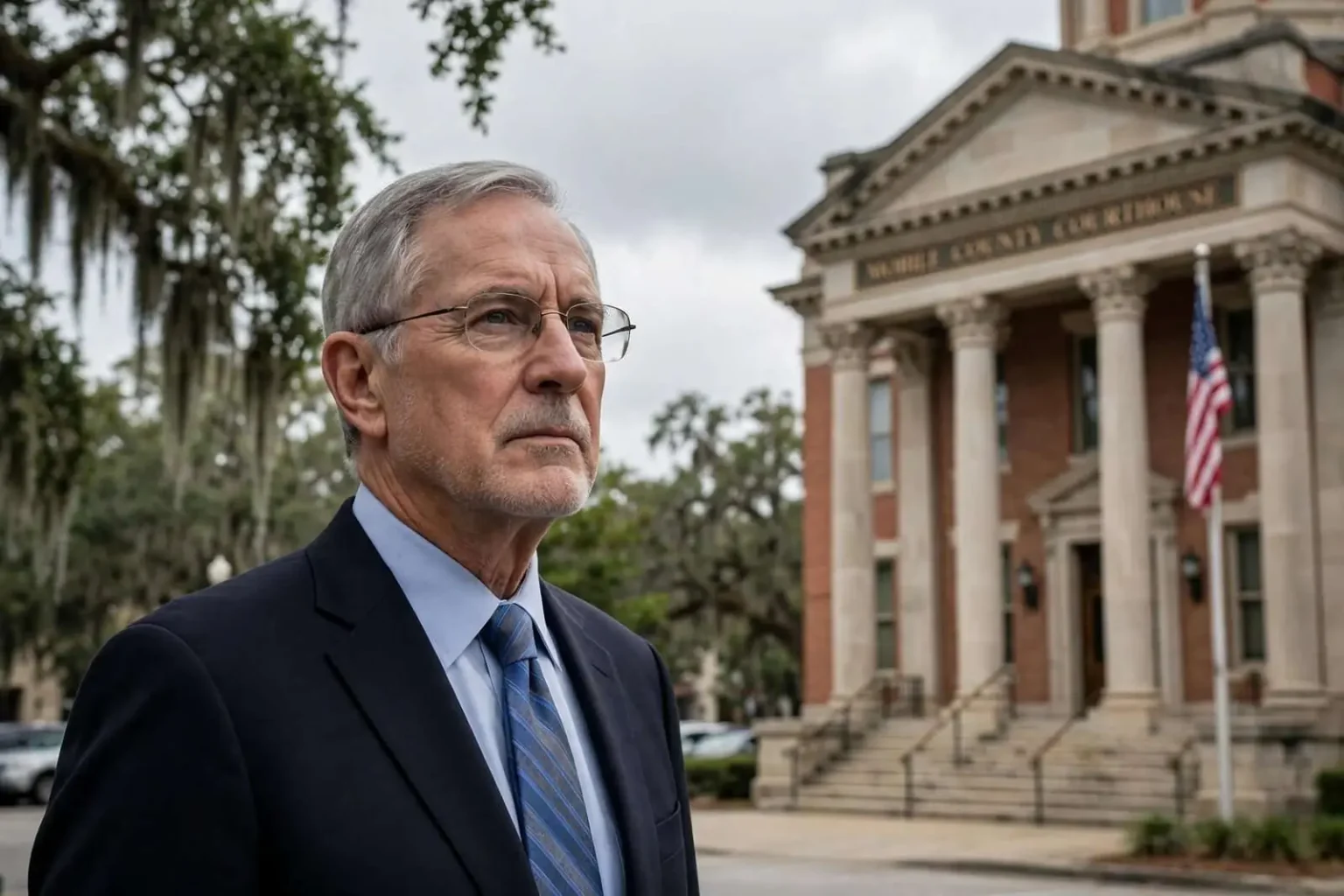
Former U.S. Attorney Don Foster qualified just under Friday’s deadline to run for Mobile County district attorney, giving the Mobile County Democratic Party a candidate for an office it has held for more than 30 years.
The late filing ends weeks of uncertainty for local Democrats, who watched the calendar run down without a name on the ballot for one of the most visible jobs in county government. Qualifying deadlines have a way of concentrating decisions in county politics, and this one produced a scramble that ended only when Foster signed his papers within hours of the cutoff.
A Scramble for a Candidate
Former District Attorney Chris Galanos took a hard look at returning to the prosecutor’s office he once ran, but ultimately backed away. With Galanos out, party leaders cast about for an alternative, and Foster emerged as their principal focus.
The seat is open. Incumbent District Attorney John Tyson Jr., a Democrat who has held the office since 1994, decided against seeking re-election. Two Republicans, former Mobile County GOP chairman and Saraland municipal judge Mark Erwin and assistant district attorney Ashley Rich, are locked in a hot contest for their party’s nomination in the June 1 primary. The winner will meet Foster in November.
The dynamics on the two sides of the ballot could hardly be more different. Foster walks into the general election with no primary opponent, no primary spending and no primary attacks to answer for. The Republican nominee will emerge from a contest in which two candidates with overlapping bases — one a former party chairman with a judicial resume, the other a career prosecutor already working inside the office — must spend months distinguishing themselves to the same voters.
Six Years as the Region’s Top Federal Prosecutor
Foster served six years as U.S. Attorney for the Southern District of Alabama, appointed during the administration of President Bill Clinton. The district stretches from the Mississippi line to the Florida line along the Gulf Coast, and its docket includes federal crimes arising in Mobile, Baldwin and the surrounding counties — everything from drug trafficking organizations to public corruption.
In a press release issued Friday, he made the case that the two jobs are more alike than they are different — and that he has already done the harder version of one of them. Both the county and federal prosecutor posts are primarily management jobs, Foster noted. But as U.S. Attorney he did not confine himself to administration. He said he used his trial experience to join his assistants in the courtroom, including on “the more difficult and controversial cases,” citing the prosecution of Leroy Hill, the Little River church fire case and the rare capital murder cases that reach federal court.
That is the argument Foster is likely to press through the fall: that a district attorney should be a trial lawyer who has carried the weight of a serious case personally, not simply a supervisor of other people’s dockets.
The Leroy Hill prosecution, one of the highest-profile cases of his tenure, made Foster a familiar name in south Alabama sports circles as well as legal ones, and the Little River church fire case tested the office on a matter that gripped the region.Candidates for district attorney rarely have a portfolio of cases the public already knows, and Foster’s campaign will lean on that recognition through the summer and fall.
Local Roots, Out-of-State Training
Foster is a native of Foley in Baldwin County. He earned a degree in industrial management from Georgia Tech before taking his law degree at the University of Alabama School of Law. At 63, he would be substantially the senior of whichever Republican emerges from the June primary — a contrast his campaign appears content to draw, and one his opponents will surely test.
His path — Baldwin County roots, an engineering-adjacent degree in Atlanta, law school in Tuscaloosa — is a recognizable one for a generation of south Alabama lawyers, and it gives him a biography that spans both sides of the Bay rather than the city alone. In a countywide race, that cross-Bay identity can matter in precincts outside Mobile’s city limits.
Why the Office Matters
The Mobile County district attorney supervises the prosecution of felonies and serious misdemeanors across the county, from downtown Mobile to Bayou La Batre, and the officeholder sets priorities that shape everything from violent crime cases to public corruption investigations. It is also one of the last non-judicial countywide elective offices in Mobile County that a Democrat has managed to hold.
Over the years, a series of controversial investigations and prosecutions with political implications appeared to erode Tyson’s standing, both with his Democratic base and with the independent voters who had kept him in office. Three local circuit judges still hold their positions as Democrats, but beyond the bench, the party’s countywide presence has thinned considerably.
The office itself is one of the largest prosecutor’s offices in Alabama, handling thousands of felony and misdemeanor filings a year across district and circuit courts in Mobile, Prichard, Saraland and the county’s municipal courts. Its decisions — which charges to bring, which cases to divert, when to seek the death penalty — reach every corner of the county’s criminal justice system.
Whether Foster can hold the seat for the Democrats — running against a Republican nominee in a midterm year with an energized conservative electorate in south Alabama — will be one of the more closely watched local questions on the November ballot.
The gap between the two jobs Foster is comparing is real but narrower than it looks on an organizational chart. A district attorney in Alabama is a constitutional officer elected by the county, and the office answers to local voters in a way a presidentially appointed U.S. Attorney never does. But the daily work — screening cases, managing a staff of prosecutors, deciding which charges to file, trying the cases that matter most — overlaps heavily, and Foster is betting that voters will credit the management side of his resume as much as the courtroom side.
His trial record is the piece his campaign will emphasize most. Federal prosecutor posts are typically staffed by career assistants who carry their own caseloads while the U.S. Attorney sets policy, and it is uncommon for the head of the office to take a regular seat at counsel table. Foster’s claim that he joined his assistants on the difficult cases is meant to answer the question every challenger faces from a sitting staff: does this person actually know the work, or only the supervision of it?
The Southern District of Alabama he led is a compact but demanding district. Its federal docket runs through courthouses in Mobile and has historically been driven by drug and firearms prosecutions flowing from the port city’s position on the Gulf, along with fraud and corruption cases that touch both public and private institutions across the region. Six years atop that office, Foster’s argument runs, is six years of experience with exactly the kinds of crime that fill the county docket at home.
For Democrats, the timing of Foster’s qualifying mattered as much as the name. Party chairs across Alabama spent the qualifying period working their phones for county offices that would otherwise go unopposed, and an open district attorney seat in the state’s largest county was the kind of prize neither party could afford to concede by default. By landing a candidate with federal credentials days before the deadline, local Democrats converted what had been shaping up as a quiet forfeit into a genuine general-election contest.
The Republicans’ June 1 primary now carries consequences well beyond the winner’s own party. Erwin, with his tenure as county GOP chairman and his years on the Saraland municipal bench, enters with deep name recognition in the county’s fastest-growing suburbs. Rich, as a sitting assistant district attorney, offers the opposite argument from inside the courthouse itself: continuity with the office’s daily operations, and a working prosecutor’s familiarity with its cases. Their contest will define the terms — experience, management, crime priorities — that Foster then faces in the fall from the outside.
Turnout arithmetic favors neither side cleanly. Midterm years in Alabama draw smaller, older and more reliably Republican electorates than presidential years, which is precisely why Democrats’ countywide incumbencies have become rare. Foster’s path runs through persuadable independents and cross-over voters who have supported the party’s judges, and his campaign’s early framing — prosecutor as trial lawyer, manager and courtroom presence — is built for that audience rather than for a partisan base.
What Happens Next
Foster will not face a primary contest, leaving him free to raise money and organize through the spring while Erwin and Rich spend theirs against each other. Republicans, for their part, will emerge from June 1 with a nominee who has been tested by a competitive race and, in all likelihood, a depleted campaign account.
The general election is set for November.