

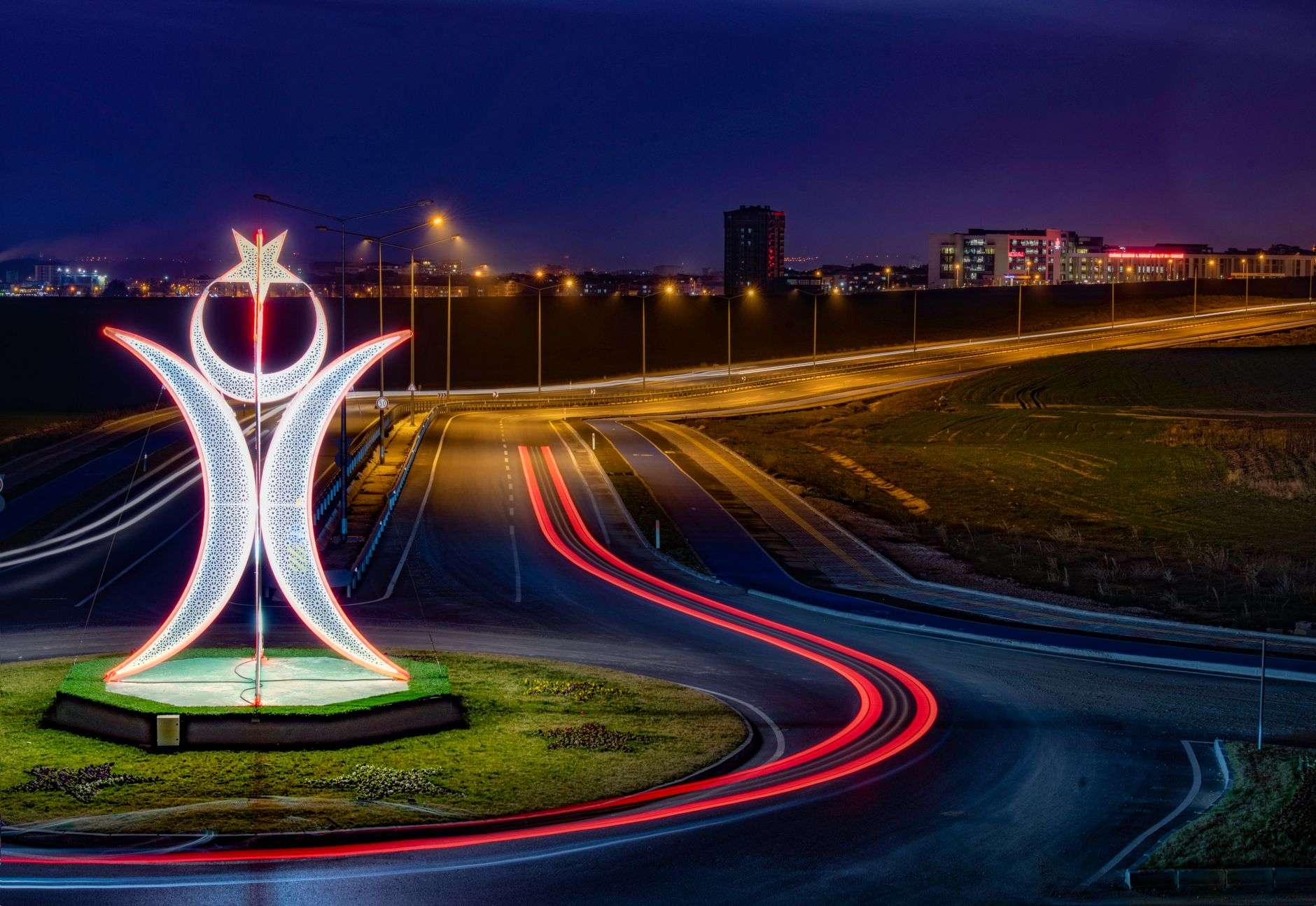
FAIRHOPE, Ala. — Two new art installations will be coming to two roundabouts within Fairhope in the near future.
The Fairhope City Council approved a resolution to award and authorize contracts for large-scale public art installations at two local roundabouts during its meeting on Monday, Sept. 14.
The Two Commissions
The first contract is for Maxwell Emcays to create a new installation at the roundabout where Veterans Drive, Scenic 98 and Triangle Drive meet, costing $115,000.
A second contract is for Nelson Grice to create an installation at the roundabout at County Road 13 and County Road 32, costing $117,300.
Models of the new pieces were put on display outside the council chambers following the council meeting.
How the Artists Were Chosen
Fairhope Mayor Sherry Sullivan described the selection process, which was led by the Committee on Public Art, featuring members of the Eastern Shore Art Center.
The process began with a call for entries in February that received 70 applications. COPA narrowed the field to 34 applicants, who were individually reviewed and scored by committee members on a scale of one to seven.
The list was then narrowed to four semifinalists, who received funding from COPA to create models of their work and met with Sullivan, two city council members and COPA members to present their art.
Paying semifinalists to build models is the detail that distinguishes a serious public art process from a perfunctory one. Producing a scale model of a large sculpture takes real time and materials, and a competition that asks four artists to do that work unpaid tends to draw only those who can afford to gamble. Funding the models widens the field of who can realistically compete.
‘Art Is Not an Afterthought in Fairhope’
“I think the two pieces of art we have chosen are fantastic,” Sullivan said. “They’re going to be great additions to Fairhope. So excited we are that we’re able to expand outside of downtown with our public art, which is something I know myself and Councilman [Jack] Burrell have wanted to do for years, was to extend art all throughout Fairhope.”
“In a lot of cities, art is an afterthought, but it’s not an afterthought in Fairhope,” said Jimmy Prestwood, a board member of the Eastern Shore Art Center who serves on the COPA selection committee. “All you have to do is go around and look. We hope that we can continue as a committee because there’s more empty roundabouts and there’s more spots where we can put art.”
Why Roundabouts
The center island of a roundabout is an unusual piece of civic real estate. It is highly visible, seen by every driver passing through, and it cannot be used for anything else — no parking, no building, no through traffic.
Traffic engineers also note a functional benefit. A visual obstruction in the center island improves roundabout safety by preventing drivers from seeing straight across, which encourages them to slow and focus on the approach to their immediate left rather than accelerating through.
Placing the commissions outside downtown is the stated intent. Public art concentrated in a walkable downtown serves visitors and residents who go there; art at roundabouts on Veterans Drive and at County Road 13 and 32 reaches residents who move through those intersections daily without necessarily going downtown at all.
A Third Piece in the Works
Sullivan said another unannounced piece of artwork is planned for a third roundabout, which Fairhope hopes to install later this year pending funding.
Also at Monday’s Meeting
The City Council approved a resolution allowing Sullivan to enter an agreement between the Baldwin County Commission and the City of Fairhope for a cost-sharing program supporting road improvement projects under the county’s Connecting Communities Collectively program.
The program was started by the Baldwin County Commission last year, originally under the name of the 30 Cubed Project, as a mechanism for municipalities and the county to share the cost of road projects that serve both.
Cost-sharing arrangements of that kind address a persistent problem in fast-growing counties: roads that carry both municipal and county traffic, where neither jurisdiction alone has an obvious obligation or budget to improve them.