

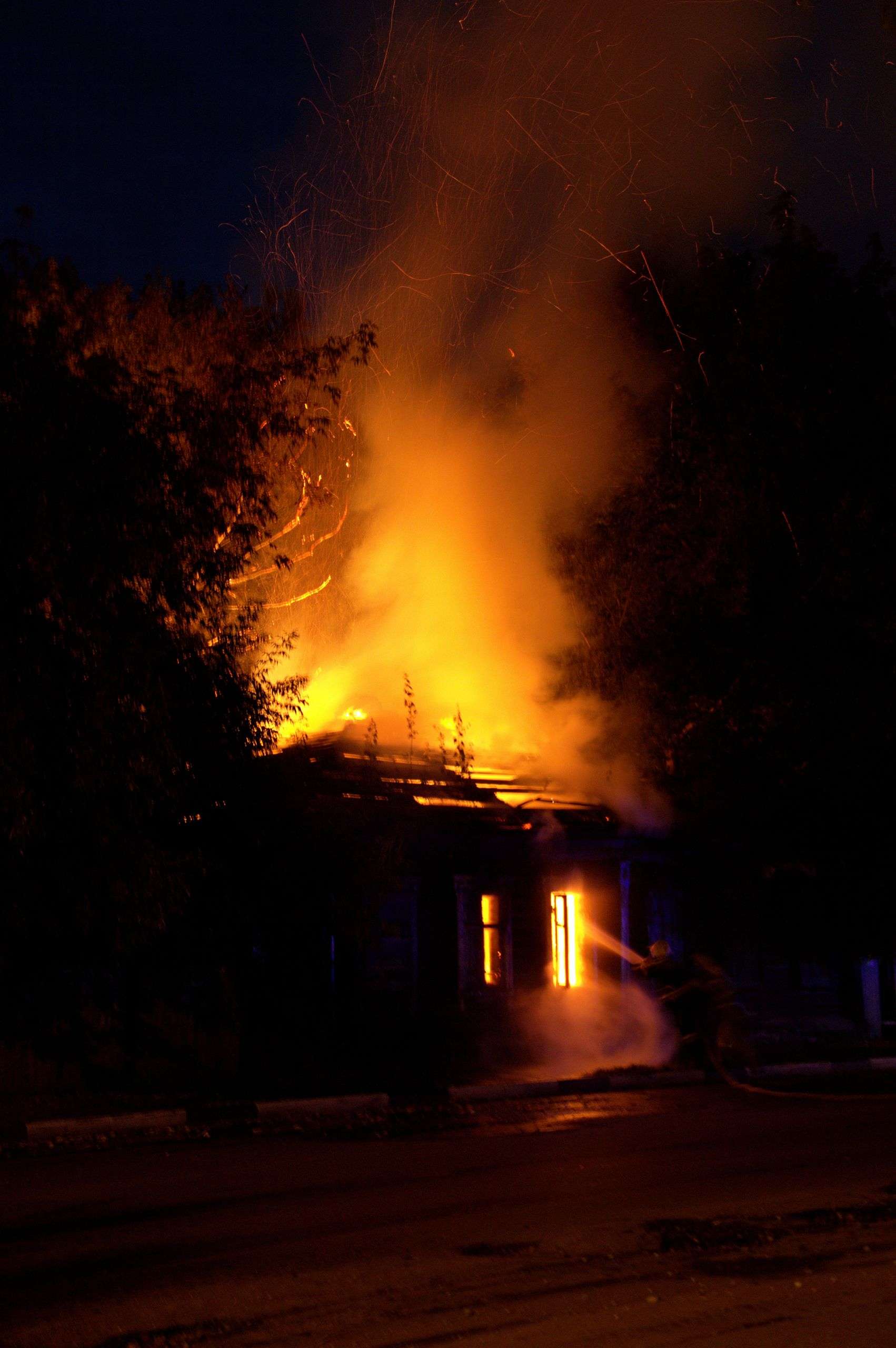
Firefighters from more than 20 area agencies spent hours battling a large house fire in Robertsdale early Sunday morning, working through the overnight hours to bring the blaze under control at a three-story single-family home. The fire drew one of the largest single-residence responses Baldwin County has seen, with engines, ladders, and tankers converging on the scene from across the county and beyond as the structure burned through the early hours of the morning.
Lillian Fire Rescue was called in on a mutual aid assignment to help the Robertsdale Fire Department, which took the lead on fighting the structure fire, according to officials. The scale of the blaze required a coordinated response rarely seen for a single residential fire in Baldwin County, and it illustrates just how quickly a fire in a large, multi-level home can grow beyond the capacity of any one department. Large homes of that height present particular challenges for firefighting, because fire can move through wall voids, attic spaces, and stairwells faster than crews can reach it from outside.
A four-hour overnight battle
In all, crews from 22 different fire and rescue agencies worked side by side from roughly 1 a.m. to 5 a.m. Sunday to knock down the flames and keep the fire from spreading further. The four-hour firefight underscores how demanding a multi-story residential fire can be, particularly overnight when visibility is limited, water supply logistics are more complicated, and crews must coordinate closely to protect both the structure and each other.
Overnight structure fires are among the most difficult assignments in the fire service. Darkness slows every task, from spotting extension in the walls to rotating exhausted crews, and rural or semi-rural stretches of Baldwin County often lack the fire hydrant coverage found in cities, forcing departments to shuttle water by tanker. Personnel rotate through rehabilitation areas as their air cylinders empty, and incident commanders must track who is inside the structure at all times to prevent disorientation in heavy smoke. A blaze that might be handled by a handful of companies in daylight can demand a small army at 1 a.m.
Officials said no injuries or fatalities were reported in connection with the fire, a relief for a community that has seen its share of severe weather and emergency incidents in recent years. No civilians and no firefighters were reported hurt despite the length of the operation and the demanding conditions, an outcome that reflects the emphasis on accountability and rotation that large mutual aid responses make possible.
What remains unknown
Beyond the basic details confirmed by officials, no further information about the cause of the fire, the extent of the damage, or the residents involved has been released. It is not yet clear whether the home was occupied at the time the fire broke out or how firefighters first became aware of the blaze. Fire investigators typically wait until hot spots are fully extinguished and the structure is declared safe before beginning their work, which means an official cause – whether accidental, electrical, or otherwise – may take days or longer to determine.
The Red Cross and other disaster relief organizations are often called upon in the days after residential fires of this scale to assist displaced families with temporary lodging, clothing, and immediate needs, though officials have not confirmed whether such assistance was requested in this case. Neighbors in the area of the fire described heavy smoke visible for a considerable distance as crews worked through the night.
How Baldwin County’s mutual aid system works
Mutual aid responses like this one are a routine but critical part of fire protection across Baldwin County, where many communities rely on smaller, often volunteer-supported departments that pool resources for major incidents. The county’s fire departments range from small volunteer companies serving unincorporated communities to career departments in the growing municipalities along the Interstate 10 and Highway 59 corridors, and formal mutual aid agreements allow any of them to summon help the moment an incident exceeds local capacity.
A three-story residential fire, in particular, can quickly overwhelm a single department’s staffing and equipment, especially in the middle of the night when off-duty personnel must be called in from home and additional apparatus has to be shuttled to the scene from surrounding jurisdictions. A single engine crew simply cannot supply the hose lines, ladders, ventilation support, and manpower reserves that a fully involved multi-story structure demands. That is why the first alarm assignment on a fire of this type automatically triggers requests to neighboring departments, and why the list of responding agencies grew to 22 before dawn.
Robertsdale sits in the heart of Baldwin County, one of the fastest-growing counties in Alabama, and its fire department regularly coordinates with neighboring agencies, including Lillian Fire Rescue, on larger incidents. The county’s population growth has pushed residential development further from existing fire stations, increasing response times and the size of the homes being built, which in turn raises the stakes when fire breaks out in the middle of the night. Departments across the county have responded with new stations, upgraded equipment, and expanded training, but the economics of fire protection still depend on the shared network that Sunday’s fire made visible.
The scale of Sunday’s response – nearly two dozen agencies pitching in over the course of the night – reflects both the seriousness of the fire and the strength of the county’s mutual aid network, which allows departments to share manpower, engines, ladder trucks and water tankers when a single fire outstrips local resources. Baldwin County’s departments drill together and operate on compatible radio communications and hose standards, so that apparatus arriving from 20 or more miles away can be put to work within minutes of arrival. That interoperability is what turned a response that could have been chaotic into a controlled, four-hour operation.
A reminder for homeowners
Large structure fires like this one are also a reminder for homeowners across South Alabama to check that smoke detectors are working, that fire extinguishers are accessible, and that families have a plan for getting out of multi-story homes quickly in an emergency. Fire officials routinely stress that early detection and a clear escape plan are often the difference between a close call and a tragedy.
In multi-story homes, fire officials recommend that every sleeping room and every level have working smoke alarms, and that families practice two ways out of each room, since a fire on a stairwell can cut off the only familiar exit in minutes. Escape ladders for upper floors, agreed-upon family meeting points outside, and closed bedroom doors – which can slow the spread of fire and smoke significantly – are among the standard recommendations. Homeowners are also encouraged to keep chimneys, dryers, and electrical systems inspected, since many serious residential fires begin with maintenance problems that cost little to fix.
This story will be updated if additional information about the cause of the fire or the extent of the damage becomes available. Residents with information about the fire are encouraged to contact the Robertsdale Fire Department.
Coordinating a multi-agency response
When the first units arrived and confirmed the scale of the fire, the incident commander on scene escalated the alarm assignment, and the dispatch center began paging departments across the county under the mutual aid plan. Each arriving apparatus was assigned a staging area, a water supply role, or a manpower pool, and crew rotations were managed to keep fresh companies moving onto the fire ground every 20 to 30 minutes. Tanker shuttles kept water moving to the scene from fill sites in the surrounding area, a logistics operation that continued without interruption until the flames were knocked down.
The accounting that makes such an operation work is considerable. Safety officers tracked every crew entering and leaving the structure, medical units stood by for the duration in case of injury, and command staff updated the assignment plan as conditions changed through the night. That the operation ended with no injuries after four hours of firefighting is a credit to the discipline of the rotating crews and the coordination among departments that, on any ordinary day, answer calls from separate stations in separate cities.
For Robertsdale, the response demonstrated the value of the relationships the department has built with its neighbors. A fire does not respect municipal boundaries, and the agencies that responded Sunday treated it as a shared problem from the first alarm. The firefighters who left the scene at dawn had come from small volunteer stations and career departments alike, and each will be counted on again the next time a fire outgrows the department that is closest to it. As the county continues to add residents, homes, and businesses, the mutual aid system that carried the night will remain the backbone of fire protection from the Mobile Bay shore to the Florida state line.