

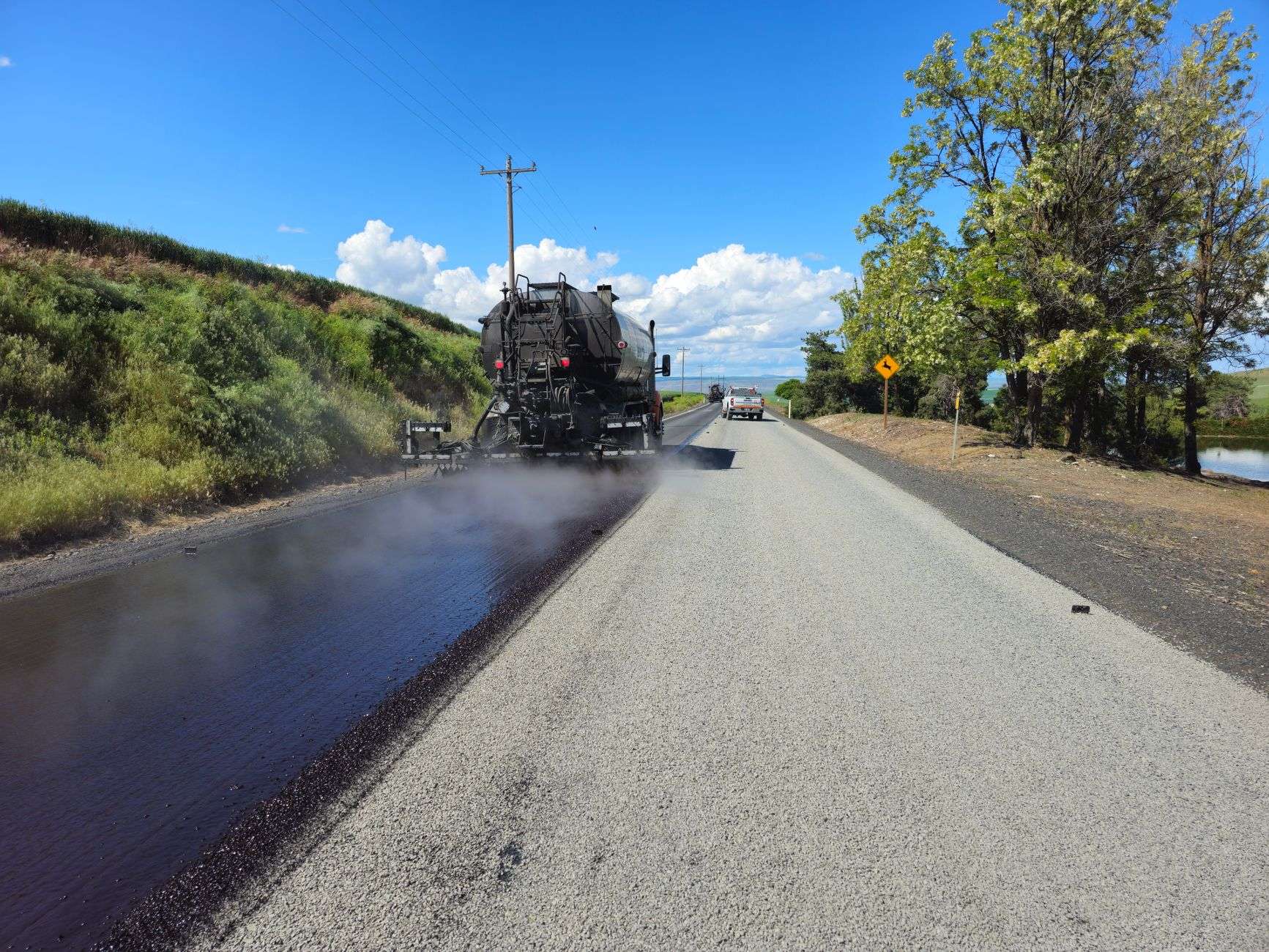
Foley drivers can expect smoother pavement on several city streets over the coming year after the City Council formally approved the municipality’s annual road improvement plan. The program authorizes city officials to seek contractor bids for resurfacing work across more than four miles of roadway, part of an ongoing effort to keep Foley’s street network in good repair as the city continues to grow.
Under the approved plan, the city will solicit bids to resurface 4.76 lane miles of streets. Officials will also request pricing on an additional 1.54 lane miles of resurfacing as an alternate, elective project that would move forward only if funding allows once the primary bids come in.
Which Streets Are Included
Two of the more notable roadways slated for resurfacing are Lakeview Drive, from Carnoustie Drive to Baldwin County Road 12, and West Peachtree Avenue, from North Cedar Street to Alabama 59. Both corridors see regular local traffic, and resurfacing is intended to smooth out wear and extend the pavement’s lifespan before more costly repairs become necessary.
The plan also designates one alley as an alternative project. That stretch runs between West Orange Avenue and West Myrtle Avenue, connecting South Pine Street and South Alston Street. Because it falls under the elective portion of the program, work on the alley would depend on how bid pricing compares to the funds the city has set aside.
City Turns Attention to Alley Conditions
Beyond this year’s resurfacing list, Mayor Ralph Hellmich said Foley intends to broaden how it tracks the condition of its infrastructure. The city already uses a rating system to evaluate the condition of its streets, helping officials decide which roads need attention first and prioritize spending accordingly. Hellmich said the city now wants to apply a similar approach to its alleys.
“We want the alleys to be part of this,” Hellmich said. “We’re looking at multiple alleys all over the city. Some of them are in worse condition than others. We will be creating this alley grading system as a subset.”
Developing a grading system specifically for alleys would give city staff a clearer, more consistent picture of where those narrower passageways stand compared with Foley’s main streets. Many alleys serve as secondary access points for businesses and residences, particularly in older parts of the city, and their upkeep can be easy to overlook without a formal evaluation process.
Why Regular Resurfacing Matters
Road resurfacing programs like Foley’s are a routine but essential part of municipal budgeting in growing Baldwin County communities. Repaving before pavement deteriorates into potholes and structural damage is typically far less expensive than full-depth reconstruction, and it helps maintain safer driving conditions for residents and visitors alike. Foley’s approach of ranking projects by pavement condition, then building in elective add-on work when funding allows, gives the city flexibility to stretch its road maintenance dollars further each budget cycle.
With the plan now approved, the city’s next step will be advertising for contractor bids on the primary resurfacing list, with the elective mile-and-a-half of paving and the alley project to follow depending on the results. City officials did not provide a specific construction timeline, but resurfacing projects of this scope are typically scheduled in phases over the following months once bids are awarded.
Foley’s road program is part of a wider pattern across the fast-growing Baldwin County municipalities, where the same basic problem keeps showing up: rapid population growth has outpaced the original design of many city street networks, and routine resurfacing budgets that worked for a town of one size are no longer adequate for a town two or three times that size. Baldwin County as a whole has been one of the fastest-growing counties in Alabama for years, fueled by retirees, second-home buyers, and people relocating from larger metro areas along the Gulf Coast. Foley, with its location along the heavily traveled Highway 59 corridor and its proximity to the Gulf Shores-Orange Beach resort market, has been one of the direct beneficiaries — and one of the direct pressure points — of that growth.
The city’s approach of ranking projects by pavement condition and building in elective add-on work when funding allows is a well-established public works practice, but it is not the only way that municipal governments try to keep up with growing road networks. Many cities in coastal Alabama supplement their annual resurfacing lists with periodic grant applications through programs like the Alabama Department of Transportation’s County Road Improvement program or the federal Surface Transportation Block Grant program, both of which can help pay for larger rehabilitation projects on major arterials. For smaller neighborhood streets and alleys, however, the city’s own capital budget usually remains the main source of money, and that is where the ranking-by-condition approach matters most.
Foley’s plan to develop a grading system for alleys is also more consequential than it might sound at first glance. Alleys in older cities often serve as secondary access points for utilities, garbage collection, and emergency response, and many were built long before modern residential subdivision standards. Without a formal grading system, alleys tend to be the first piece of a city’s infrastructure to be deferred when budgets are tight, which means their condition can deteriorate faster than the main streets. By adding alleys into the same kind of pavement-condition scoring system the city already uses for its larger roads, Foley is essentially creating a more complete picture of the entire right-of-way network, which gives staff and council members better information when tradeoffs are being made between competing projects.
The corridors slated for resurfacing in this round — Lakeview Drive from Carnoustie to Baldwin County 12, and West Peachtree Avenue from North Cedar Street to Alabama 59 — are both significant local connectors that carry a mix of residential and commercial traffic. Lakeview Drive, in particular, has been on the city’s watch list for several years as the area around it has continued to develop, and resurfacing along that stretch is a relatively low-cost way to extend the life of a road that would be considerably more expensive to reconstruct if the surface is allowed to fail. The same logic applies to West Peachtree, where the connection to Alabama 59 puts additional daily traffic on a road that was not originally designed for that kind of load.
Baldwin County’s growth also means that road maintenance decisions in Foley cannot be made in isolation. The county’s major road network, which is managed by the Baldwin County Highway Department and the Alabama Department of Transportation, feeds directly into Foley’s local streets, and a resurfacing project on a city road can quickly become irrelevant if the county or state road it connects to is in poor condition. The same is true of the city’s alleys, which often serve as informal access between residential blocks and the major arterials. Cooperation between the city, the county, and the state on pavement management is therefore a quiet but important part of how Baldwin County municipalities keep their road networks functional, even as the traffic those networks carry keeps growing.
For Foley drivers, the practical effect of the approved resurfacing list is likely to be a series of short-term lane closures and minor traffic disruptions over the next several months, with the heaviest work concentrated on the projects that affect higher-traffic corridors. Once the primary bid list is awarded, work is typically scheduled in phases to limit the impact on businesses and residents, with resurfacing crews generally able to complete a project of this scope well within a single construction season. The elective add-on work and the alley project, if they move forward, will follow a similar schedule, depending on the pricing the city receives from contractors and the availability of funding in the next budget cycle.
Public works directors in fast-growing coastal Alabama cities also spend a significant amount of time coordinating with the utility companies that own buried infrastructure in the same rights-of-way. Water, sewer, natural gas, and telecommunications lines all run under Foley’s streets, and any resurfacing project typically includes a pre-construction review to make sure that no utility is about to dig up the new pavement to repair a leaking main or to add a new service line. When that coordination is done well, the new pavement lasts for its full design life. When it is not, freshly paved streets can be cut open within months, and the city’s resurfacing investment is effectively reduced to a short-term cosmetic fix. Foley has worked to formalize that coordination over the years, and the alley grading system the city is developing will likely include a similar utility-coordination component, since alleys are often home to overhead and underground utilities that are even harder to relocate than those under main streets.
The economic case for keeping up with road maintenance is one that Foley officials have made publicly several times. A street network in good condition supports commercial activity, residential property values, and the city’s overall ability to attract new investment. Conversely, roads that are allowed to deteriorate can become a drag on the same indicators, and full-depth reconstruction of a failed road typically costs several times more than a planned resurfacing cycle. The council’s annual approval of the resurfacing plan is, in effect, a maintenance policy that signals both to residents and to the development community that the city is willing to invest the kind of steady, predictable funding that keeps its road network functional over the long term.