

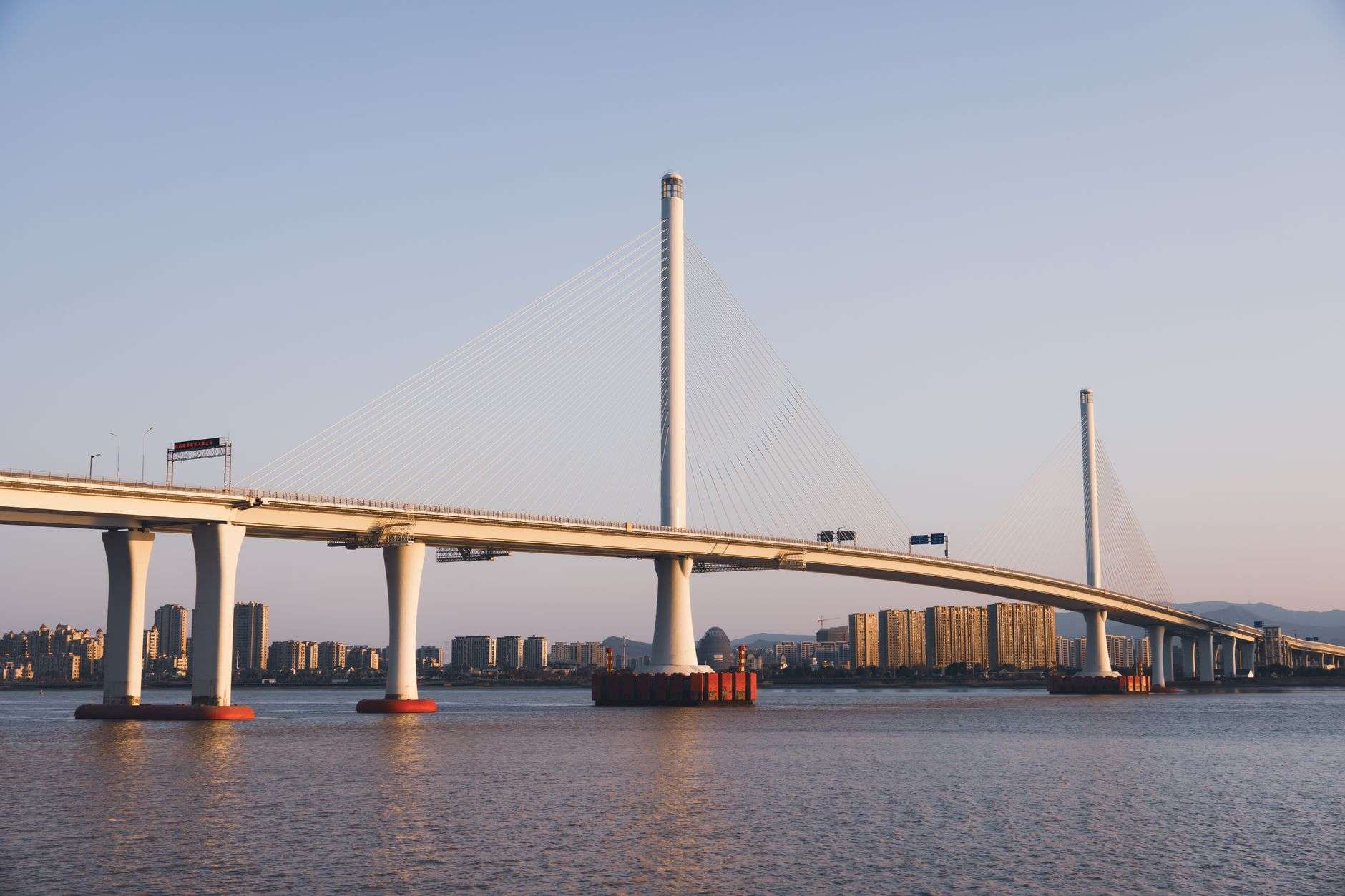
MOBILE, Ala. — Mobile City Councilman Ben Reynolds has a wish for President Donald Trump’s visit to the Port City on Friday: forgive the bridge loan, the federal financing behind the new Interstate 10 Mobile River Bridge, and with it the tolls drivers are expected to pay to cross it.
Reynolds made the comment in the closing moments of Tuesday’s City Council meeting, after several of his colleagues ran through a busy weekend calendar that includes a hip-hop concert Friday night and the University of South Alabama’s homecoming football game on Saturday. Before adjourning the meeting, Reynolds said the biggest event of the week was “worth mentioning.”
“It’s worth mentioning on this rare occasion, we have the President of the United States coming to Mobile and it’s a huge deal for everyone,” said Reynolds, who represents District 4 and was the only council member to publicly address the visit.
Trump is scheduled to hold a 6 p.m. rally Friday, Oct. 2, at the university’s Mitchell Center.
“Put your politics aside, you know, the President of the United States along with our current United States senators will be there,” Reynolds said. “I expect to have the who’s who of politicians in the City of Mobile and that’s a big deal.”
‘With one swipe of the pen, no more tolls’
Reynolds said he hoped the president would use the visit to make a major announcement about the I-10 Mobile River Bridge and Bayway project, the largest public infrastructure project in the region and one of the largest, if not the largest, in the history of the Alabama Department of Transportation.
The project, now budgeted at about $4.15 billion, is expected to be financed in part through a federal Transportation Infrastructure Finance and Innovation Act loan, commonly called a TIFIA loan, of up to $2.52 billion. That loan is to be repaid with toll revenue generated by the new crossing. ALDOT, which is overseeing the project, has described toll revenue as a crucial part of the financing package.
“My hope is he will say, ‘we’ll forgive the TIFIA loan,’ and with one swipe of the pen, no more tolls,” Reynolds said. “That would be great.”
There has been no indication that Trump plans to forgive the project’s borrowing, or that he intends to discuss the bridge at all during Friday’s event.
How the bridge is being paid for
The TIFIA program is run through the U.S. Department of Transportation’s Build America Bureau. Unlike a grant, a TIFIA loan is federal credit assistance that must be repaid, generally on favorable terms, from a dedicated source of revenue. For the Mobile project, that source is tolls.
Transportation Secretary Sean Duffy announced the loan earlier this month, completing the financing for the first phase of construction. The TIFIA loan joins a $550 million federal Bridge Investment Program grant, a $125 million federal INFRA grant and at least $250 million in state funding.
The borrower is the Alabama Toll Road, Bridge and Tunnel Authority. According to bond documents, the authority issued nearly $3.8 billion in four bond and note series for the project, including $567 million in first-lien toll revenue bonds, about $2.52 billion in short-term notes and nearly $696.3 million in third-lien bonds. ALDOT officials have said the federal loan will be held until near the end of the roughly five-year construction period and then used to pay off higher-interest private borrowing.
Those same bond documents show toll rates will be adjusted automatically every Jan. 1. For the first 10 years after tolling begins, rates would rise by 5% or by the inflation rate for Southern urban consumers, whichever is higher. ALDOT has defended the increases, saying a multibillion-dollar project financed over several decades could not realistically be paid for with toll rates frozen indefinitely. Several local officials, including Mobile Mayor Spiro Cheriogotis, said they had not been aware of the planned increases before the documents became public.
What drivers are expected to pay
Tolls will not be collected until the new bridge opens to traffic, which is expected around 2031. Under current plans, standard passenger vehicles would pay:
- ALGOpass, per trip: $3
- ALGOpass monthly unlimited plan: $60 per month
- Compatible transponder from another toll agency: $7.70 per trip
- No transponder (pay-by-plate): $15.40 for a single trip across the bridge and the Bayway
The Causeway, the George Wallace Tunnel, the Bankhead Tunnel and the Africatown Bridge are to remain toll-free.
Tolls have been the central controversy of the project for years. A previous plan collapsed in 2019 amid a public revolt over proposed toll rates, after local metropolitan planning organizations voted to remove it from their plans. When leaders in Mobile and Baldwin counties revived the idea in 2021, they set a framework for passenger tolls of no more than $2.50 per trip.
Reynolds is not the only local official looking for ways to ease the cost to commuters. State Sen. Chris Elliott, R-Josephine, has drafted legislation that would give Alabama residents with ALGO transponders a dollar-for-dollar state income tax credit for tolls paid on the bridge and Bayway, at an estimated cost to the state of about $15 million a year.
What the project will build
The first phase includes a new six-lane, 215-foot-tall cable-stayed bridge over the Mobile River and the widening of the existing Bayway across Mobile Bay from four lanes to six through restriping. The work also includes related improvements intended to reduce congestion, improve freight movement and provide a direct interstate route for trucks carrying hazardous materials, which are barred from the Wallace Tunnel.
Construction is expected to begin this year and continue through approximately 2031.
Alabama Republicans have credited the Trump administration with helping move the project forward, in part by allowing it to be split into two phases. The first phase covers the new bridge and the Bayway widening. A second phase would involve demolishing the existing Bayway and replacing it with a new elevated structure. The administration also approved Alabama in July as the first state in a federal pilot program that allows tolling on an existing interstate for reconstruction and rehabilitation, a step that made the toll-backed financing possible.
The rally is expected to coincide with a groundbreaking celebration for the bridge on Friday, with federal officials expected to attend.
A name for the bridge
The bridge’s future name has also become part of the conversation around the president’s visit. U.S. Rep. Barry Moore, the Republican nominee for U.S. Senate, has proposed calling it “Gateway to the Gulf of America, the Donald J. Trump Bridge.” John Wahl, the Republican nominee for lieutenant governor, has also said the bridge should be named for the president.
Other names have been floated as well. State Sen. Chris Elliott has suggested honoring the late singer Jimmy Buffett, who spent much of his youth in Mobile and Fairhope, and U.S. Rep. Shomari Figures, D-Mobile, has proposed baseball Hall of Famer Hank Aaron, who grew up in Mobile’s Toulminville neighborhood. Democratic gubernatorial nominee Doug Jones has criticized the Trump proposal.
Reynolds said he does not believe the bridge should become a “billboard for anyone.” But he said that if putting Trump’s name on the span would result in the loan being forgiven, “I’m not against it.”
His remark echoes one made earlier this month by Fairhope City Councilman Jack Burrell, who chairs the Eastern Shore Metropolitan Planning Organization. Burrell said he would prefer a name with local roots and added, “If they stick a politicians name on it, I hope (the politician) comes up with a few billion dollars to pay for it.”
ALDOT has said it considers naming roads and bridges to be the prerogative of the Alabama Legislature, and any legislative action is unlikely before a new governor takes office in January. Cheriogotis has said the city would welcome the chance to weigh in on a name on behalf of the local community.
City says it will cover security costs
James Barber, senior adviser to Cheriogotis, said the city is prepared for the president’s visit and will absorb any associated security costs. Barber said he did not yet know what those costs would be and referred questions about security, road closures and other operational details to the U.S. Secret Service.
In a statement Tuesday, a Secret Service spokesperson said the agency is coordinating with local, state and federal law enforcement, event organizers and University of South Alabama officials on a security plan for the rally. Attendees should expect enhanced security measures, including TSA-style screening and identity verification, the agency said.
“The safety of our protectees, attendees, and the public remain our top priority,” the spokesperson said. “While we strive to minimize impacts, some traffic disruptions and congestion should be anticipated in the area prior to, and through the conclusion of the event. The public is encouraged to plan to allow additional travel time especially when near the venue.”
The Secret Service encouraged ticketed guests to arrive early, follow posted signs and directions from law enforcement and event staff, and monitor official event and venue channels for updates on parking, traffic, entry times and prohibited items. Its list of prohibited items includes balloons, bicycles, ammunition and oversized backpacks.
Barber urged residents who are not attending the rally to stay away from the Mitchell Center area Friday evening.
“We know it will be difficult to get through those areas,” Barber said. “It’s always good that if you’re not going to that event, to avoid it. There will be rigorous traffic control and security throughout those areas.”
About Reynolds
Reynolds represents District 4 on the seven-member Mobile City Council, which holds its regular meetings on Tuesdays at Government Plaza in downtown Mobile. Friday’s rally begins at 6 p.m. at the Mitchell Center, and the bridge groundbreaking is expected the same day.