Alabama Gulf Coast Zoo Mourns Loss of Beloved Tiger Pepper
The Alabama Gulf Coast Zoo in Gulf Shores is mourning the death of Pepper, a 14-year-old Siberian tiger known for her TV appearances with sister Salt.
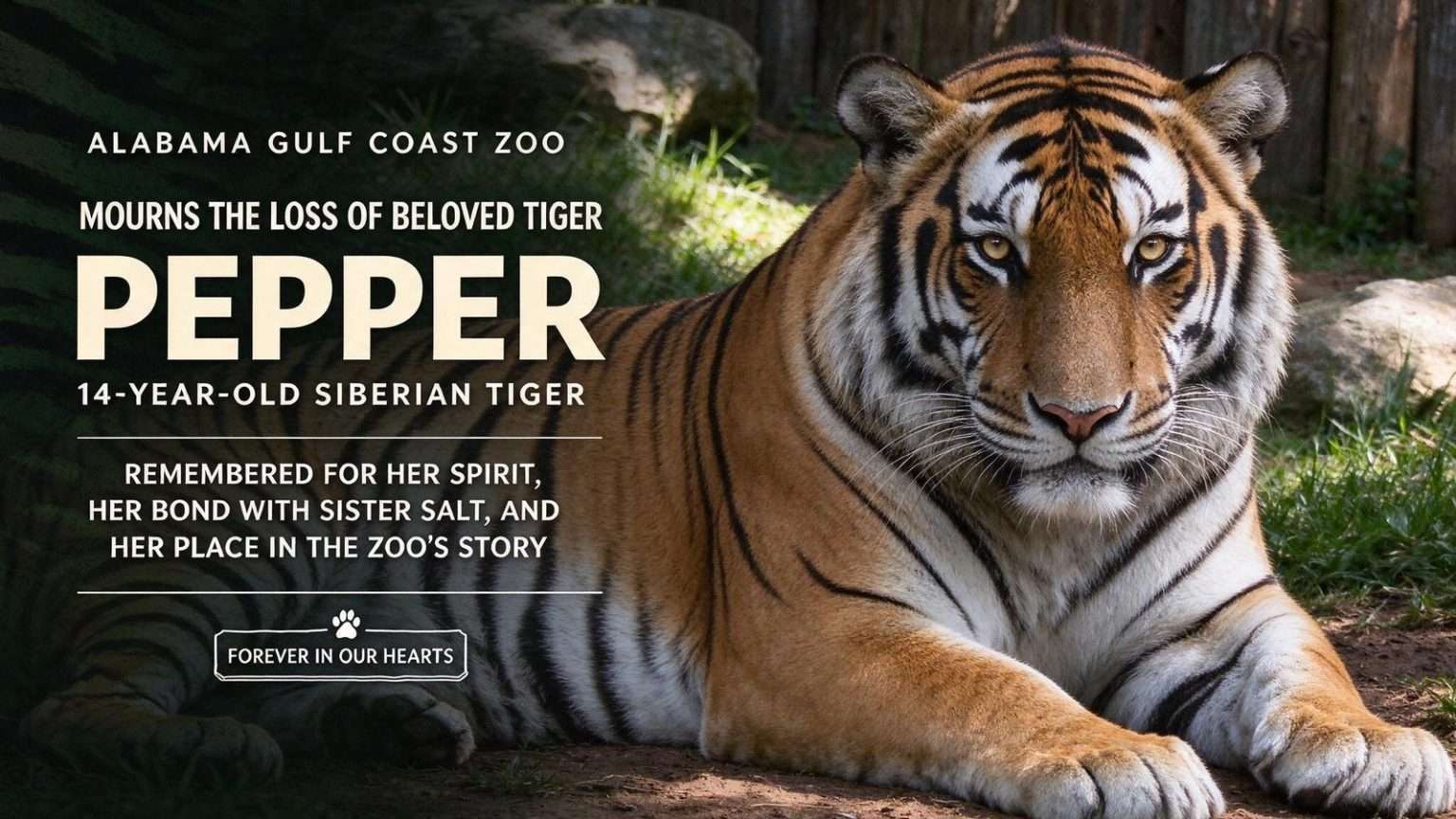
The Alabama Gulf Coast Zoo in Gulf Shores is mourning the loss of Pepper, a 14-year-old Siberian tiger who died after a battle with an infection that veterinarians struggled to pinpoint. Pepper’s death closes a chapter in the zoo’s history that stretches back to her arrival as a cub, and it leaves behind her sister Salt as the last remaining tiger of the famous pair that helped put the small coastal zoo on the national map.
Pepper and her sister Salt became local celebrities after appearing together on an Animal Planet television series that followed daily life at the zoo. According to the zoo’s director, the sister tigers were consistently the animals visitors most wanted to see in person once the show began airing, making them two of the most recognizable residents in the zoo’s history. For years after the cameras moved on, guests arriving at the gates would ask about the tiger sisters by name, a level of name recognition few animals at any zoo ever achieve.
The tigers joined the Alabama Gulf Coast Zoo’s permanent collection at about four months old after arriving from a zoo in the Florida Panhandle. From that early age, they grew up in Gulf Shores, raised side by side through every stage of their lives and becoming fixtures of the exhibit area that generations of Coastal Alabama families came to know. The zoo’s curator, who raised both cats from cubs, described them as a foundational part of the zoo family and said Pepper’s death leaves a noticeable void among the staff who cared for her for more than a decade.
Illness That Defied an Easy Answer
Zoo officials said Pepper first began showing signs of illness earlier in the month. Despite X-rays and ultrasounds, veterinarians were initially unable to determine the cause of her decline, a frustration familiar to anyone who has cared for a large animal that cannot describe where it hurts. Diagnostic imaging on a tiger of Pepper’s size requires specialized equipment and careful handling, and the early tests failed to reveal what was wrong inside her.
A two-hour exploratory surgery eventually revealed evidence of an infection, though its exact origin remained unclear even after surgeons were able to look directly at the affected area. The discovery confirmed that Pepper was fighting a serious internal illness, but it did not give her caretakers the answer they needed most, which was how to stop it. Staff said there were no indications the infection was contagious to other animals at the zoo, an important determination for a facility that houses dozens of species in close proximity and had to weigh the health of its entire collection while Pepper’s condition remained a mystery.
Caring for a big cat through an illness of this kind involves the entire animal care team, from the keepers who monitor appetite and behavior each day to the veterinary staff who perform the procedures. In Pepper’s case, the staff’s inability to identify the infection’s source despite surgery and imaging underscored how difficult exotic animal medicine can be, even for a team with decades of combined experience with the species.
Salt Adjusts to Life Without Her Sister
With Pepper’s death, her sister Salt is now the zoo’s only remaining tiger from the pair, and staff say they are focused on helping her adjust. Tigers are known to form strong bonds with littermates, and zoo officials said Salt is likely to go through a mourning process of her own, something the animal care team will watch for in her eating habits, activity level and behavior in the weeks ahead. Keepers who have worked with the sisters for years are leaning on that long familiarity, keeping Salt’s routine as consistent as possible while she adapts to an exhibit without the companion she has had since cubhood.
Because Salt is an older, fully grown tiger, introducing a new adult tiger as a companion is considered unlikely to succeed. Adult tigers are territorial by nature, and merging an unfamiliar mature cat into an established exhibit carries significant risk for both animals, a reality well understood at zoos across the country. Zoo staff have discussed the possibility of eventually bringing in a Siberian tiger cub for Salt to interact with, an arrangement that can work when the younger animal is introduced at an age when the older cat is more likely to tolerate it, though no formal plans have been made and any such decision would come only after careful evaluation.
The bond between Pepper and Salt was visible to guests for years, with the sisters often resting near one another in their exhibit and engaging in the play behavior that littermates retain into adulthood. Visitors who followed the pair from their television days often remarked on how closely the two stayed together, and that closeness is exactly what the staff now hope to honor as they help Salt through the loss.
A Life Span Cut Short of the Record Books
Siberian tigers in captivity typically live between 12 and 14 years, though the zoo has cared for tigers that lived into their late teens and even early twenties, making Pepper’s death feel premature to the staff who worked with her. At 14, she had reached the upper end of the typical range but fell well short of the remarkable lifespans the zoo has seen from other tigers in its care, which is part of why the loss has hit the team so hard.
Siberian tigers, the largest of all tiger subspecies, are native to the forests of the Russian Far East and parts of northeastern China, and they are considered endangered in the wild. Zoos like the one in Gulf Shores play a role in maintaining insurance populations of the species and in giving millions of visitors a face-to-face encounter with an animal they would otherwise know only from documentaries. Pepper spent her life as that ambassador, and her popularity made her one of the zoo’s most effective messengers for conservation.
In keeping with the zoo’s practice for its permanent collection animals, Pepper will be cremated. Zoo officials said a future expansion of the facility will include a memorial space for animals like Pepper, with a plaque planned in her honor, giving staff and visitors a permanent place to remember a tiger whose story was woven into the zoo’s rise from a small roadside attraction to one of the Gulf Coast’s best-known animal parks.
A Zoo That Found Fame on Television
The Animal Planet series that made Pepper and Salt famous followed daily life at the Gulf Shores zoo during a period when the small facility was battling through an extraordinary stretch of adversity, including repeated hurricane threats that forced the zoo to evacuate its animals and rebuild. The show’s run introduced millions of viewers to the zoo’s keepers and its collection, and the tiger sisters emerged from the program as its most beloved stars. For many viewers across the country, the pair was the first introduction to the zoo, and for many locals they became the reason for a first visit.
The zoo’s director noted that once the show began airing, the tigers were consistently the animals visitors most wanted to see in person. That kind of star power carries real weight for a nonprofit zoo of its size, driving attendance, memberships and donations that support care for the rest of the collection. The sisters’ appearances also made them fixtures of the community, with school groups, tourists and longtime members all counting the tigers among the animals they made a point of visiting every trip.
Zoo staff describe the loss of an animal like Pepper as something closer to losing a family member than losing a specimen, particularly for the curator and keepers who bottle-raised the sisters and worked with them daily for more than a decade. Animal care professionals form deep attachments over years of feeding, training and medical care, and grief among the staff is a real part of the aftermath of a death like this one, alongside the practical work of caring for the surviving animal.
What Comes Next for the Tiger Exhibit
In the near term, the focus remains on Salt and on letting her adjust at her own pace rather than rushing any changes to her living situation. Zoo officials have been clear that no formal plans exist yet for adding another tiger, and any future decision about a cub would involve the same careful planning the zoo applies to every animal introduction. Until then, guests can expect to see Salt continuing her routine under the watch of a care team that knows her history better than anyone.
The planned memorial space in the zoo’s future expansion will give the community a way to honor Pepper along with other animals who spent their lives at the facility. For a zoo whose story has always been about the bond between its animals and the people who care for them, that tribute will stand as a lasting marker of a tiger who helped carry the place through its most famous chapter, and whose absence, staff say, will be felt every time they walk past the exhibit she shared with her sister.