

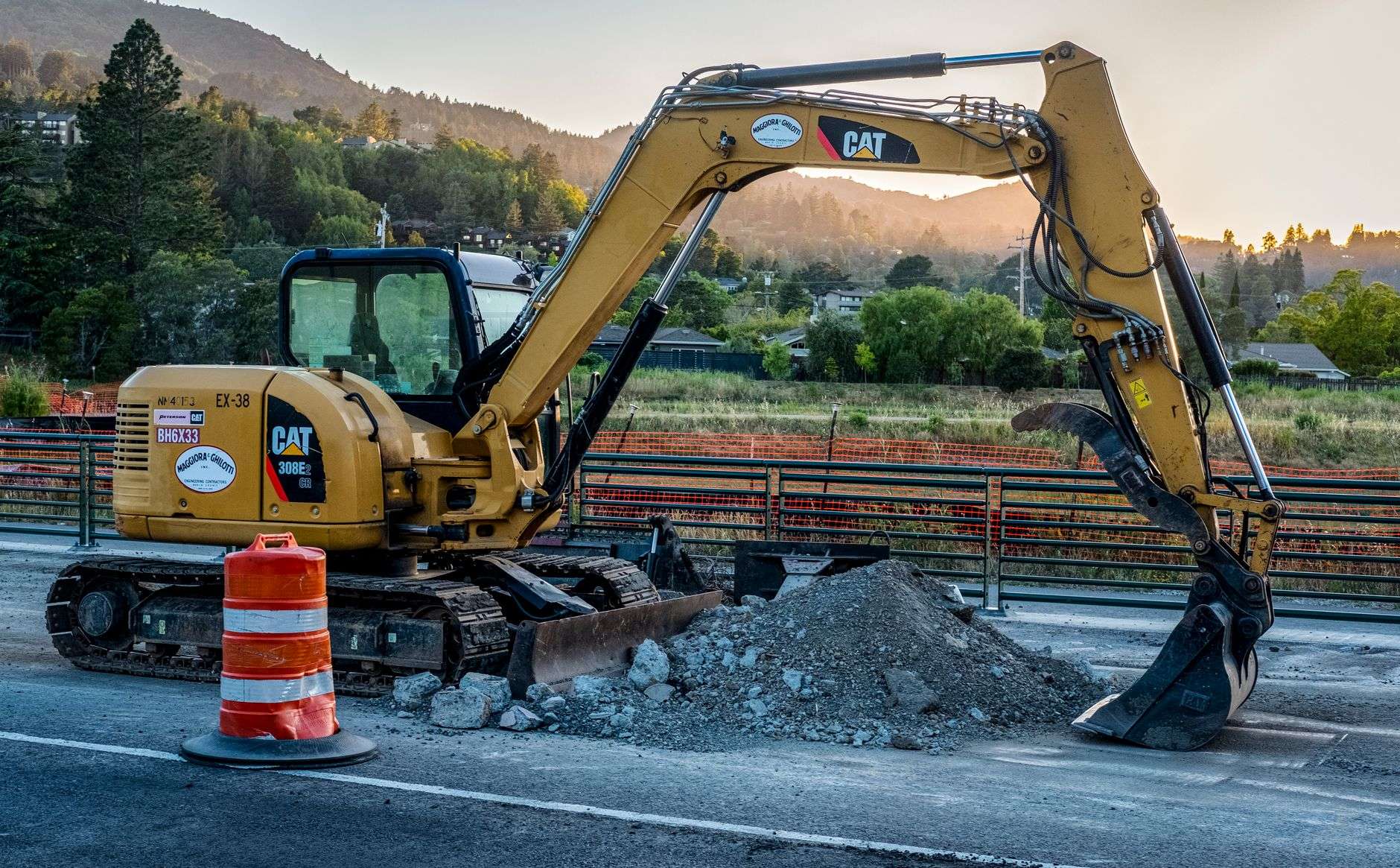
MONTGOMERY, Ala. — Baldwin Preparatory Academy in Loxley is one of four schools chosen to launch a new statewide heavy equipment operator program for high school students, an effort by the Alabama Road Builders Association to steer more young people toward careers building and maintaining the state’s roads and bridges.
The association, known as ARBA, announced the Next Gen Heavy Equipment Operator Program on Wednesday. The program will give students time on heavy equipment simulators, introduce them to the kinds of jobs available in road and bridge construction and connect them directly with the contractors who do the hiring.
The initiative is paid for through legislative appropriations and is aligned with Alabama Career Pathways, the statewide career and technical education push championed by House Speaker Nathaniel Ledbetter. ARBA is partnering with the Alabama State Department of Education, local school systems and its own member companies to carry it out.
The first four schools
The program will start at four schools and career technical education centers spread across the state:
- Baldwin Prep Academy — Baldwin County Public Schools
- LeCroy Career Tech Center — Chilton County Schools
- Limestone County Career Tech Center — Limestone County Schools
- Opelika High School — Opelika City Schools
The State Department of Education and ARBA picked the sites through an application process. According to the association, reviewers weighed available classroom space, instructor capacity, student interest, involvement from local contractors and geographic distribution. The result is a set of pilot sites that stretches from the Tennessee Valley in the north through central Alabama to the east side of the state and down to the Gulf Coast.
What students will do
At its core, the program is meant to show teenagers what running heavy equipment actually involves before they ever climb into a real cab. Students will train on simulators that replicate the controls and operation of machines used on road and bridge jobs, and they will learn about the skills, responsibilities and working conditions that come with the work.
Industry involvement is built into the model. Contractors and other industry partners are expected to visit classrooms, talk with students about workplace expectations and identify candidates for internships and jobs after graduation. ARBA said it plans to recognize students who move from the program into employment with signing day celebrations and other school events, borrowing a tradition more commonly associated with college-bound athletes.
The association also plans to work with the Alabama Community College System Innovation Center and its Skills for Success program so students can earn industry-recognized skills and credentials.
What state leaders said
Ledbetter, the Republican speaker from Rainsville, praised the association’s approach and said he hoped other industries would follow its example.
“The success of Alabama’s economy is heavily dependent upon having a well-trained workforce and modern road and bridge infrastructure—the Next Gen Heavy Equipment Operator Program will help our state achieve both,” Ledbetter said. “The Alabama Road Builders Association has created a workforce development blueprint that every skilled-trades industry should work to replicate. Their partnership is a great asset to our state, and I look forward to seeing this program’s coverage expand in the years to come.”
State Superintendent of Education Eric Mackey said the program gives students a firsthand look at a career path many may not have considered.
“Students deserve the chance to see where their skills can take them,” Mackey said. “This program gives them a chance to learn on heavy equipment simulators, meet the people who build and maintain Alabama’s roads and bridges, and see what a career in this industry could look like. We’re grateful to the Alabama Road Builders Association and our participating schools for opening yet another path from the classroom to a rewarding career.”
Why the road building industry is doing this
Alabama’s road and bridge construction industry has struggled to recruit, train and keep enough workers, according to ARBA. The trade association is based in Montgomery and describes itself as the only group in the state that exclusively represents all sectors of the transportation construction industry. Its members include highway contractors, equipment dealers, materials suppliers, consulting engineers and other professional service firms, and it works with the Alabama Department of Transportation, the Legislature, Congress and the Federal Highway Administration on issues affecting road building.
Equipment operators sit at the center of nearly every road project. The people who run excavators, bulldozers, motor graders, loaders, rollers and pavers move the dirt, shape the roadbed and lay down the asphalt and base materials that make a highway possible. When contractors cannot find enough trained operators, projects can take longer and cost more.
The Next Gen program is designed to address that problem at its source by reaching students while they are still deciding what comes after high school. Rather than waiting for adults to find their way into the trade, the association wants teenagers to see it as a legitimate career option alongside college, the military and other trades.
Who is leading the effort
ARBA President Rodney Payton made workforce development a priority during his term. Payton leads Chilton Contractors and serves on the Chilton County Board of Education, giving him a view of the issue from both the employer’s side and the school system’s side. He created a Workforce Development Committee to look for funding, coordinate participation from the industry and help schools put the program in place.
That committee is chaired by Chad Stracener, chief executive officer of Tractor & Equipment Company.
Day-to-day coordination falls to Houston Blackwood, the association’s workforce development director. ARBA named Blackwood to the post earlier this month. He brings more than two decades of experience in education and workforce development, including work as a teacher, assistant principal, principal and college workforce development director. Most recently, he served as workforce director for the Alabama Community College System Innovation Center, where he oversaw the Skills for Success program, and he has experience training operators on excavators, bulldozers, skid steers, motor graders, backhoes and rollers.
In his new role, Blackwood will coordinate partnerships with schools and employers, support instructors and arrange career activities for students.
A model borrowed from Georgia
ARBA said it modeled the Alabama program in part on a Georgia initiative developed by the Georgia Highway Contractors Association and that state’s Career, Technical and Agricultural Education programs. The Alabama association said it had followed the Georgia program’s growth for several years before launching its own.
Georgia’s Heavy Equipment Operator pathway began in 2022 with six schools. By the fall of 2023 it had grown to 15 sites, according to the American Road & Transportation Builders Association. Enrollment climbed from 90 students in the first year to 232 in the second. In that first year, 45 percent of graduating seniors in the program accepted jobs in the industry, and 63 percent said they were interested in pursuing careers as heavy equipment operators.
The Georgia model leans heavily on industry support. The contractors association there dedicated a full-time staff member to the program, member companies assigned employees to high school outreach and recruiting, and the association holds annual training for the program’s teachers. Students work through simulator modules and also get time on real machines. Funding comes from a mix of state money, the association and contractors.
Alabama’s version shares several of those features, including a dedicated staff coordinator, industry visits to classrooms and a focus on connecting students with employers.
How it fits Alabama Career Pathways
The Next Gen program arrives two months after state leaders launched Alabama Career Pathways in late July. That initiative is intended to create clearer routes from the classroom into high-demand, high-wage careers and to tie career and technical education more closely to the needs of employers and the state’s economic development strategy.
Lawmakers have put significant money behind the effort. The Legislature appropriated $100 million in 2025 and another $150 million in 2026 to expand and modernize career and technical education facilities around the state, a combined $250 million. The Career Pathways initiative also includes a website, alabamacareerpathways.com, with information for students, parents, educators and employers.
The road builders’ program is one of the first industry-specific efforts to plug into that framework, which is part of why Ledbetter described it as a blueprint for other skilled trades.
What it means for Baldwin County
For south Alabama, Baldwin Prep’s selection places the program on the Gulf Coast from day one.
Baldwin Preparatory Academy opened in 2024 on State Highway 59 in Loxley as Baldwin County Public Schools’ dedicated career technical high school. The campus covers roughly 200,000 square feet, and Superintendent Eddie Tyler has said the total project cost was a little more than $100 million. The school serves students from across the county, who are bused in from designated pickup points, and it has become popular enough that admission is decided by lottery.
Baldwin Prep already offers a dozen career programs, including construction, welding, HVAC, automotive technology, aviation, mechatronics, health science, cybersecurity, culinary arts, graphic design, cosmetology and a teacher cadet program. Students at the school follow workplace-style routines, such as clocking in and out and wearing industry-specific uniforms. Local employers, including Austal, Airbus, Infirmary Health and USA Health, helped shape its design and curriculum.
Adding heavy equipment operation to that lineup comes as Baldwin County continues to grow quickly. New subdivisions, commercial developments and road widening projects have kept construction crews busy across the county, and major industrial projects in north Baldwin have added to the demand for skilled construction labor.
Tracking results and expanding
ARBA said it will track enrollment, student completion, participation by schools and employers, internships and employment opportunities. Those numbers will guide decisions about expanding the program to additional Alabama schools.
Ledbetter’s comments suggest state leaders expect that expansion. If the Alabama program follows a path similar to Georgia’s, the pilot schools could be the first of many sites.
At a glance
- Program: Next Gen Heavy Equipment Operator Program
- Led by: Alabama Road Builders Association, with the Alabama State Department of Education, school systems and ARBA member companies
- Funding: Legislative appropriations, aligned with Alabama Career Pathways
- First sites: Baldwin Prep Academy, LeCroy Career Tech Center, Limestone County Career Tech Center and Opelika High School
- What students get: Simulator training, career exploration, classroom visits from contractors and potential internships and jobs
- Credentials: Planned partnership with the Alabama Community College System Innovation Center’s Skills for Success program
- Coordinator: Houston Blackwood, ARBA workforce development director
What families should know
Parents and students interested in the program at Baldwin Prep should contact the school or Baldwin County Public Schools’ career and technical education office for details on how the program will fit into course offerings. Families in other parts of the state can learn more about career and technical options through the Alabama Career Pathways website and their local school system.
Contractors interested in taking part as industry partners can reach out to the Alabama Road Builders Association, which is coordinating employer participation through its Workforce Development Committee.