

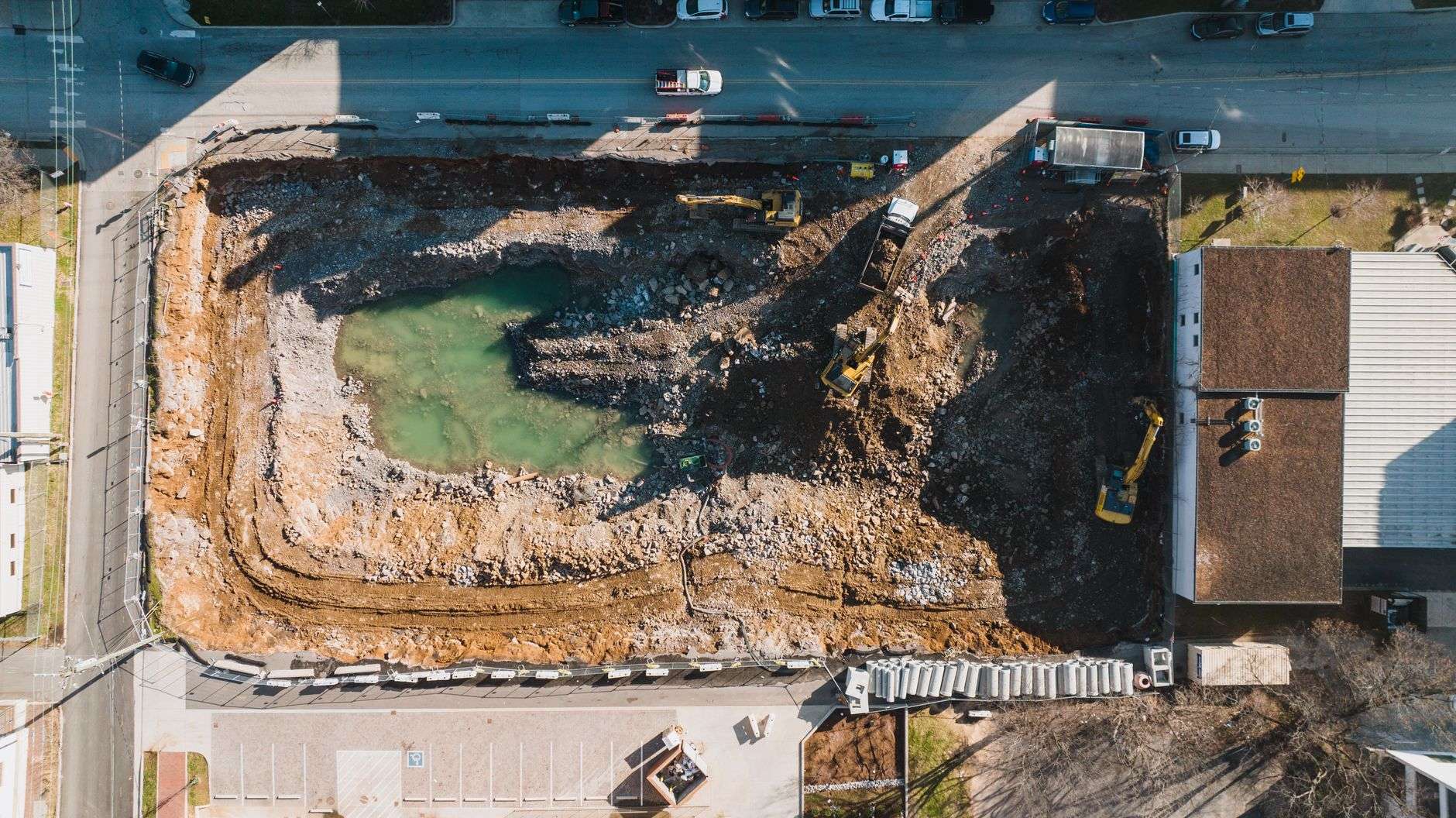
Jackson Medical Center marked a milestone moment on July 23 as community leaders, hospital staff and residents gathered for a groundbreaking ceremony launching a $10 million expansion project.
The undertaking, which includes a new emergency department, a new physicians clinic and a replacement roof for the existing hospital building, represents the largest construction effort at the facility in more than five decades.
For a hospital of its size in rural southwest Alabama, the project is significant on every axis: cost, square footage and what it means for the delivery of care in Clarke County. Rural hospitals across Alabama have struggled for a generation — the state has lost more community hospitals than nearly any other, and surviving facilities often operate with aging plants, tight margins and deferred maintenance. A $10 million investment that adds clinical space and replaces a roof on the original building puts Jackson Medical Center in the minority of rural Alabama hospitals expanding rather than contracting.
A New Chapter for a Community Hospital
The expansion will add a 6,300-square-foot emergency department and a 5,700-square-foot medical clinic to the Jackson Medical Center campus, alongside a full roof replacement for the current hospital structure. Gould Nelson Kaywood designed the project, and J.T. Harrison Construction Co. has been contracted to build it. Together, the additions are intended to give the hospital more space, updated infrastructure and improved efficiency for patients and staff alike.
The emergency department expansion addresses the function that defines a small-town hospital. In Clarke County, where the nearest large hospitals sit in Mobile, Monroeville and Thomasville, the local emergency room is often the difference between a manageable medical event and a fatal one — the first stop for farm injuries, highway wrecks on the US-43 and Highway 177 corridors, cardiac events and everything in between. Emergency departments in rural facilities treat a broad slice of their communities, and space constraints that seem minor in an urban hospital translate directly into hallway beds and longer waits in a county seat like Jackson.
The physicians clinic adds outpatient capacity, the side of rural medicine that has changed most over the past two decades. Clinics attached to hospitals allow a town to recruit and retain primary care doctors and specialists who rotate through, keeping routine care local instead of exporting every appointment to Mobile or Montgomery. A new 5,700-square-foot clinic gives the medical staff room to grow and gives the hospital a pipeline of patients who arrive for checkups rather than emergencies.
Jackson Medical Center CEO Jennifer Ryland told those gathered for the ceremony that the project carries deep historical weight for the Clarke County community.
The hospital first opened its doors in August 1954, built not through a single benefactor or a state or federal grant, but through the collective effort of local residents, sales-tax dollars and a county appropriation.
Ryland noted the facility underwent an expansion in 1971 to keep pace with a growing population, but has not seen a major construction project in the 55 years since.
That 1954 origin story is unusual and defining. In the postwar years, thousands of American communities built their hospitals the way Jackson did — by taxing themselves and donating labor and materials — because neither the market nor the government would do it for them. Clarke County’s decision to fund its hospital through a sales tax and county appropriation meant the facility belonged, in a practical sense, to the people who paid for it, and that ownership has shaped how the community treats the institution ever since.
The 1971 expansion reflected the optimism of the era, when rural populations were still growing and county seat hospitals were expanding into surgical suites, obstetrics and laboratories. The half-century of quiet that followed — with the hospital maintaining rather than growing — tracks with the pressures rural healthcare has faced nationwide: declining populations in some rural counties, reimbursement cuts, the consolidation of specialists into urban centers and the financial collapse of hospitals that could not adapt.
Honoring a Legacy of Community Investment
Ryland emphasized that while much has changed in Jackson over the decades, the community’s commitment to its hospital has not wavered. “Many things have changed over those 55 years but one thing has remained the same — our community and the people with the vision and determination to ensure our facility can serve this community for generations to come,” she said during the ceremony.
She extended thanks to the Jackson Healthcare Authority, the City of Jackson, hospital staff and the supporters whose work carried the project from concept to groundbreaking.
The Healthcare Authority sits at the center of that effort. Public hospital authorities operate facilities like Jackson’s under Alabama law, holding the property, overseeing budgets and answering to appointed boards of local citizens rather than corporate shareholders. An authority-governed hospital keeps its surplus revenue in the community and its governance in local hands, which is why groundbreaking ceremonies in towns like Jackson carry the tone of civic achievement rather than commercial development.
Jackson itself is the county seat and largest town in Clarke County, a city of roughly 5,000 people set among the timberlands and rivers of southwest Alabama. The town’s economy has long rested on the paper mill and chemical operations along the Tombigbee River, timber harvesting, small business and the institutions a county seat holds — courthouse, schools and hospital. The hospital’s role extends beyond medicine: it is among the community’s larger employers, its doctors and nurses are neighbors, and its continued operation is a condition for attracting industry and retirees to the area.
The loss of a rural hospital sets off consequences that reach far past healthcare. Studies of hospital closures across rural America consistently show that when a county loses its hospital, it loses jobs, loses doctors, sees infant and elderly health outcomes worsen and finds it harder to recruit employers. That dynamic is why Clarke County’s expansion draws attention beyond Jackson: it is the harder path, taken deliberately.
The $10 million price tag reflects the real costs of rural construction — materials, mechanical systems and the specialized infrastructure an emergency department requires. Projects of this scale at small hospitals typically combine operating reserves, authority financing and philanthropic contributions from a community that, in Jackson’s case, has a 70-year history of paying for its hospital directly.
The design-build team brings regional experience to the work. J.T. Harrison Construction Co., a south Alabama general contractor, has built healthcare, municipal and educational projects across the region, and Gould Nelson Kaywood’s architects have designed medical facilities sized to communities of Jackson’s scale. Local hiring for a project of this length also sends money through the county economy during construction, before the expanded facility opens.
Construction sequencing will matter for a working hospital. The new emergency department and clinic rise on the campus while the existing facility continues operating around them, and the roof replacement will proceed in phases over the occupied building. Hospital construction projects of this kind are planned to keep every service available throughout, with temporary routing for ambulances and patients while the work moves from one side of the campus to the other.
When the additions open, the changes will be visible at the front door and measurable in the operation. A larger emergency department means more treatment rooms, better triage flow and room for the equipment modern emergency care requires. The new clinic consolidates outpatient visits in a purpose-built space. And the new roof protects the 1954 building that started it all — the facility a community built for itself, now three-quarters of a century old and, with this project, prepared for its next decades.
Ryland’s framing at the ceremony returned to that lineage. The hospital’s history in Jackson is a story of residents who taxed themselves in 1954, expanded in 1971 and, seventy years on, committed again. The groundbreaking was the visible start of that latest chapter, with shovels in the ground and the community that owns the hospital watching.
Clarke County’s health picture sharpens the stakes. The county sits in the Black Belt region’s southern edge, where Alabama’s rural health statistics are at their most difficult: higher rates of chronic disease, fewer physicians per capita, longer ambulance runs and an aging population spread across towns like Grove Hill and Thomasville as well as Jackson itself. The nearest trauma-level care is an hour or more away by road, which places a premium on stabilizing care close to home.
Alabama’s rural hospital record underscores how unusual the expansion is. The state has watched community hospitals close in towns across the Black Belt and south Alabama over the past two decades, converting once-busy facilities into shuttered buildings and forcing residents to drive farther for everything from childbirth to chemotherapy. Emergency medical service providers in those counties now run longer transports, and the time lost on the road is measured in outcomes.
Against that backdrop, the ceremony on July 23 drew the cross-section a hospital groundbreaking in a county seat can attract — county and city officials, authority board members, physicians and nurses still in scrubs, business owners and longtime residents who remember the hospital’s earlier chapters. Ceremonial shovels aside, the gathering doubled as a statement of intent: the community intends to keep its hospital, and to keep it growing.
The project’s timeline runs from groundbreaking through roughly a year of construction, with the clinic and emergency department additions expected to come online as work completes and the roof project proceeds alongside. Hospital leadership will publish milestones as the work advances, and the community that built the place in 1954 can be expected to watch each one.